
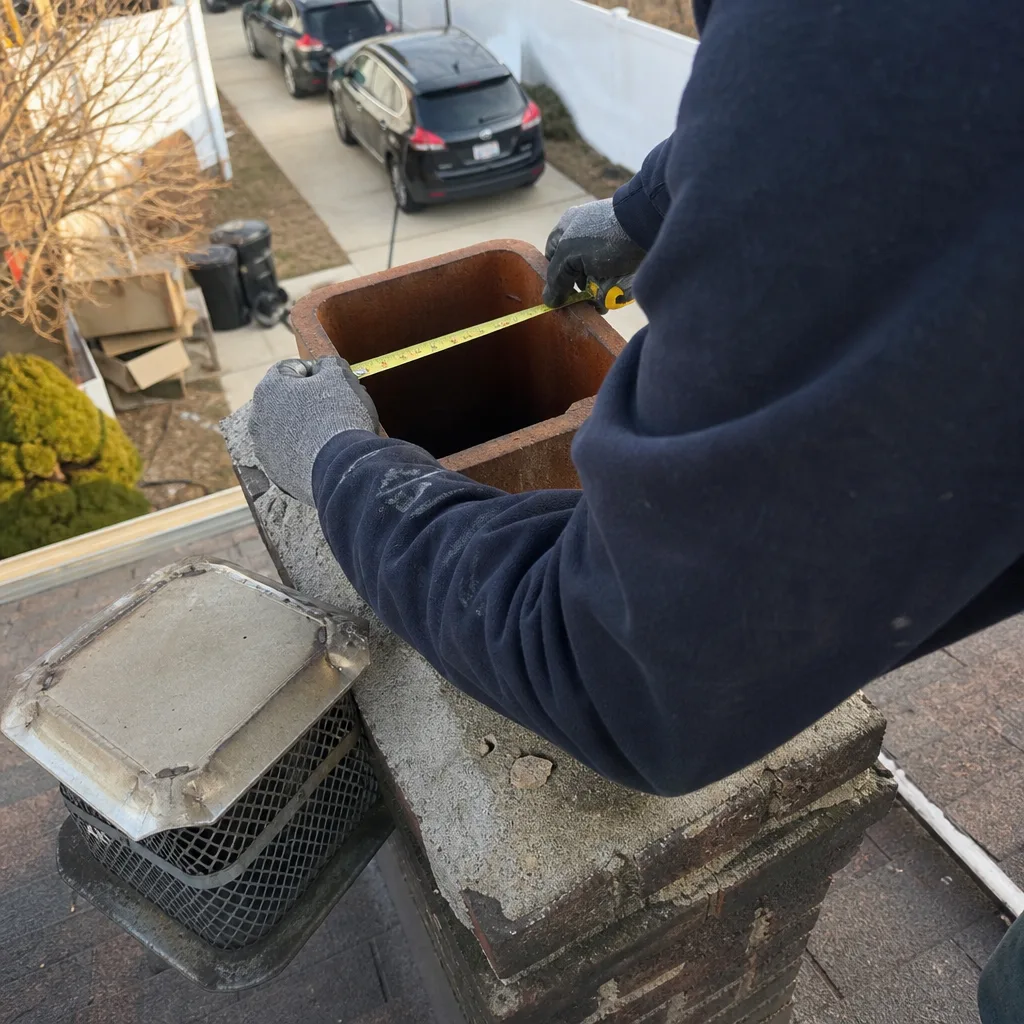
Last updated November 25, 2026
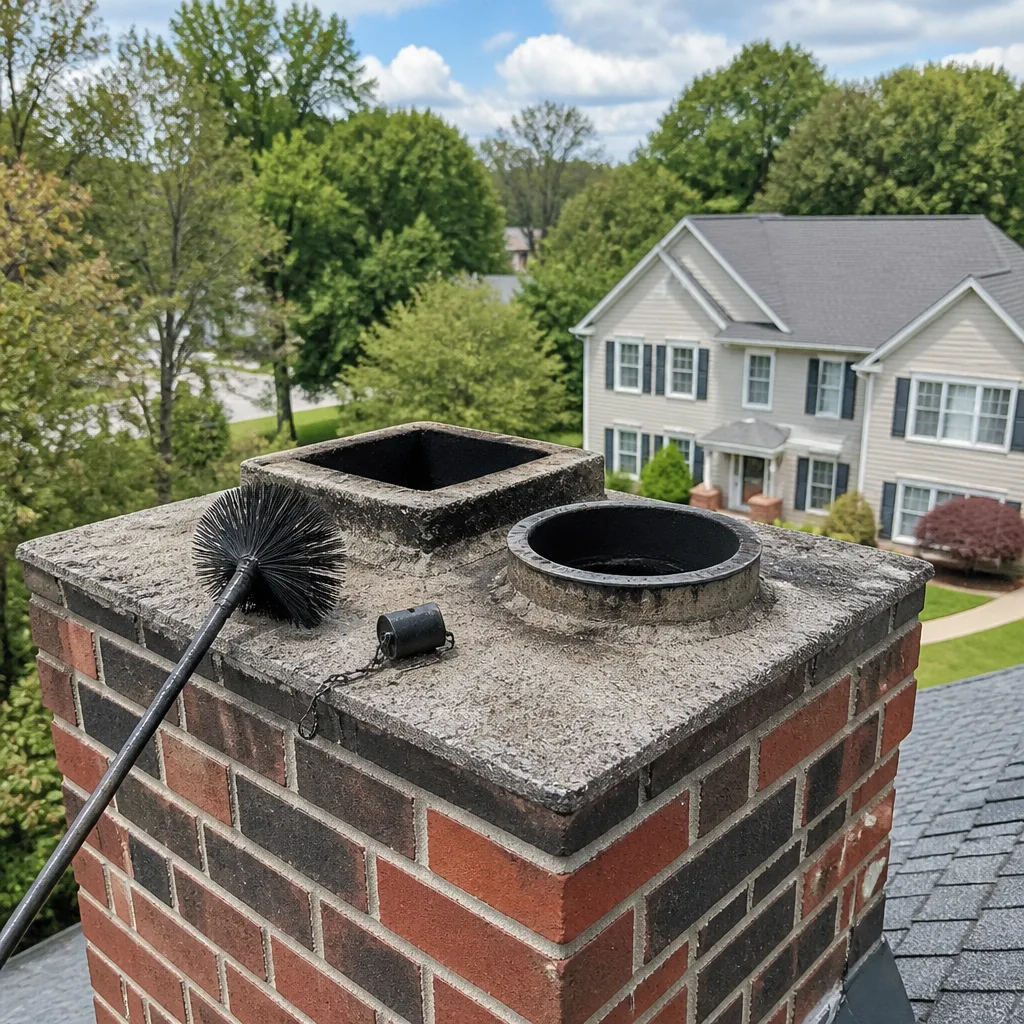 Sweep & inspection
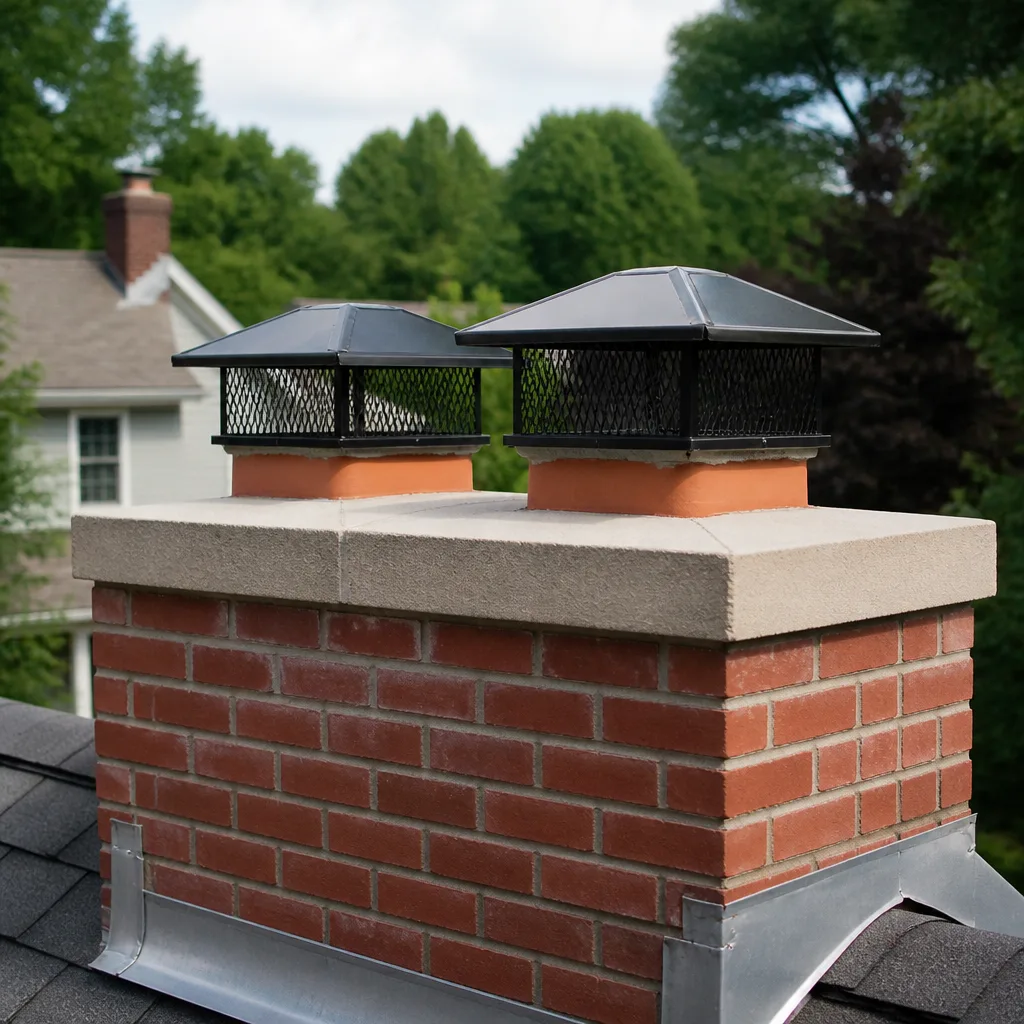 Caps & crowns
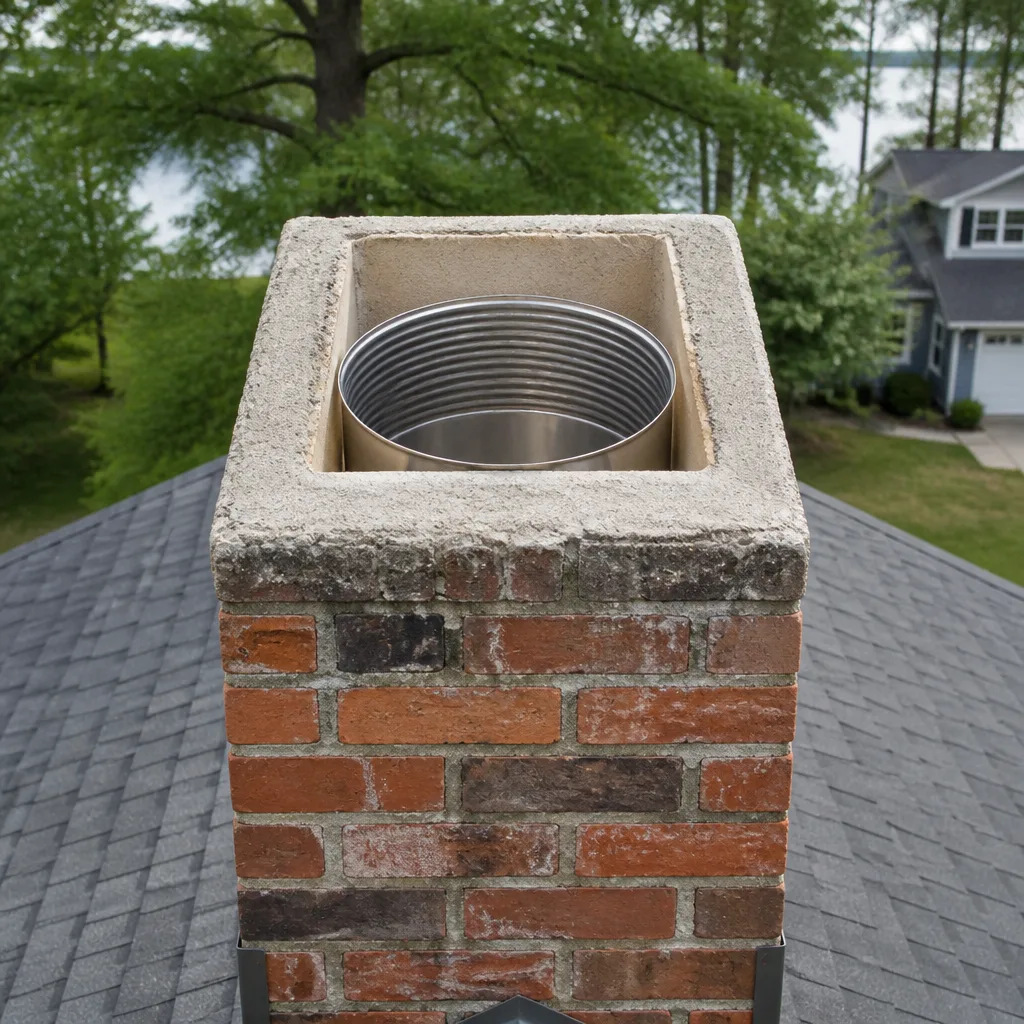 Flue relining
 Masonry repair
 Gas fireplace service
Level 1 sweep and inspection to the NFPA 211 annual standard - flue, crown, cap, and flashing checked and photographed
Chimney sweep logs do not sweep chimneys. They loosen some creosote - which then falls where a brush and vacuum still have to collect it.
Chimney Sweep Maintenance Checklist for South Ozone Park Homeowners
The chimney cap is the cheapest part of the whole system, and it’s usually the first thing to fail. Yet it’s the one item most homeowners skip during a walkaround, because checking it means looking up, not in. Meanwhile the firebox gets all the attention, since that’s what you can see from the living room floor. This guide flips that instinct around. We’ll walk the chimney component by component, from the cap down through the crown, flashing, masonry, damper, smoke chamber and firebox, and show you what each one does, how it fails on its own timeline, and what you can reasonably check yourself between professional visits. South Ozone Park homeowners have a few specific conditions worth knowing about, and we’ll get to those too.
Quick Answer
A sound chimney maintenance routine in South Ozone Park runs on two tracks: an annual professional inspection and sweep, and a homeowner walkaround that checks the cap, crown, flashing, masonry, damper and firebox a few times a year. The cap and flashing tend to fail first, crowns need re-sealing roughly every 5 to 7 years, and stainless steel caps can last a decade. A chimney is not a single object that wears out at one speed; it’s a stack of components on separate clocks.
Styles & brands we work with
- Sweep & inspection
- Caps & crowns
- Flue relining
- Masonry repair
- Gas fireplace service
Table of Contents
- Why a Component Checklist Beats a Seasonal Reminder
- Start at the Top: The Chimney Cap
- The Crown and the 5-to-7-Year Re-Seal
- Flashing and Jamaica Bay Moisture
- Exterior Masonry and Mortar Joints
- Dampers, Top-Mount Dampers and the Smoke Match Test
- The Smoke Chamber and Firebox
- Maintenance Intervals by Component
- Common Mistakes to Avoid
- When to Call a Professional
- Frequently Asked Questions
Why a Component Checklist Beats a Seasonal Reminder
“Clean the chimney once a year” is the advice everyone repeats, and it’s not wrong. It’s just too blunt to act on. A chimney doesn’t fail as a unit. The cap corrodes on its own schedule, the crown cracks on another, the flashing pulls loose on a third, and the damper seizes on a fourth. If you only think about the system once a year, you tend to think about the part you can see from the sofa and forget the parts working hardest in the weather.
Organizing your maintenance around components does two things. First, it tells you what to look at and when, so a walkaround becomes a quick, purposeful check rather than a vague squint at the roof. Second, it makes you a better client when a technician does arrive, because you can describe what you noticed and where.
In our experience, the chimneys that stay in the best shape are the ones where the homeowner catches small things early, a cracked crown before water gets behind it, a loose cap before it lifts in wind. Water is the enemy here far more than fire. Most of the structural damage we’re called to repair in South Ozone Park started as moisture getting in where it shouldn’t.
A proper sweep is the first step toward a safe chimney, and a thorough inspection is what protects your home the rest of the year. That’s why we start every job with an inspection: findings first, recommendations second. A diagnosis you can see is worth more than a list of things someone says you need.
Start at the Top: The Chimney Cap
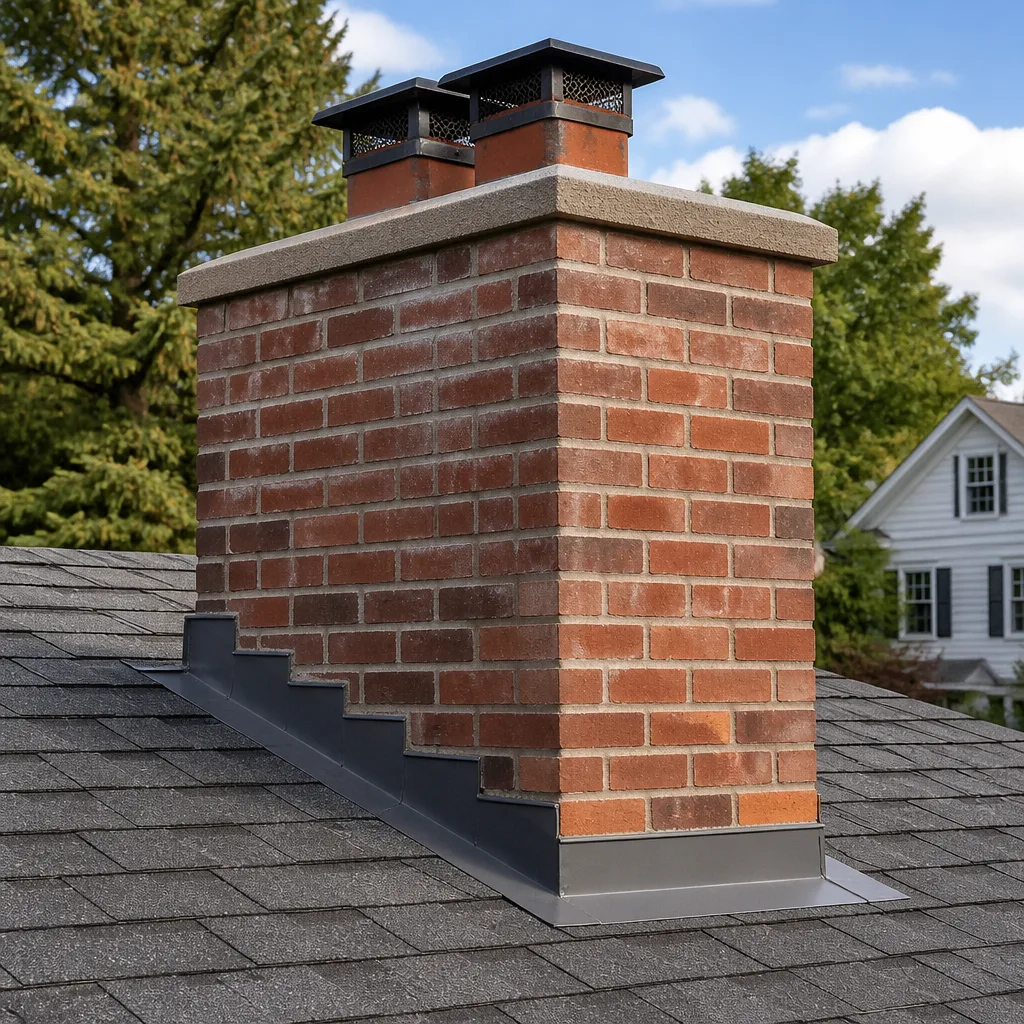
The chimney cap is a simple thing: a lid that sits over the flue opening, usually with mesh sides, sized and set so rain, snow, birds and squirrels stay out while smoke and gases escape freely. It’s modest metal and mesh, and it’s the first line of defense for everything below it.
Caps fail early for a few predictable reasons. The mesh rusts out or tears, letting birds and debris in. The connection to the flue top loosens or is never properly fastened in the first place, so wind moves it or lifts it entirely. The metal itself corrodes through. Any of these means water and animals get a straight path into the flue and down to the smoke chamber and damper.
What to look for when you check yours, ideally from the ground with binoculars:
- Mesh that’s rusted, sagging, torn, or missing in places.
- A cap that’s visibly tilted or sitting off-center on the flue.
- Rust stains streaking the chimney below the cap.
- Visible gaps between the cap and the flue sides.
- Birds or squirrels flying in and out, or nesting material at the top.
A well-made stainless steel cap is a long-lived component, often good for a decade before it needs more than a cleaning. That’s why we lean on purpose-built components from makers like Gelco and Olympia Chimney, engineered for chimney applications rather than bent from a sheet of generic screen and a pipe clamp. Cap and crown work is one of our core service categories, so a single specialist can handle what gets found up there.
The Crown and the 5-to-7-Year Re-Seal
The crown is the concrete or masonry surface that caps the top of the chimney structure and slopes it, so rain running down the sides and down the flue is directed away from the masonry instead of into it. It’s a small slope with a big job. When a crown is sound, water sheds and the flue stays dry. When it’s cracked or dished, water sits and finds the path of least resistance down through the chimney body.
Crowns almost never fail all at once. They crack in fine lines, spall, or lose their slope over time, and each small failure lets a little more water in. That’s why re-sealing on a rhythm makes sense. A crown is a component that wants attention roughly every 5 to 7 years, an interval that lines up with the freeze-thaw cycle and how hard the weather pounds the top of a chimney.
The re-seal itself is a real material decision, not a paint job. We use a product like CrownCoat, a flexible coating made for masonry crowns, to renew the surface and keep water out. It’s a far better answer than patching hairline cracks with whatever caulk is in the garage, which fails again on the next cold snap. When the crown is beyond coating, it’s replaced with a properly sloped surface that sheds water by design.
What to look for on your crown:
- Hairline or wider cracks radiating across the top.
- A surface that looks flaky, chalky or pitted.
- Discoloration or water stains below the crown line.
- A crown that appears to slope toward the flue instead of away from it.
That last one is subtle, and it’s a common reason water turns up inside the firebox when the cap looked fine. If you can’t get a clear view of the crown, say so when an inspector arrives; getting eyes on it is one of the main reasons a checkup pays for itself.
Flashing and Jamaica Bay Moisture
Flashing is the metal and sealant detail where the chimney meets the roof, and it’s the seam most likely to be blamed for a leak that’s actually coming from somewhere else. Good flashing steps and weaves into the roof covering, sheds water over it, and keeps the joint between two different materials, brick and shingle, watertight through season after season.
South Ozone Park sits close enough to Jamaica Bay that the air carries more moisture than it does in the inland parts of the borough and further upstate. More moisture in the air means more time for metal to corrode and for mortar and sealant to soften and fail, and it’s a real difference from neighborhoods away from the water. Flashing, being a mix of metal and sealant right on the roofline, feels that moisture first and worst. Where inland flashing might survive on neglect for a decade or more, the same detail here is far more likely to pull, dry out and start letting water in sooner.
What to look for around the flashing:
- Cracked or separated sealant at the chimney base.
- Rust streaks on the metal or the masonry just above the roofline.
- Water stains on ceilings or roof boards near the chimney.
- Lifted or stepped-out flashing edges.
Moisture here is also a reason we keep the exterior masonry in view on every visit. A leak at the flashing can travel sideways and show up as a damp interior wall far from the chimney, which is why a proper diagnosis beats guessing.
Exterior Masonry and Mortar Joints
The masonry body of the chimney, brick and mortar in rows, has to hold together through freeze-thaw cycling, wind-driven rain and whatever the air carries. Mortar joints are the softer, more porous part of that structure, and they wear first. That’s normal and gets managed on a cycle, not fought once and forgotten.
In South Ozone Park, the moist air near Jamaica Bay works on those joints a little faster than it does further inland. Crumbling or receding mortar exposes the brick edges to more water, and once water gets into the body of the chimney it can freeze, expand and pry at the structure. Finding it early is about water management. Finding it late is about structural repair.
What to look for on the exterior masonry:
- Mortar that’s crumbling, sandy or visibly recessed between the bricks.
- Cracked or spalling brick faces, with pieces flaking off.
- Dark staining or efflorescence, a white powdery bloom indicating moisture.
- Visible layers or shifts where the chimney leans or the joints step out.
A proper cap and crown do a lot to keep water out of this component in the first place, which is why the top-down order isn’t arbitrary. If the top of the chimney isn’t shedding water, the masonry body takes the wear it shouldn’t have to. Repointing mortar on a sensible cycle costs far less than a rebuild, and that’s the point of a component schedule.
Dampers, Top-Mount Dampers and the Smoke Match Test
The damper is the door that separates the firebox from the flue, closing it when the chimney is at rest and opening it when you’re burning. A traditional throat damper sits just above the firebox and should open fully, close snugly and seat without gaps. It’s a moving part, and moving parts in a hot, sooty environment wear. Rust, warping, a seized hinge, a damper that hangs loose or won’t close all the way, each is a common find.
A top-mount damper is a different approach: a lid on the very top of the chimney, controlled by a cable, that closes the flue at the cap instead of at the firebox. Because it seals at the opening, the whole flue column stays closed between burns, which keeps warm room air from drifting up and out and stops draft-back cold coming down. Lyemance and Chimalator top-mount dampers are recognized names in that category.
A top-mount damper in good order opens and closes smoothly across its full range, seats flush when closed, and holds its cable taut without binding. Watch for signs it’s corroding or misaligned:
- A lid that no longer sits flush, leaving a visible gap.
- A cable that kinks, binds or needs a yank to move.
- Rust on the lid or the mechanism, or a lid that sticks open.
- A handle or lever loose inside the firebox.
You can also learn a great deal about how the chimney is drawing with a smoke match test. Light a match and hold it near the open damper or the firebox opening with the house warmed, not cold, and watch which way the smoke goes. A chimney that’s pulling properly draws the smoke up and away. Smoke that drifts back, swirls, or hangs in the firebox is a sign.
What a sluggish draw actually means, in our experience, is one of a few things: the flue is restricted by soot or a partial blockage, the smoke chamber is coked up with glaze, the chimney needs more height, or a house fan is stealing the draft. It doesn’t tell you which one. That’s the point of the test; it says “look inside before you burn again.”
The Smoke Chamber and Firebox
The smoke chamber is the sloped funnel above the damper that funnels smoke from the firebox into the flue. It’s the part of the system most homeowners have never seen, because you can’t see it from the firebox looking up. Its job is to smooth the transition from a wide firebox to a narrow flue without turbulence, and when its surface gets rough with coked-on creosote, smoke has more to grab and the draw suffers.
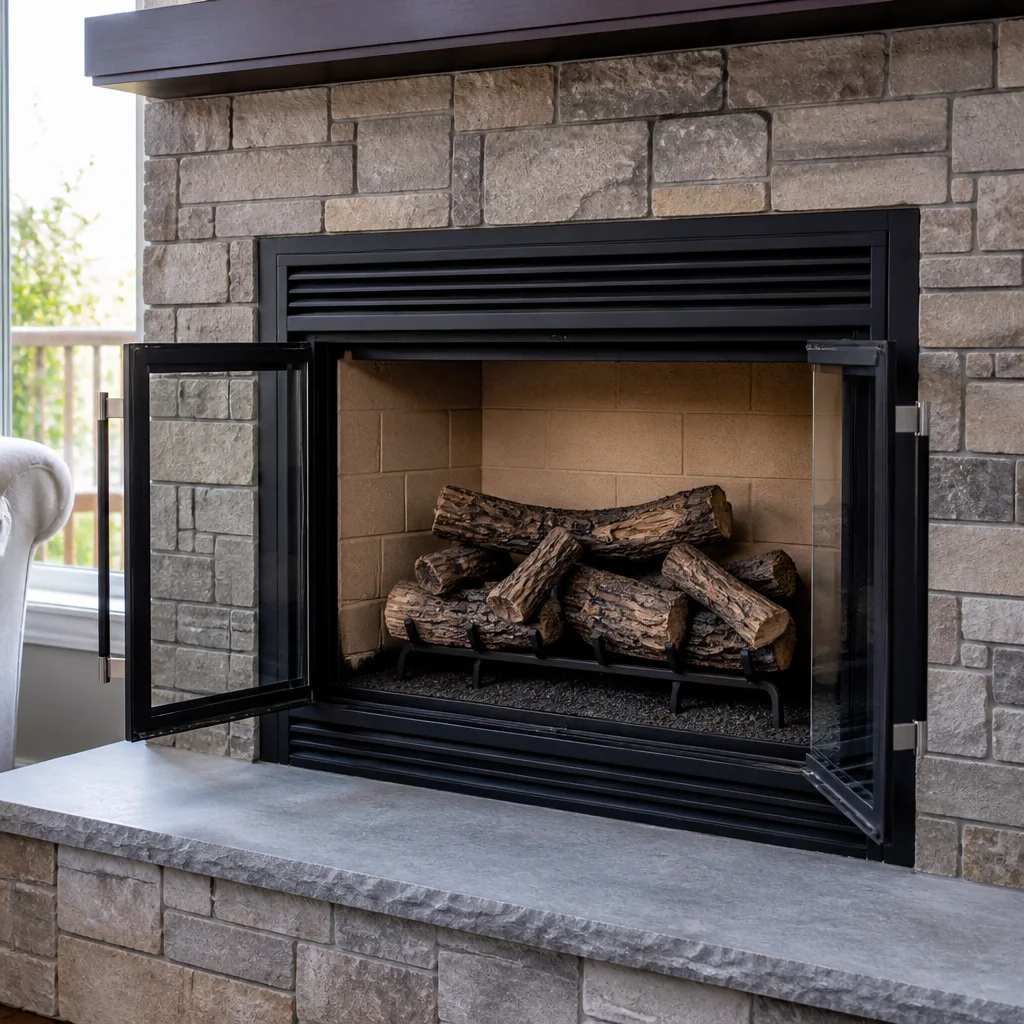
The firebox is what you know best: the walls where the fire burns. Brick fireboxes and brick firebox liners eventually show spalling, cracking and loose joints from heat cycling. Prefabricated fireboxes have their own wear points, and the metal panels don’t last forever. Both deserve a look each season because they take the most heat and the first visible damage.
What to look for at the firebox and above:
- Cracked or spalling bricks, or loose mortar joints in the firebox walls.
- A firebox floor that’s cracked or warm to the touch without a fire.
- In a prefab, rust or warping on the panels and hinges.
- Heavy creosote glaze visible above the damper if you can see up.
A quick pre-season look at the firebox tells you a lot before you light the first fire of the season. If in doubt, that’s a case for a professional look rather than a guess. The interior is where a camera inspection earns its keep, showing you the real condition of the flue and the chamber, so the recommendation comes from evidence you can see rather than from a hunch.
Maintenance Intervals by Component
Here’s the rhythm that keeps a chimney in shape, component by component. None of these figures is a hard rule; it’s the interval we apply in South Ozone Park based on the moisture and weather, and the condition of the system itself. What matters is checking each component on its own clock rather than lumping them together.
| Component | Typical Interval | What to Watch |
|---|---|---|
| Chimney cap | Check 2 – 3 times a year; replace only when worn | Rust, torn mesh, tilt, loose fastening |
| Crown | Re-seal roughly every 5 – 7 years | Hairline cracks, spalling, lost slope |
| Flashing | Check each season; more often near the bay | Separated sealant, rust, interior leaks |
| Exterior masonry | Inspect yearly; repair joints as found | Crumbling mortar, spalling brick, staining |
| Damper | Check before every season | Seizing, misalignment, corrosion, loose cable |
| Smoke chamber & flue | Professional sweep and inspection yearly | Soot buildup, glaze, restrictions |
| Firebox | Look before every season | Spalling, cracked bricks, loose joints |
A stainless steel cap on this schedule can go a decade without more than cleaning and a look. A re-sealed crown at the 5-to-7-year mark stays a coating job instead of turning into masonry replacement. The components that take the most weather, flashing and crown, want the most attention. The ones inside want checking and a yearly sweep to clear what builds up.
One quick number worth remembering: the same interval for a sweep and inspection is every year. Everything else you can space out, but the inspection is the check that catches what habit misses, and it’s the one thing this whole schedule is built around.
Common Mistakes to Avoid
- Skipping the cap because it’s out of sight. It’s the cheapest component and the first to fail, and it protects everything below it. If you only check one thing from the ground, check the cap.
- Treating a cracked crown like a cosmetic issue. A hairline crack is trivial to seal now, and it’s a slow route to water damage and masonry repair later. That’s what CrownCoat and the 5-to-7-year cycle are for.
- Blaming the flashing for a damp stain without looking at the crown. Water often comes in at the top and exits low down. A weak flashing seal near Jamaica Bay doesn’t rule out a crown running water in.
- Lighting a fire after a long idle without checking the damper. A seized or misaligned damper, or one that won’t close, means smoke in the room or a cold losing its seal. It’s a 30-second check before the first burn.
- Using the smoke match test as a verdict instead of a heads-up. A sluggish draw tells you to investigate, not what’s wrong. Restriction, a coked smoke chamber or a fan can all show up the same way.
- Taking a walkaround in fall and calling it a year. In South Ozone Park, the flashing and masonry deserve a look after the worst weather too, not just before. Catching a lifted flashing edge in one season prevents a wet wall in the next.
- Replacing a chimney that needs renewal instead. In plenty of cases the structure is fine and the liner and crown need work. Get a diagnosis before you consider a rebuild.
When to Call a Professional
Some findings are yours to note and some want a trained eye right away. Call when you see water inside the firebox, a smell of smoke in the house when no fire is burning, a crack in the masonry that runs clear through, or flashing that’s pulled loose. Call if the firebox bricks are spalling or a prefab panel is cracked, if the smoke match test sends smoke into the room, or if the chimney cap is gone outright and the flue is open. A chimney is also a carbon monoxide path if something has failed, and if your detector has ever gone off with the fireplace in use, that’s a call too. You don’t want an untrained guess on any of these.
Chimney Sweep South Ozone Park offers free estimates in South Ozone Park. Call (877) 492-4232. We answer 24/7. Fast dispatch from 7am to 7pm, Sunday through Friday.
Frequently Asked Questions
Once a year is the working rule, or more often if you burn heavily and the flue loads up faster. A yearly sweep and inspection together catches the interior buildup and the exterior issues on the same visit. Call (877) 492-4232 for a free estimate.
Costs vary by chimney and what’s found, and the written estimate sets the final price. We start with an inspection so the recommendation comes from what’s actually there, not a flat guess. Call (877) 492-4232 for an exact quote; estimates are free.
Many liner problems can be repaired rather than replaced. HeatShield ceramic resurfacing lets a specialist renew the inside of an existing liner, often saving significant cost over a full replacement. That’s why the recommendation follows the camera inspection: you see what we see, and you can weigh it yourself.
The smoke match test shows you there’s a draft problem, not its cause. A sluggish draw usually means a restricted flue, a coked-up smoke chamber, a chimney that needs more height, or a house fan stealing the draft. A camera inspection tells you which.
A small crack that’s not yet letting water in can usually wait until the weather is kinder, but don’t let it go more than one season. Water works slowly and steadily. If you’re not sure, a look from a specialist settles it, and often the work can safely wait for a better window.
They’re a good fit when you want the full flue sealed between burns, keeping heat from going up the chimney and cold from backing down. They need to open smoothly and seat flush, and a corroded or misaligned lid needs attention. We check the whole damper when we inspect, and name the components involved.
The Bottom Line
Maintenance for a South Ozone Park chimney is a component checklist, not a vague seasonal reminder. Check the cap and crown first and often, since they fail first and protect everything below. Watch flashing and masonry a little harder near Jamaica Bay, where moisture does more damage than it does inland. Keep the damper on a pre-season check, use the smoke match test as a heads-up rather than a diagnosis, and let a yearly inspection and sweep do the deep work. Renew the crown on its 5-to-7-year cycle, let a stainless cap run its decade, and catch the small water problems before they become structural ones. Call (877) 492-4232 for a free estimate. We answer 24/7. Fast dispatch from 7am to 7pm, Sunday through Friday.
Written by the team at Chimney Sweep South Ozone Park.
See the difference
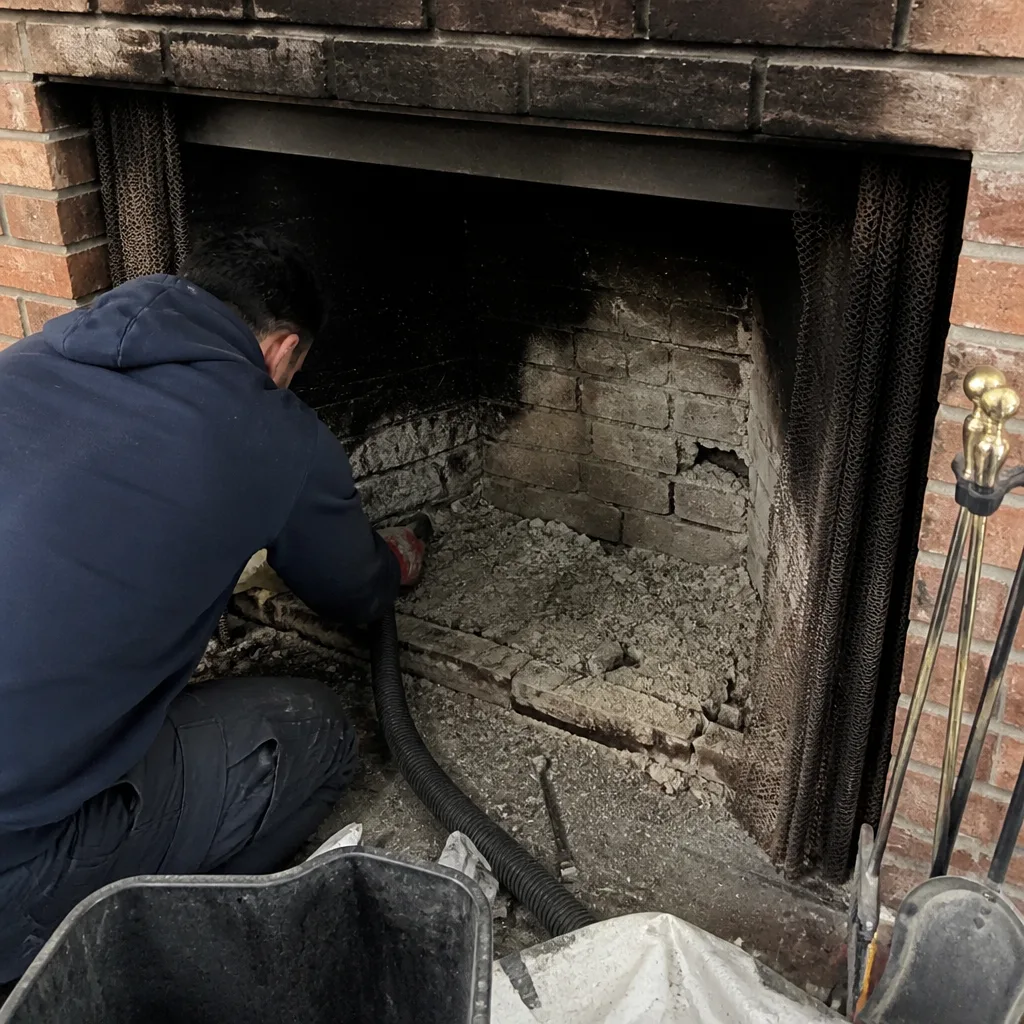 Before
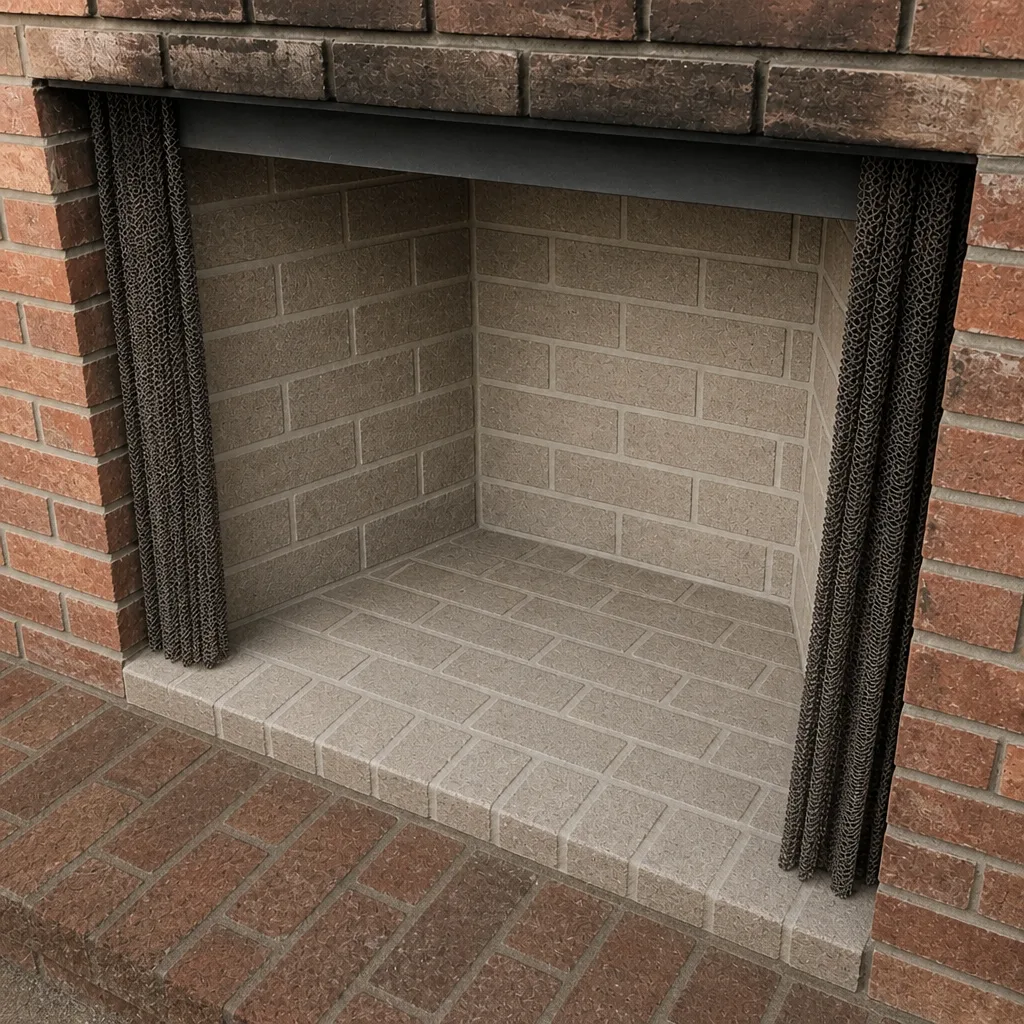 After
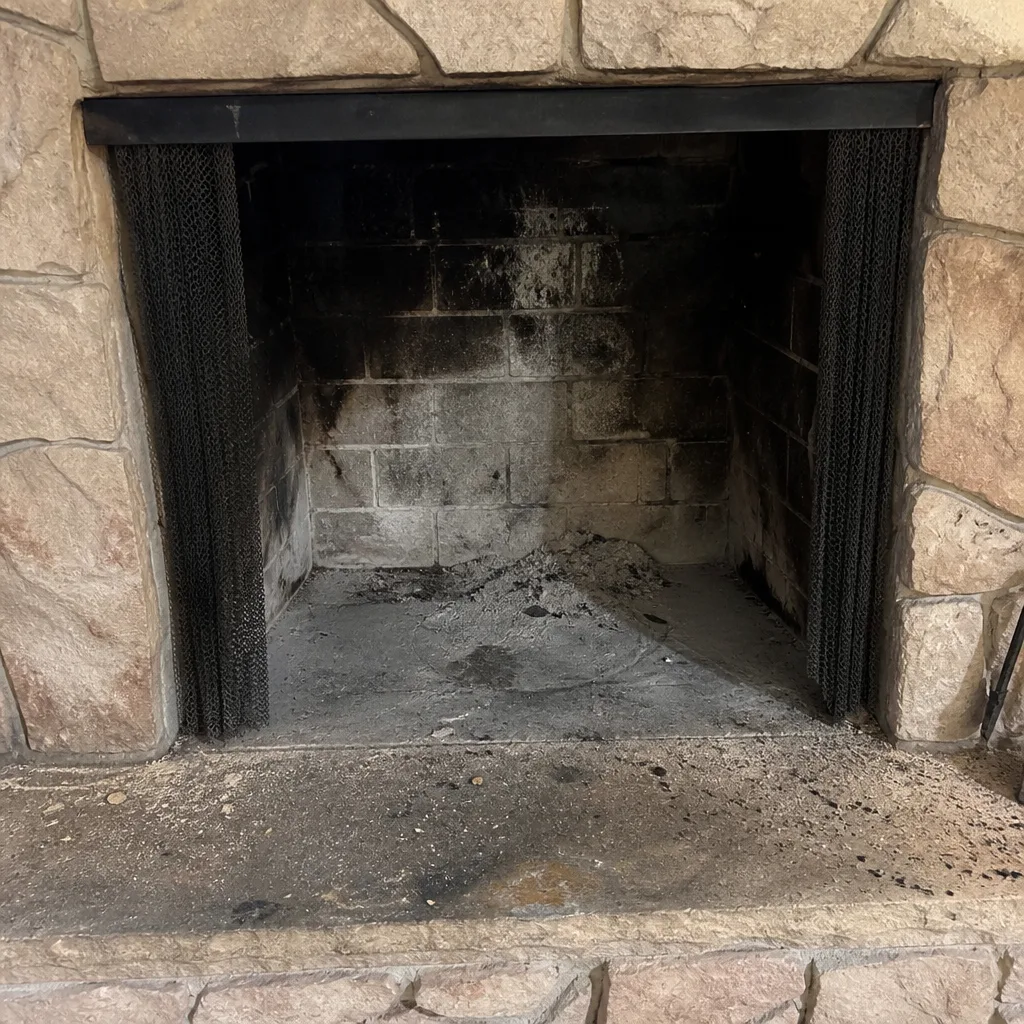 Before
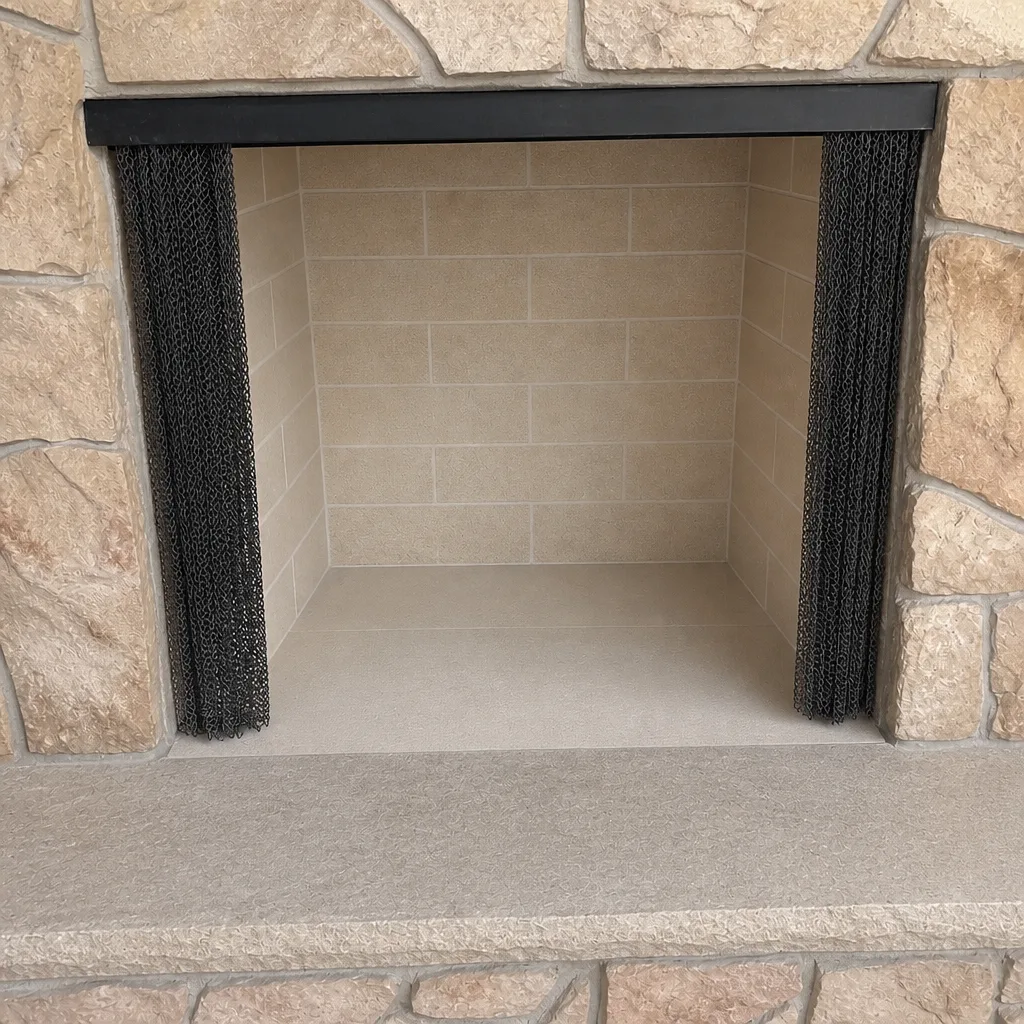 After
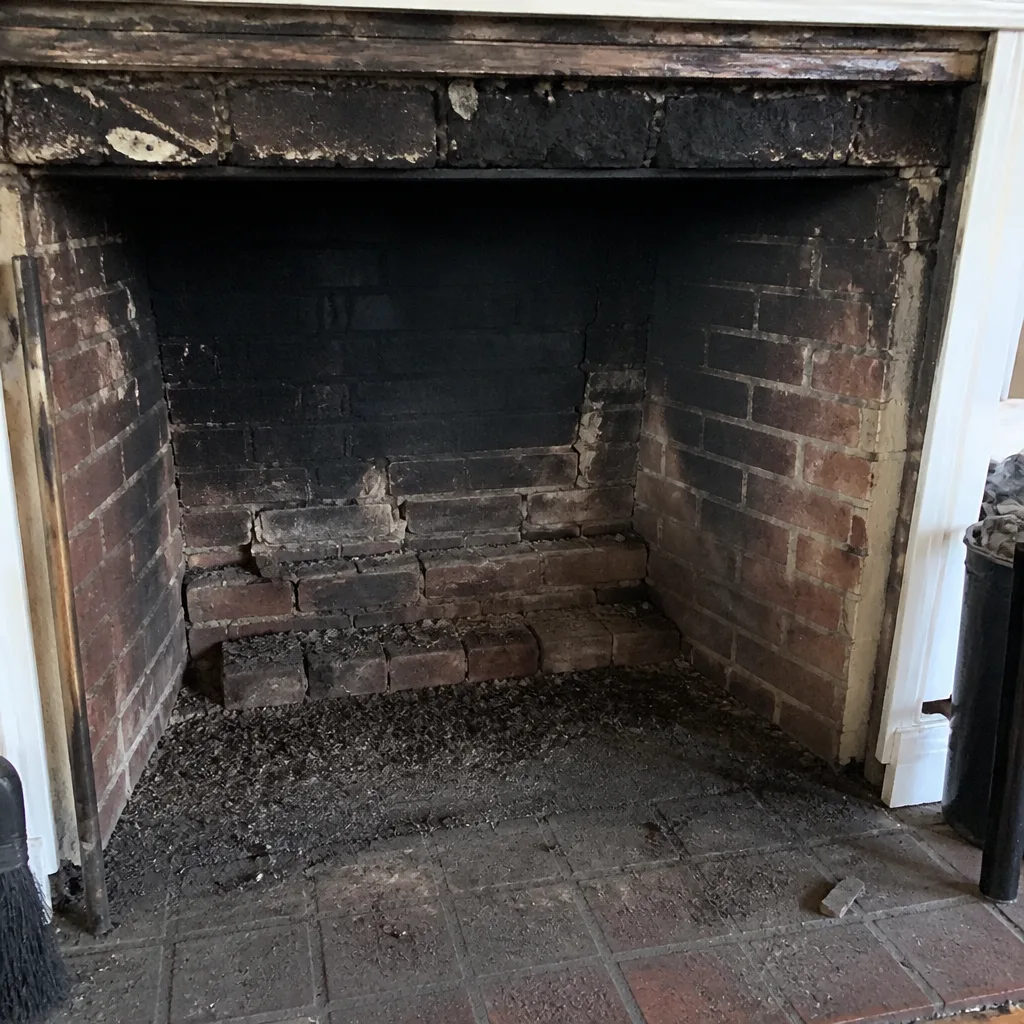 Before
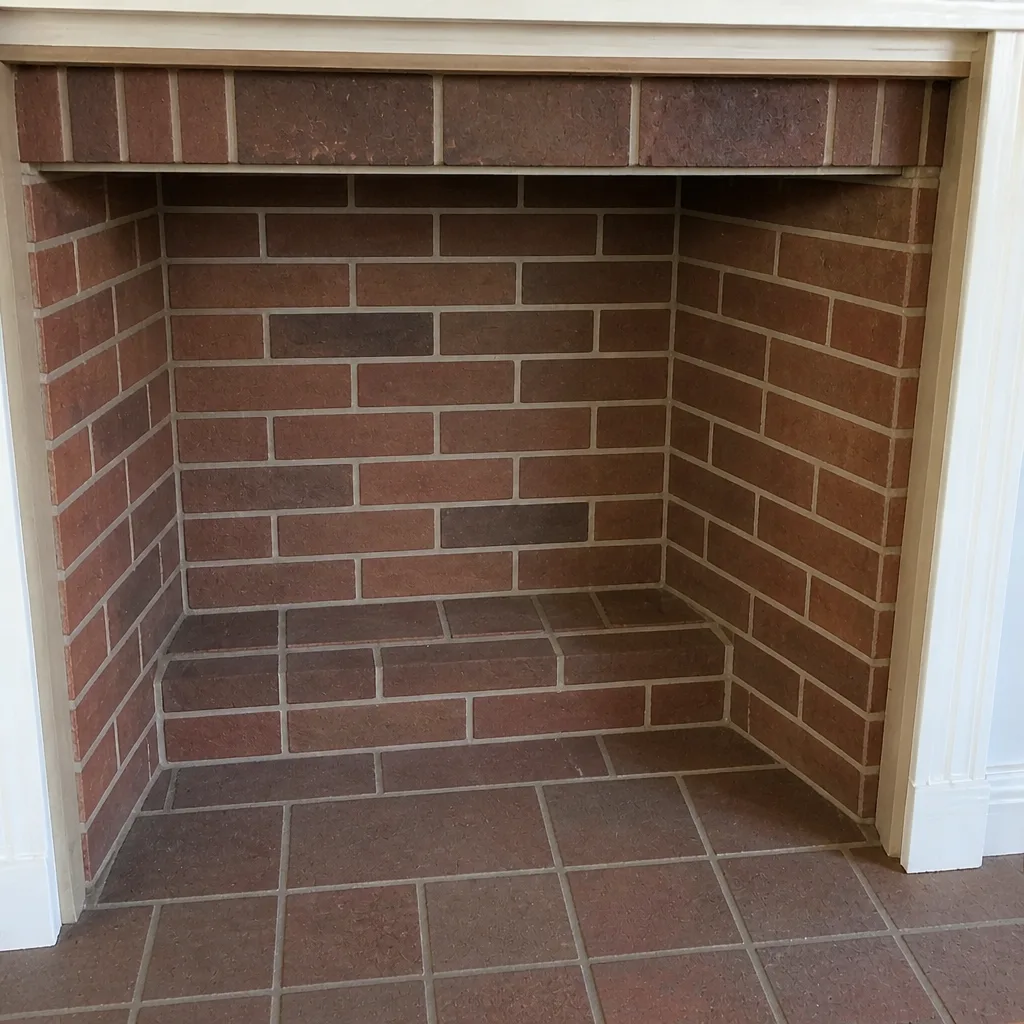 After