
Last updated November 25, 2026
 Sweep & inspection
 Caps & crowns
 Flue relining
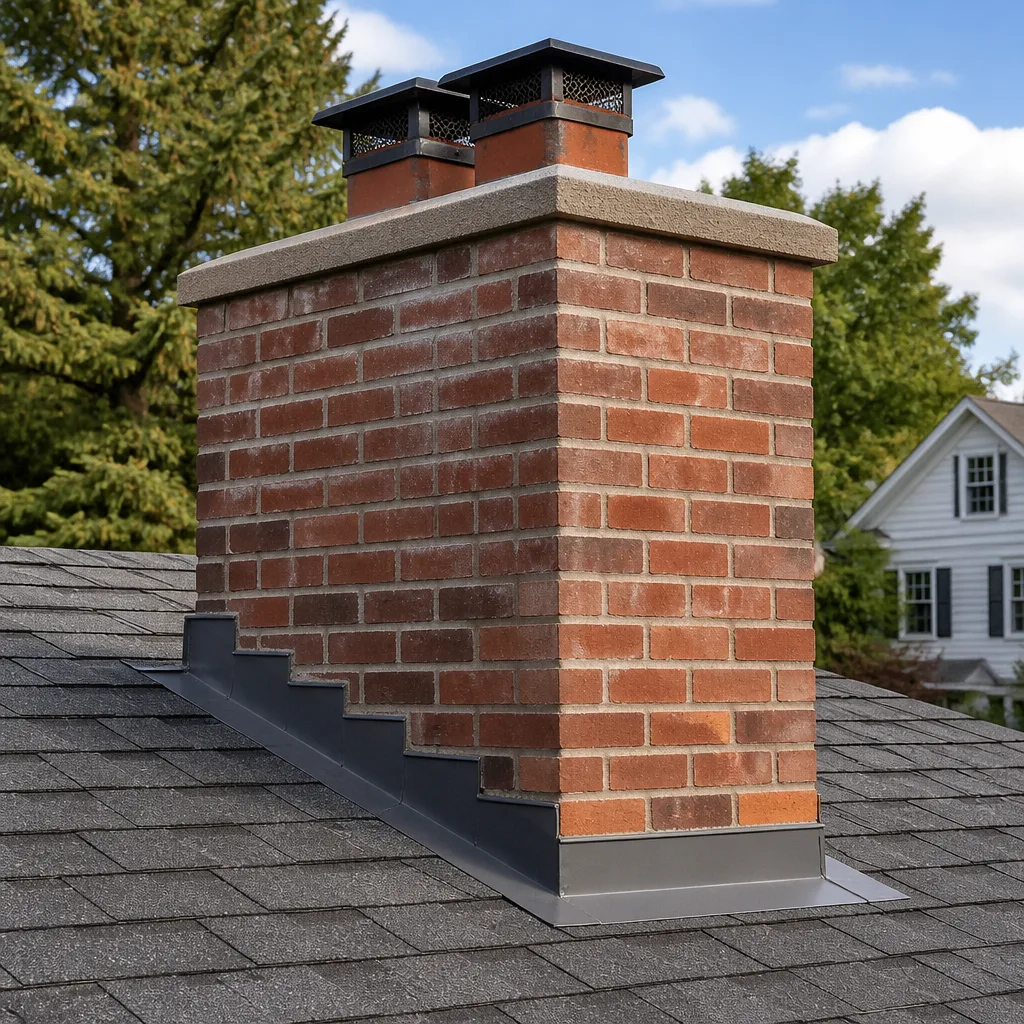 Masonry repair
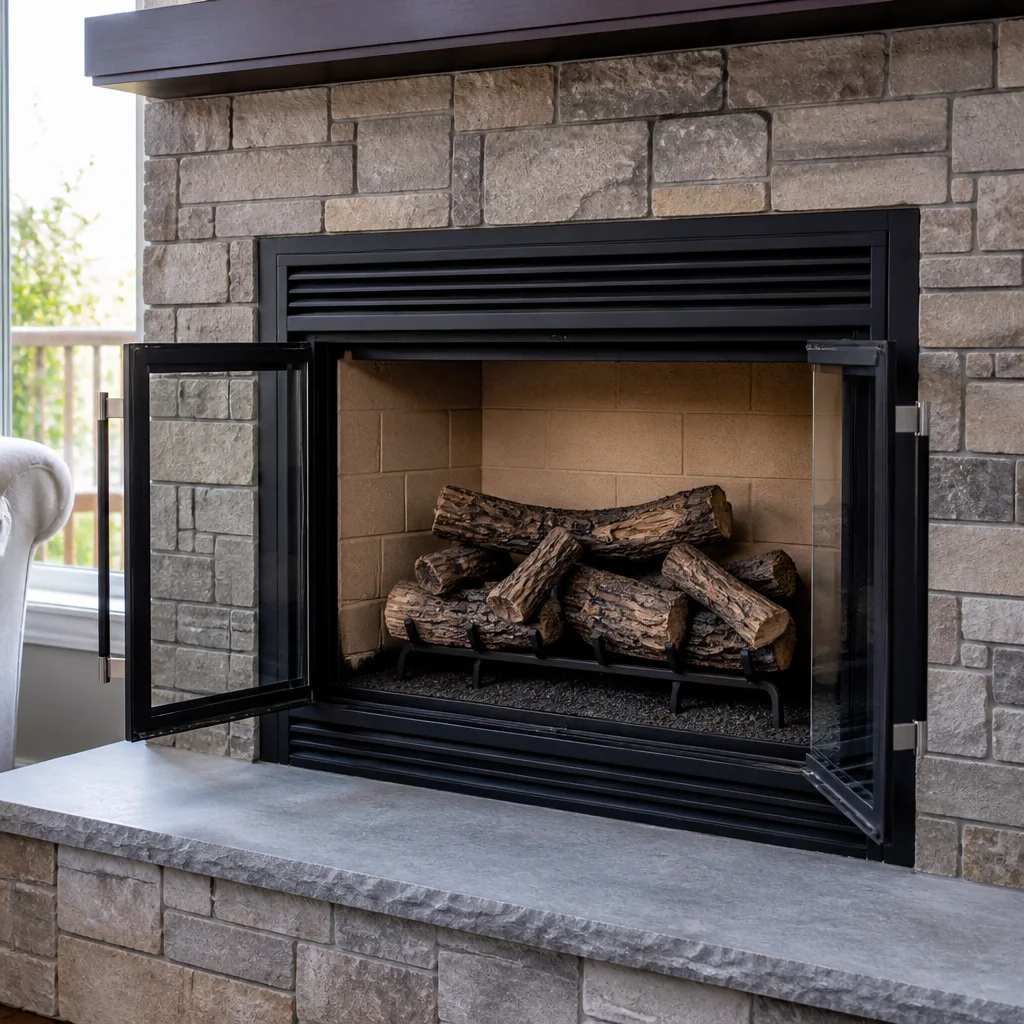 Gas fireplace service
Level 1 sweep and inspection to the NFPA 211 annual standard - flue, crown, cap, and flashing checked and photographed
Chimney sweep logs do not sweep chimneys. They loosen some creosote - which then falls where a brush and vacuum still have to collect it.
Chimney Sweep Troubleshooting in South Ozone Park: Common Problems and How to Fix Them
If your fireplace smoked fine for a decade and suddenly doesn’t, nothing inside the chimney changed. Your house did. Weatherstripping, replacement windows and added insulation are the culprits we find most often, and they never show up on a standard sweep invoice. A tight house holds its air, the chimney can’t pull, and smoke rolls out into the room from a flue that’s been swept and clean the whole time. In this guide we’ll walk through what’s actually happening, how to tell a creosote blockage from falling masonry, what a cracked flue tile sounds like compared to a loose damper, and which faults are everyday fixes versus reasons to shut the fire down. South Ozone Park homeowners live in exactly the kind of attached housing where these pressure problems show up most.
Quick Answer
Most chimney problems in South Ozone Park aren’t dirty chimneys – they’re draft problems caused by negative air pressure in tightly sealed homes, plus debris or spalling masonry landing on the smoke shelf. Start by checking for pressure issues (crack a window and see if the smoke reverses), then check the firebox for fallen material, and if the problem persists, book a Level 2 inspection before you burn again. Nothing should be repaired until an inspection shows what the actual fault is.
Styles & brands we work with
- Sweep & inspection
- Caps & crowns
- Flue relining
- Masonry repair
- Gas fireplace service
Table of Contents
- How does the stack effect cause smoke problems in South Ozone Park?
- How do you tell a creosote blockage from a masonry spall blockage?
- What sound is your chimney making, and what does it mean?
- Why do tight homes backdraft and how do you diagnose it?
- The troubleshooting decision tree: DIY, inspection, or shutdown
- Hairline flue cracks and the HeatShield resurfacing option
- Why a proper sweep comes before any repair
- What Level 1, Level 2 and Level 3 inspections actually cover
How does the stack effect cause smoke problems in South Ozone Park?
The stack effect is the reason a warm chimney pulls air up and out. Warm air is lighter than cold air, so it rises through the flue, and cooler air is drawn in from the room to replace it. That’s the whole engine of a wood-burning fireplace. When the stack effect stalls, smoke doesn’t know which way to go – and it usually picks your living room.
South Ozone Park’s row houses and attached colonials were built close together, often sharing a party wall, and many were designed when houses leaked air freely. Draft depended on that leakage. Replace the windows, add weatherstripping, insulate the attic, and the house becomes almost airtight. The fireplace is still trying to pull air but there’s nowhere for it to come from. So the flue reverses and pushes smoke down instead of drawing it up.
Here’s what makes South Ozone Park especially prone to this:
- Attached walls. Shared party walls mean less exterior surface for air to infiltrate, so less replacement air.
- Modern window weatherstripping. Older casement and double-hung windows leaked by design. Replacements don’t.
- Whole-house fan and range hood interference. A kitchen or bathroom exhaust fan pulling 100 cubic feet a minute can starve a fireplace of air on its own.
- Tightly fitted storm doors. Another common retrofit that reduces infiltration.
- Chimney height relative to neighbouring rooflines. A short chimney on a row house sits close to a taller neighbour’s ridge, which can put the flue in turbulent or negative-pressure air.
Diagnosing the stack effect starts with one test: with the fireplace cold and a small fire just lit, crack a nearby window an inch. If the smoke reverses direction within a minute or two, you have negative pressure. If it doesn’t, the problem is inside the chimney and you can move down this troubleshooting path. That one test tells you more than a whole page of symptom-checking.
How do you tell a creosote blockage from a masonry spall blockage?
Two very different blockages cause a very similar symptom – smoke in the room. But they behave differently on the way, and the fix and the urgency are different. Learning the difference is the single most useful piece of troubleshooting a South Ozone Park homeowner can do.
Creosote blockage: gradual, building smoke, sooty smell
Creosote builds up in layers, mostly at the smoke chamber and the top of the firebox where the flue narrows. The symptom is gradual. At first, the fire just doesn’t draw as well as it used to. You see a little smoke rolling out when you first light. Within weeks, the fireplace needs to be “warmed up” longer before it draws. You’ll notice a stronger sooty smell on mild damp days when the fire isn’t lit. That smell is a strong hint – creosote absorbs moisture and lets it go slowly.
The important urgency point: creosote is the fuel of chimney fires. A severe glazed build-up is more than a draft problem; it’s a fire risk. A proper chimney sweep at the right interval, usually annually during heating season, clears the build-up before it gets to that stage.
Masonry spall blockage: sudden, with debris in the firebox
Masonry spalling is a piece of the flue lining, the smoke chamber, or the crown that has cracked and dropped. The symptom is sudden. The fireplace draws fine, then doesn’t. You open the firebox door and find flakes or chunks of grey-white material sitting on the floor of the firebox or on the smoke shelf. The smoke problem arrives all at once, not gradually.
Spalling is a different problem from creosote because the material has weight. A chunk of flue tile can partially block the flue, causing an updraft to divert into the room, or it can wedge and force hot gases out through a crack. If you see debris in the firebox after a fire, stop using the fireplace until a technician can look at it. That’s not a swept-clean problem, it’s a structural one.
Here’s how to tell them apart in two minutes:
- Look in the firebox for debris – if there’s material there, it’s spalling.
- Check the smell – a persistent sooty smell points to creosote.
- Note the timing – gradual decline is creosote, sudden onset is spalling.
- Check the fire – a crackling, popping sound from inside the chimney is a warning sign of flue damage.
What sound is your chimney making, and what does it mean?
Sound tells you more about a chimney than most homeowners realize, and it’s a huge help on a phone call because it’s describable. When you call, listen carefully and tell the technician what you hear. It shortens diagnosis and helps the dispatcher send the right tools.
Cracked flue tile sound
A flue tile that has developed a hairline or wider crack produces a sound like a sharp metallic click or a series of clicks when the fire heats up and cools down. It’s the tile contracting unevenly because a crack has broken the thermal envelope. Often it’s intermittent – not every fire, not every time. And it usually shows up first on a cold start, then quiets once the heat reaches a steady level.
Loose damper sound
A loose or improperly seated damper produces a rattle, a low metallic clank, or a vibration when the fire draw pulls air across the damper’s edge. A damper that’s stuck partially open can also produce a whistling sound as air squeezes past. If you can push the handle into place and the sound stops, that’s a damper issue. If the sound carries on regardless of the handle, it points elsewhere.
What other sounds mean
- A dull boom or whoomph when lighting: a small explosion of gas igniting – often draft-related or too much fuel and paper, sometimes a sign of a partly blocked flue.
- A rumbling roar mid-fire: a chimney fire. Get out of the house and call 911.
- Whistling along the top of the chimney: wind-driven pressure across the flue opening, often a sign of a missing cap or an incorrectly fitted crown.
A loose damper is a real but fixable fault, and on a cold start it will make the fire hard to control. A crack in the flue tile is more serious and should be diagnosed with a camera. If it’s stage-one damage – a hairline crack that hasn’t opened into a channel – HeatShield ceramic resurfacing can often address it without a full reline. If it’s exposed masonry or a gap wider than a hairline, the answer changes.
Why do tight homes backdraft and how do you diagnose it?
Backdrafting is the word for the exact condition described at the top of this guide – a chimney that pulls down instead of up. It’s a pressure problem, not a cleaning problem, and the diagnosis is a step-by-step process South Ozone Park homeowners can run themselves before calling anyone.
- Crack-a-window test. With a cold fireplace and a just-lit fire, open a nearby window an inch. If the smoke reverses, you have negative pressure.
- Fan test. Turn off the kitchen and bathroom exhaust fans. If draw improves, the pressure deficit is from mechanical venting.
- Flue temperature test. Hold your hand over the firebox opening (carefully) – if you feel cold air spilling down, the chimney is in a reverse state.
- Chimney-cap check. A cap that’s the wrong size or that’s been partially blocked by nesting birds or leaf debris can reverse a chimney even when the house is fine.
- Duct leak check. A forced-air furnace with leaky return ducts can add to negative pressure. A technician walks through this with you.
- Neighbour’s chimney test. In a row of attached houses, a taller chimney nearby can put yours into the wake of its plume, causing a turbulence effect. This is one of those South Ozone Park-specific realities – what works on a detached house doesn’t always transfer to a row house.
Once you know it’s negative pressure, the practical fixes split two ways. First: leave a small air source open when burning – a window cracked an inch, or better, a dedicated combustion-air vent added to the room. Second: install a draft-inducing fan at the chimney cap. A draft booster sits inside the cap and pulls a steady flow up the flue, breaking the pressure stall. In our experience they solve maybe seven out of ten negative-pressure cases in attached houses, but they’re not a substitute for a proper chimney cap & crown that seals the flue from weather. A booster can’t compensate for a flue that’s structurally compromised.
The troubleshooting decision tree: DIY, inspection, or shutdown
Every chimney symptom belongs in one of three buckets: manage it yourself, book a Level 2 inspection, or stop burning immediately. Use the following decision tree to sort your own symptom into the right bucket and skip the guesswork.
Bucket one – DIY-manageable
- Smoke rolls out at startup and stops once the fire warms up: negative pressure. Try the crack-a-window test and a draft booster.
- The fire draws but not strongly: check the firewood moisture and stop burning unseasoned wood.
- A whistling or downdraft-style whine during wind: check the cap and crown for damage or missing components.
- A damper handle feels loose: the damper itself may need adjusting or replacing, but a sweep can look at it when they’re next on site.
Bucket two – book a Level 2 inspection
These symptoms point to a fault inside the flue that needs a camera:
- Sudden smoke reversal that isn’t fixed by the window test.
- Debris appearing in the firebox after a fire.
- A dull metallic clicking sound that repeats on a cold start.
- A persistent sooty smell even when the fireplace isn’t lit.
- Any reason to suspect the flue tile is cracked – a bump, a chimney fire in the past, or visible damage at the top.
- A property sale, a new appliance, or major renovation in the house.
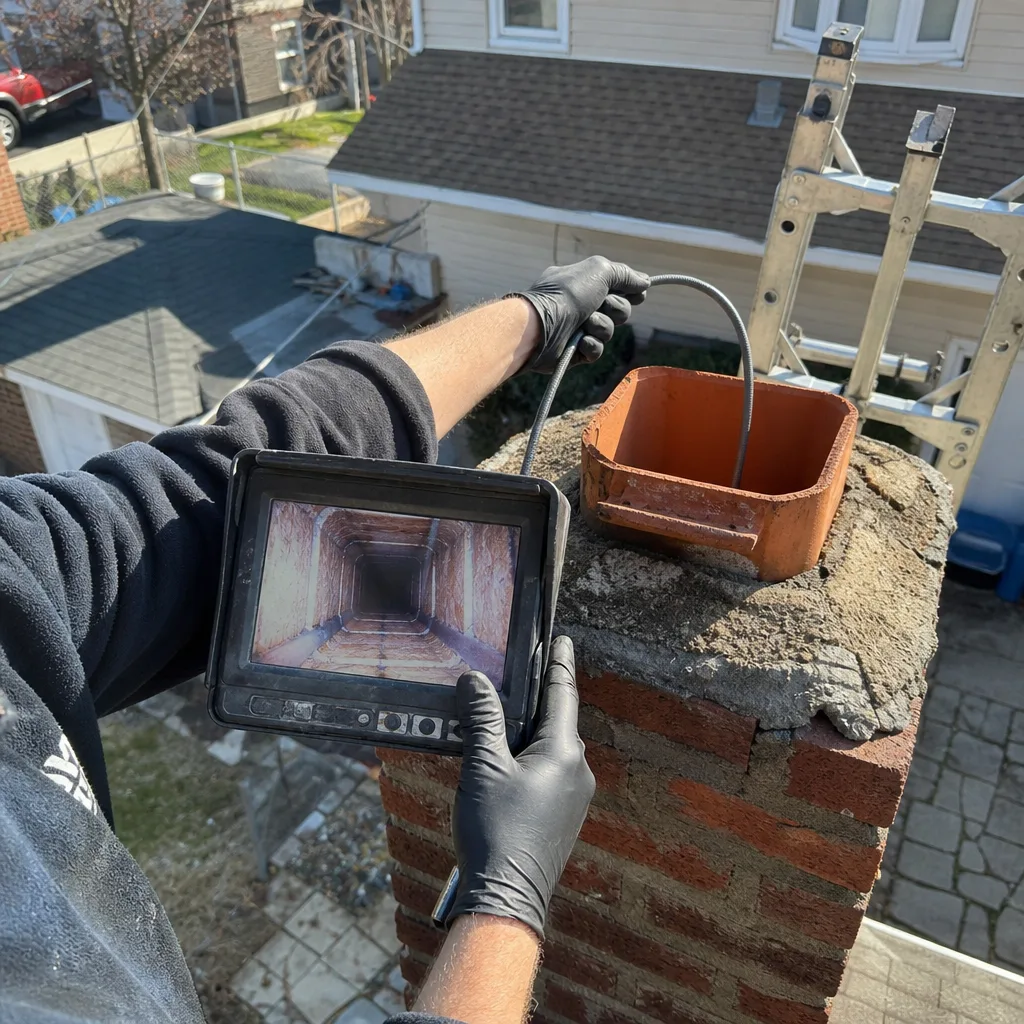
A Level 2 inspection is the standard scope for a suspected fault because it includes a video camera run of the flue. It shows the inside of the flue, the smoke chamber and the transition into the firebox, and that’s what tells a technician whether the problem is a creosote layer, a crack, or a displacement.
Bucket three – shutdown
Stop burning and call for immediate help if:
- You hear a rumbling roar from inside the chimney during a fire – possible chimney fire.
- You see smoke entering the room from around the chimney breast or through mortar joints.
- The carbon monoxide alarm sounds. Get out of the house, call 911, and don’t relight until a technician clears the system.
- A visible crack runs through the brickwork of the chimney stack.
- A chunk of flue tile or masonry drops into the firebox while the fire is lit.
- A metallic rattle continues even after you’ve settled the damper handle.
For anything in Bucket 3, the priority isn’t troubleshooting – it’s safety. Everything else can wait for diagnosis. Sort the symptom first, then book accordingly.
Hairline flue cracks and the HeatShield resurfacing option
A hairline flue crack doesn’t have to mean a full reline. If the crack hasn’t yet opened into a channel, HeatShield Cerfractory Flue Sealant can often resurface the flue from the inside, repairing the damage without demolishing the surrounding chimney structure.
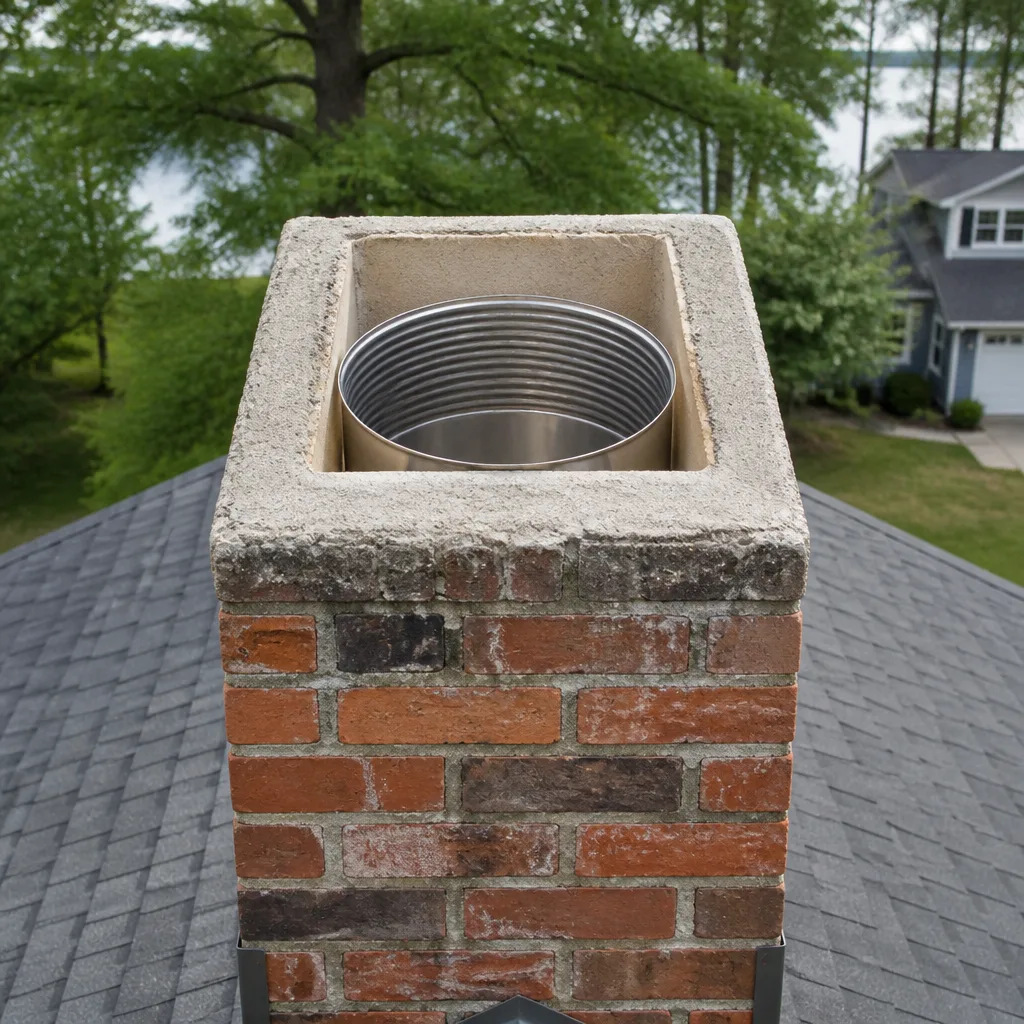
That’s the difference between stage-one damage and stage-two. Stage one is a hairline – visible on camera, not yet wide enough to matter structurally. Stage two is when the crack has widened so the heat and gases can reach the masonry behind the tile. Once you’re at stage two, resurfacing won’t hold. The answer moves to a full reline using a DuraFlex flexible liner, which slips down the flue and gives the chimney a new, code-compliant, UL-listed interior without knocking down the surrounding structure.
How we approach this in South Ozone Park:
- Inspection first. Every recommendation comes from a diagnostic video run, not a guess.
- HeatShield for stage-one cracks. Resurfacing is a repair of the liner you have, and it saves the cost of a demolition job.
- DuraFlex flexible liner for stage-two or fully failed flues. It’s an industry-standard product line, and a technician who knows it is familiar with fitting it to the specific internal dimensions of the flue.
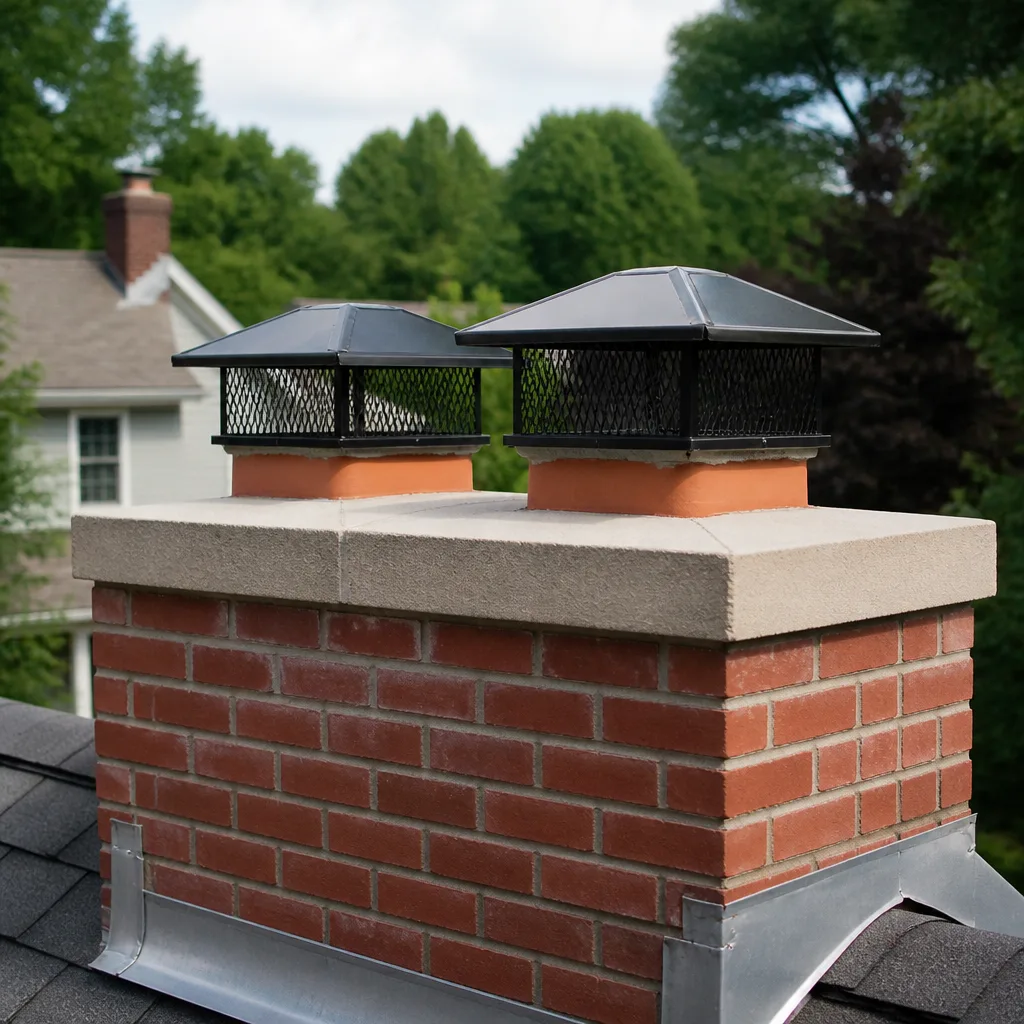
- Olympia Chimney parts for the top end. The cap and crown are purpose-built components, not retrofitted hardware-store substitutes. A cap that isn’t sized and sealed to the flue lets water and animals in, which is what causes the crack in the first place.
Whether resurfacing is right for your chimney depends entirely on the camera image. That’s why we don’t quote a liner over the phone. What we can tell you is that a lot of the liner replacements we see quoted elsewhere could have been resurfaced if they’d been caught earlier – which is why we recommend an annual inspection rather than waiting for the fire to stop working.
Why a proper sweep comes before any repair
No repair should be recommended without a sweep first, because a chimney full of creosote tells you nothing useful about the underlying structure. Once the flue is clean, the technician can see whether the draw problem is a residue issue or a structural one.
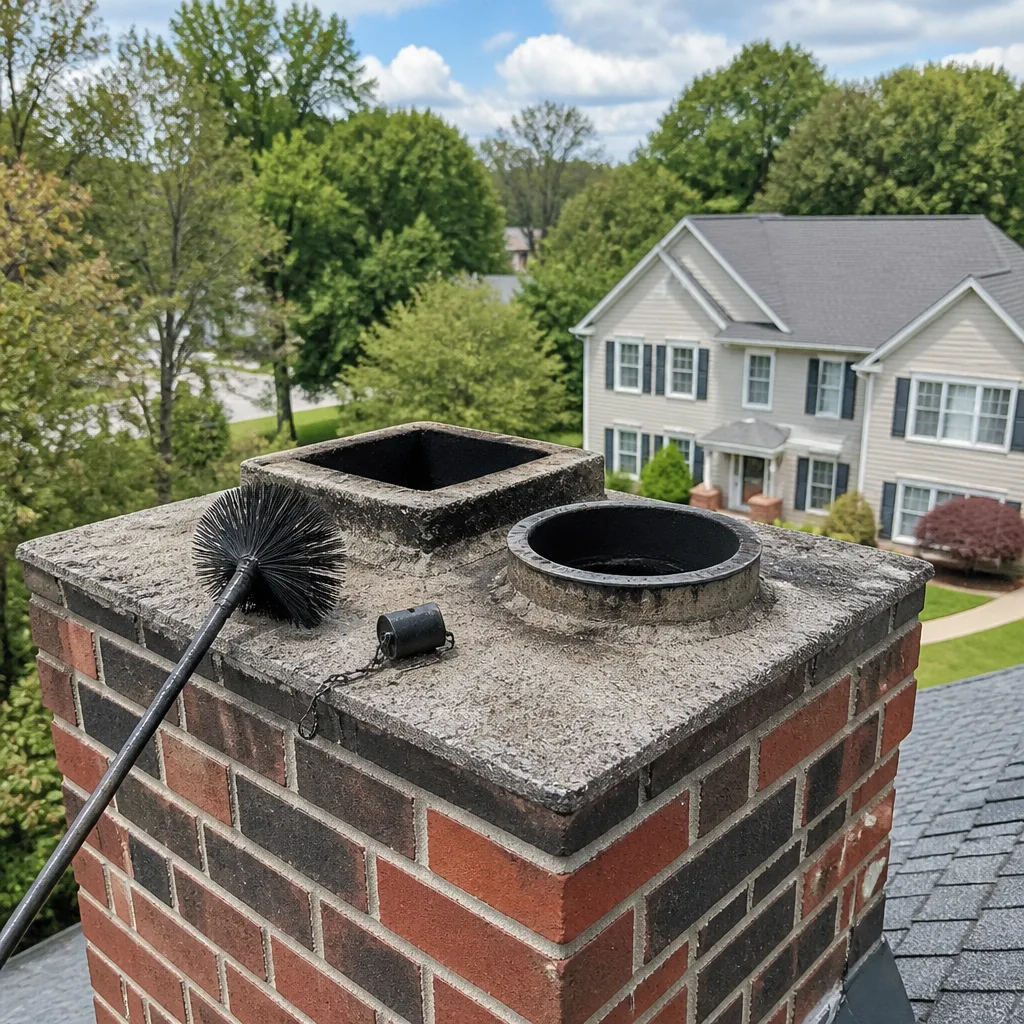
A proper sweep is more than a brush down the flue. It involves clearing the smoke chamber, the smoke shelf behind the damper, the firebox and the top of the flue, because that’s where the partial blockages actually form. A quick brush-and-go leaves the creosote nodules at the top of the smoke chamber, and those are precisely what cause smoke rollout. If your fire was smoking before the sweep and still smokes after, the sweep was incomplete.
In South Ozone Park, the sweep is also the moment a technician can run a quick visual pass over the chimney crown, the cap, and the top three feet of the flue. That’s the part of the system that weather attacks first. When the crown is cracked and water gets into the masonry, freeze-and-thaw over the winter months opens the joints and starts the spalling that eventually drops tile down the flue. A sweep-and-cap visit is a cheaper repair than a masonry one further down the line, because it stops the water before it starts the damage.
If you haven’t had a sweep in over a year and you burn regularly, that’s the first step. It’s also the moment to book the Chimney Sweep South Ozone Park visit and get a proper inspection on the same trip, so the technician can look at the whole system while the firebox is open.
What Level 1, Level 2 and Level 3 inspections actually cover
The three inspection levels come from a national standard, and knowing which level applies to your problem stops a technician from over-scoping or under-scoping the job. In practice, most South Ozone Park homeowners need a Level 1 or Level 2. Level 3 is for a known problem that requires opening up the chimney.
Level 1 – the routine annual inspection
A Level 1 inspection covers the readily accessible parts of the system: the firebox, damper, smoke chamber, flue from the top and bottom, chimney cap and crown. It’s visual only, no camera. It’s the right scope for an annual check on a system that’s working and hasn’t changed. If there’s a fault, a Level 1 inspection notices it and recommends upgrading.
Level 2 – the diagnosis-level inspection
A Level 2 inspection adds a video camera run of the flue, and it’s required when the system has changed – a new appliance, a change of fuel, a property transfer, a chimney fire, or an earthquake or severe weather event. It’s also the correct scope for any fault falling into Bucket 2 of the decision tree. The camera shows the inside of the flue, which is exactly what you need to distinguish a creosote layer, a hairline crack, or a channel that needs a full reline.
Level 3 – the structural inspection
A Level 3 inspection opens up the chimney – removing a wall section or dismantling the crown – to inspect concealed areas. It’s only warranted when the problem is confirmed and the access can’t be achieved any other way. In most South Ozone Park homes it’s a last resort, not a first step.
If you’re not sure which level you need, describe the symptom and ask. A specialist should tell you which level matches the problem, not send the most expensive scope by default. Every job at our company starts with an inspection so that chimney repair recommendations come from diagnosis rather than guesswork. Repairs are described in writing, with the specific part named – DuraFlex, HeatShield, Olympia Chimney, Gelco, Famco or Copperfield – because you should know what’s going into your chimney before you agree to it.
Common Mistakes to Avoid
- Blaming the chimney for a house problem. If your fireplace smoked fine ten years ago and now doesn’t, the odds are the house got tighter, not the chimney dirtier. Don’t buy a reline before you’ve run the crack-a-window test.
- Sweeping before inspecting. A sweep cleans. An inspection diagnoses. Booking a sweep when the problem is a dropped chunk of flue tile means the sweep clears the debris but leaves the underlying fault in place.
- Burning soft or unseasoned wood. Green wood produces far more creosote per hour than seasoned wood, and in South Ozone Park’s frequent damp spells, wood stored outdoors absorbs moisture quickly. Store your firewood covered and off the ground, and don’t burn anything that still feels heavy for its size.
- Lighting a fire before the flue is warmed. In a row house, a cold flue is a stubborn flue. Roll up a sheet of newspaper, light it, hold it near the open damper for a minute, then build the fire. Skipping that step and lighting the fire directly is the most common cause of smoke that clears up after twenty minutes anyway.
- Calling a generalist when the flue needs a camera. A chimney sweep who doesn’t run a camera and doesn’t know the difference between a stage-one hairline crack and a stage-two channel will either miss the crack or over-quote the repair. Ask what products they install and whether they resurface with HeatShield.
- Ignoring a suddenly noisy chimney. A new metallic click on a cold start is a symptom. Don’t wait for the chimney to fail to draw, because by then the crack has widened and resurfacing may not be an option.
- Assuming a cap is a cosmetic add-on. A chimney cap isn’t decoration. It keeps rain, birds and squirrels out of the flue, and it’s a purpose-built component sized to that flue. A crop of leaf debris or a nesting bird is one of the less obvious causes of a chimney that suddenly stops drawing in the fall.
See the difference
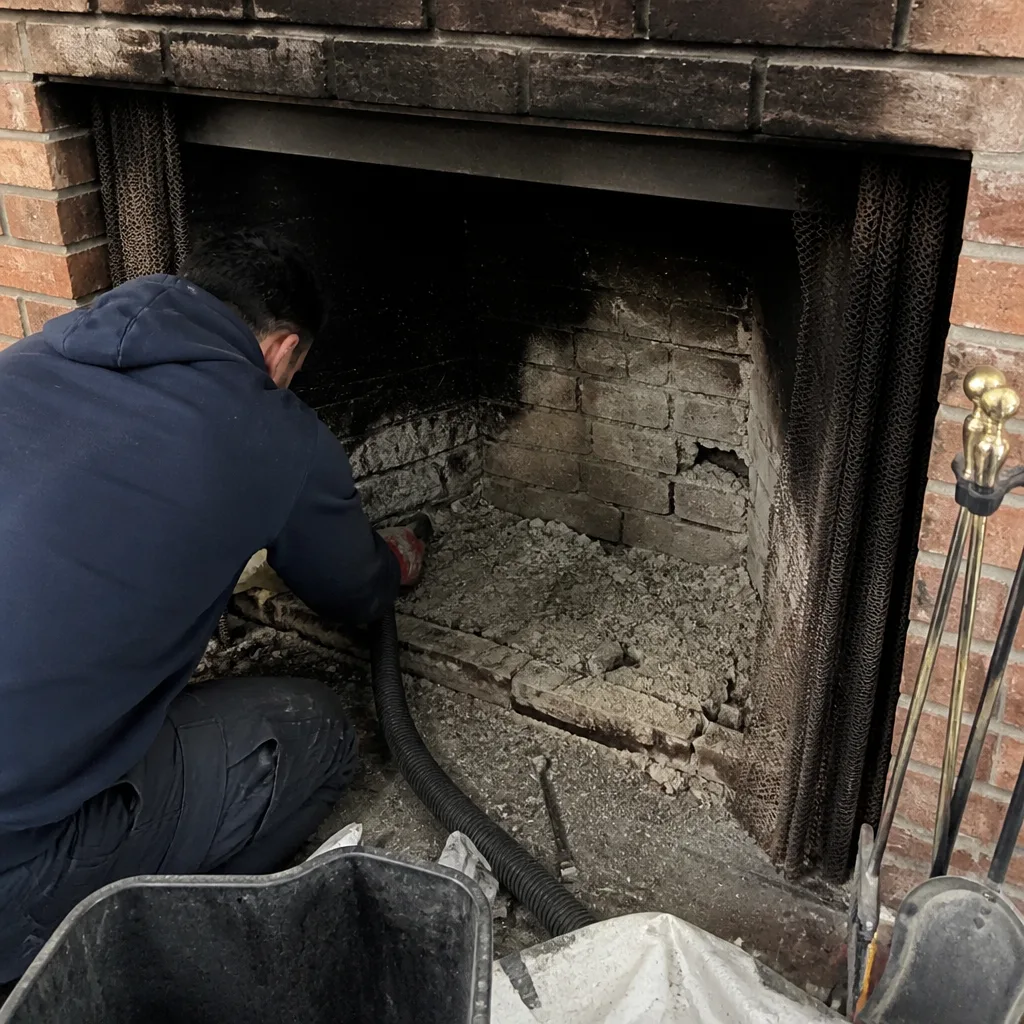 Before
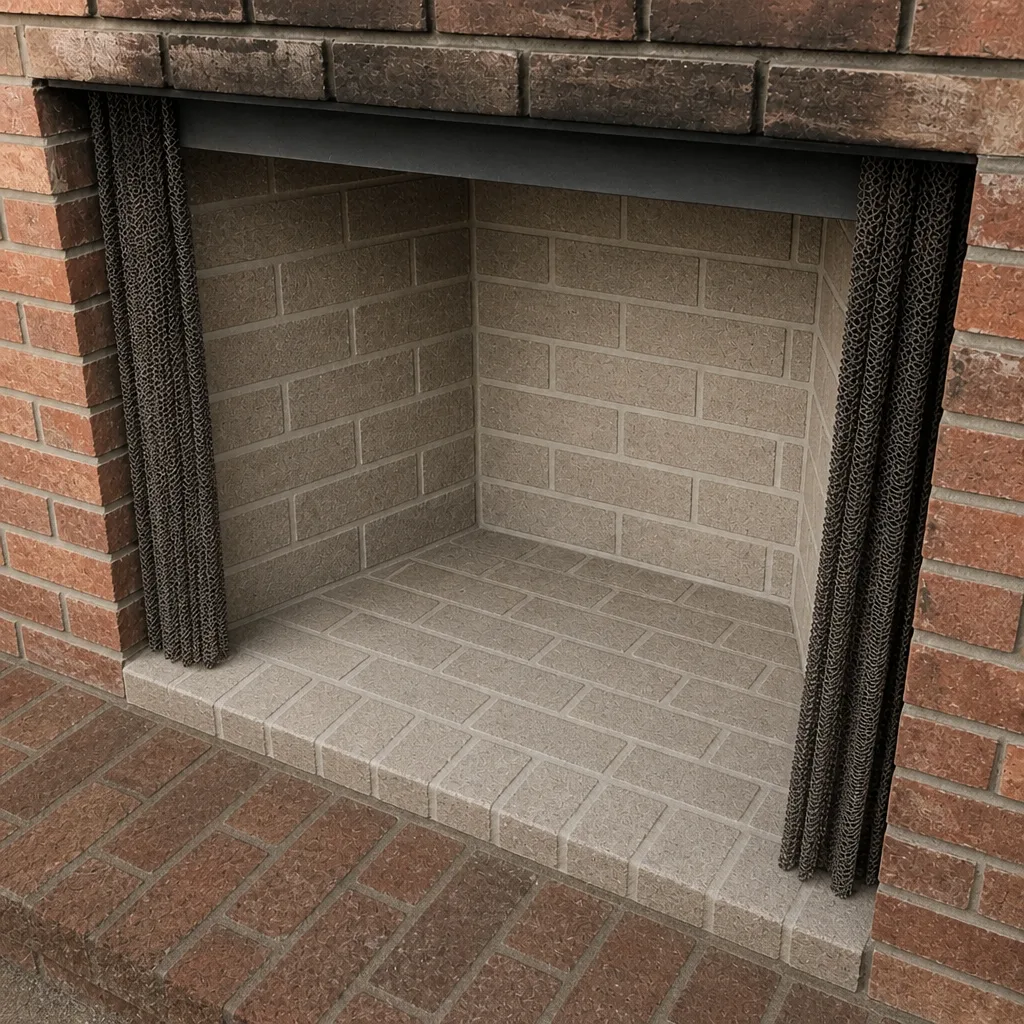 After
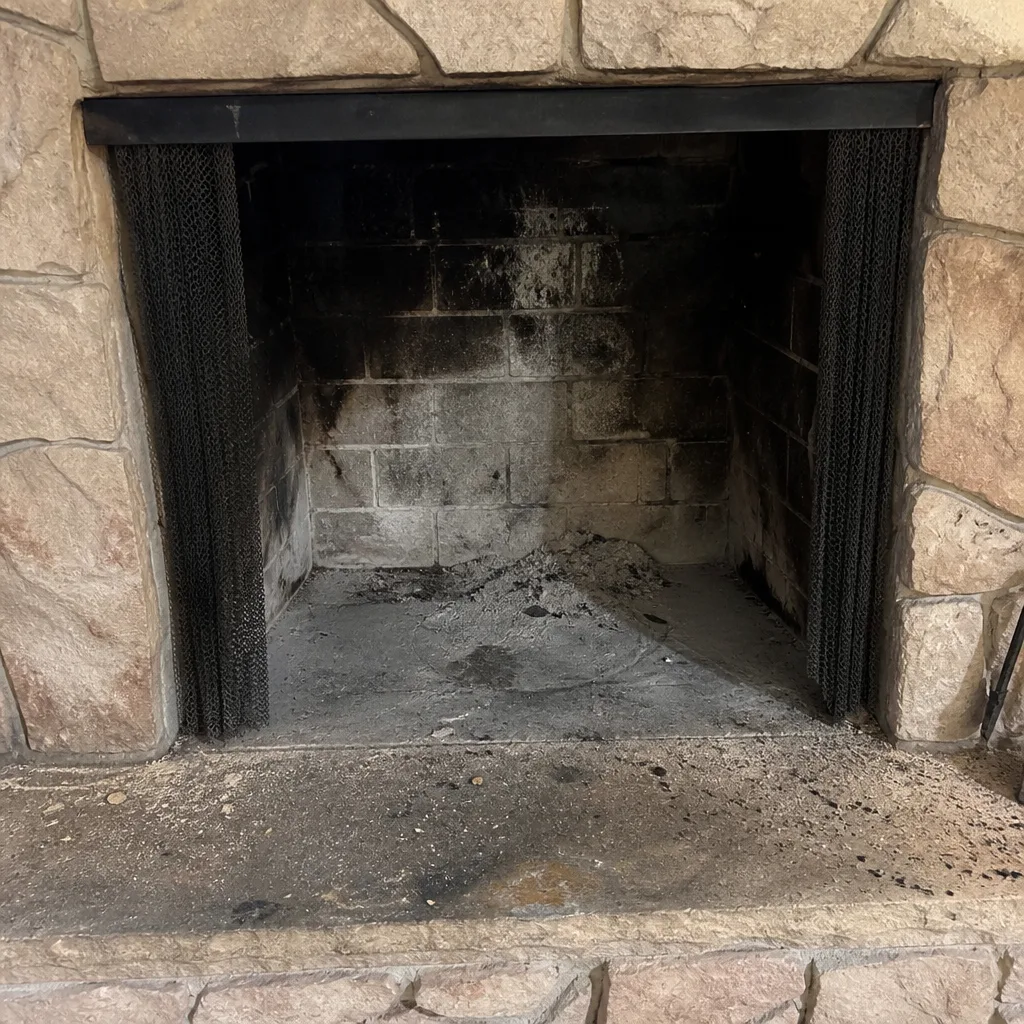 Before
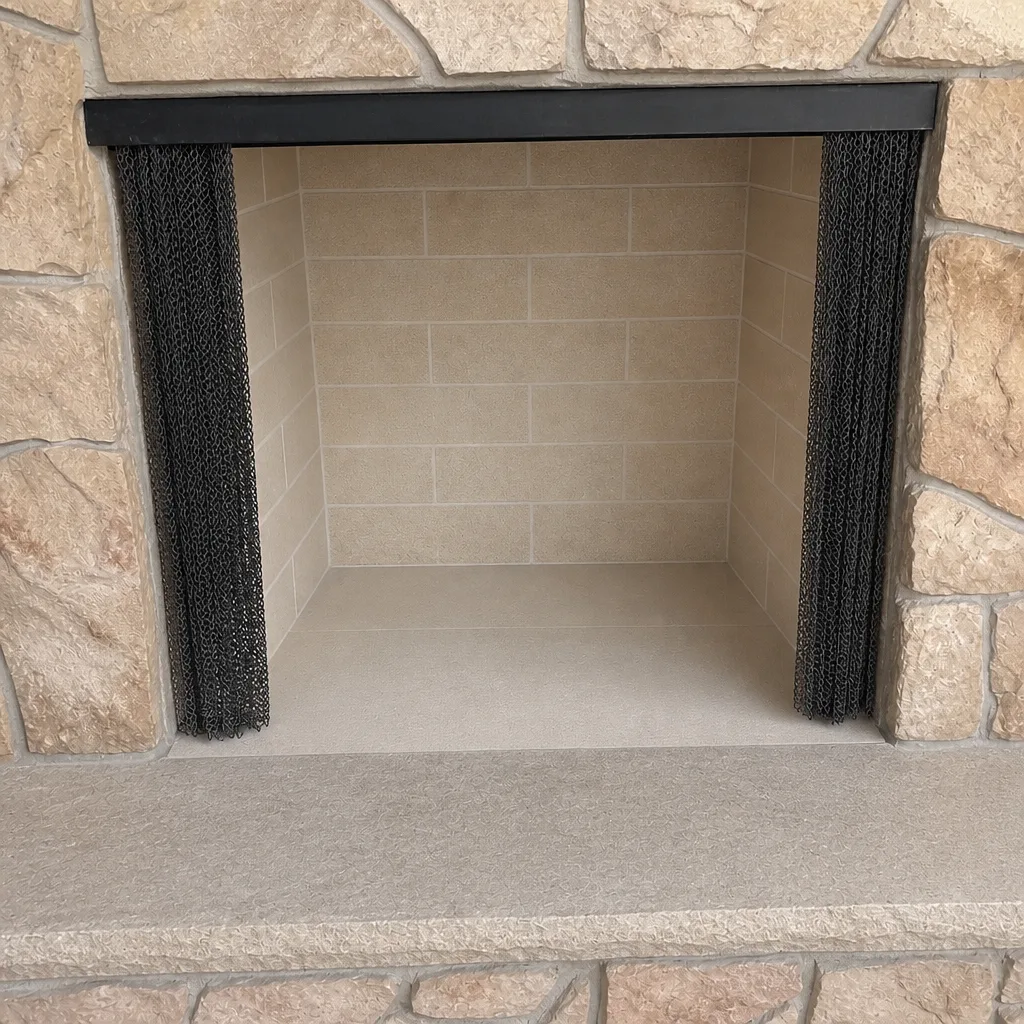 After
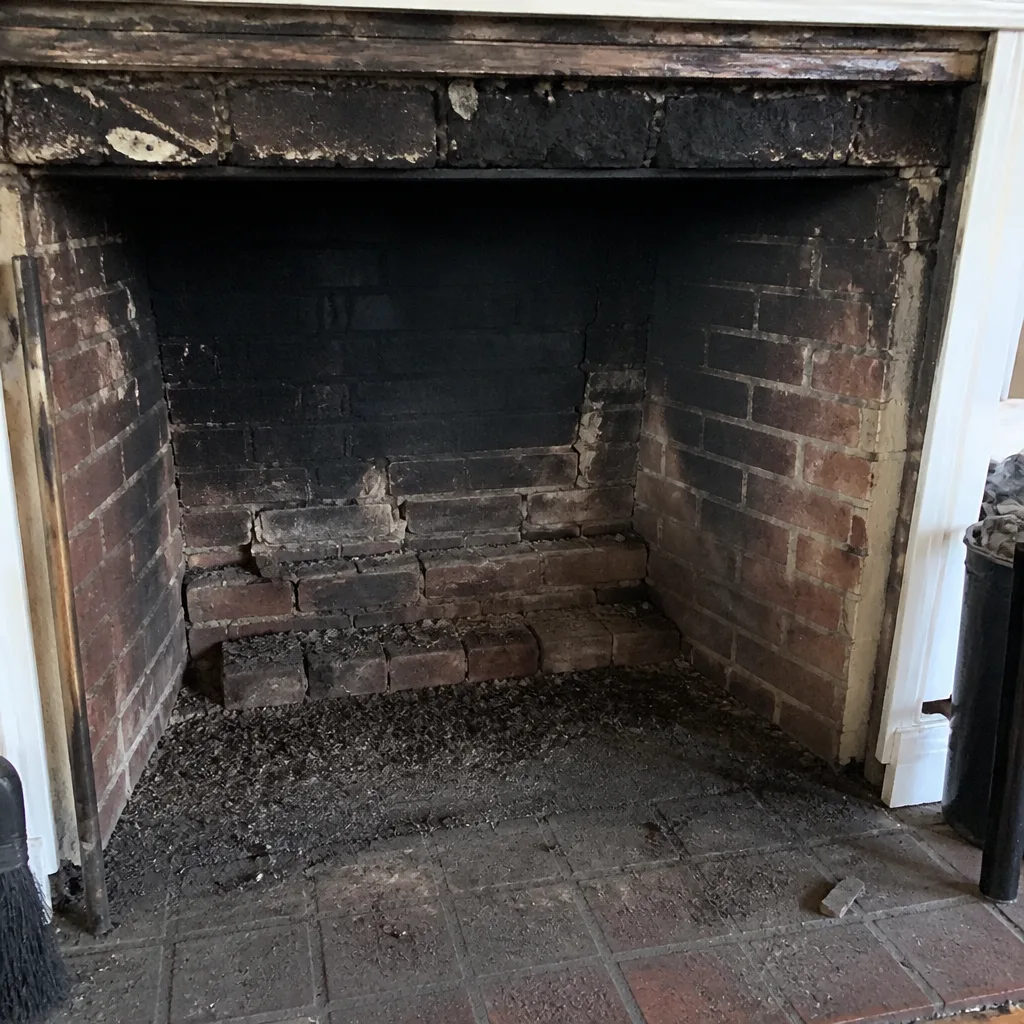 Before
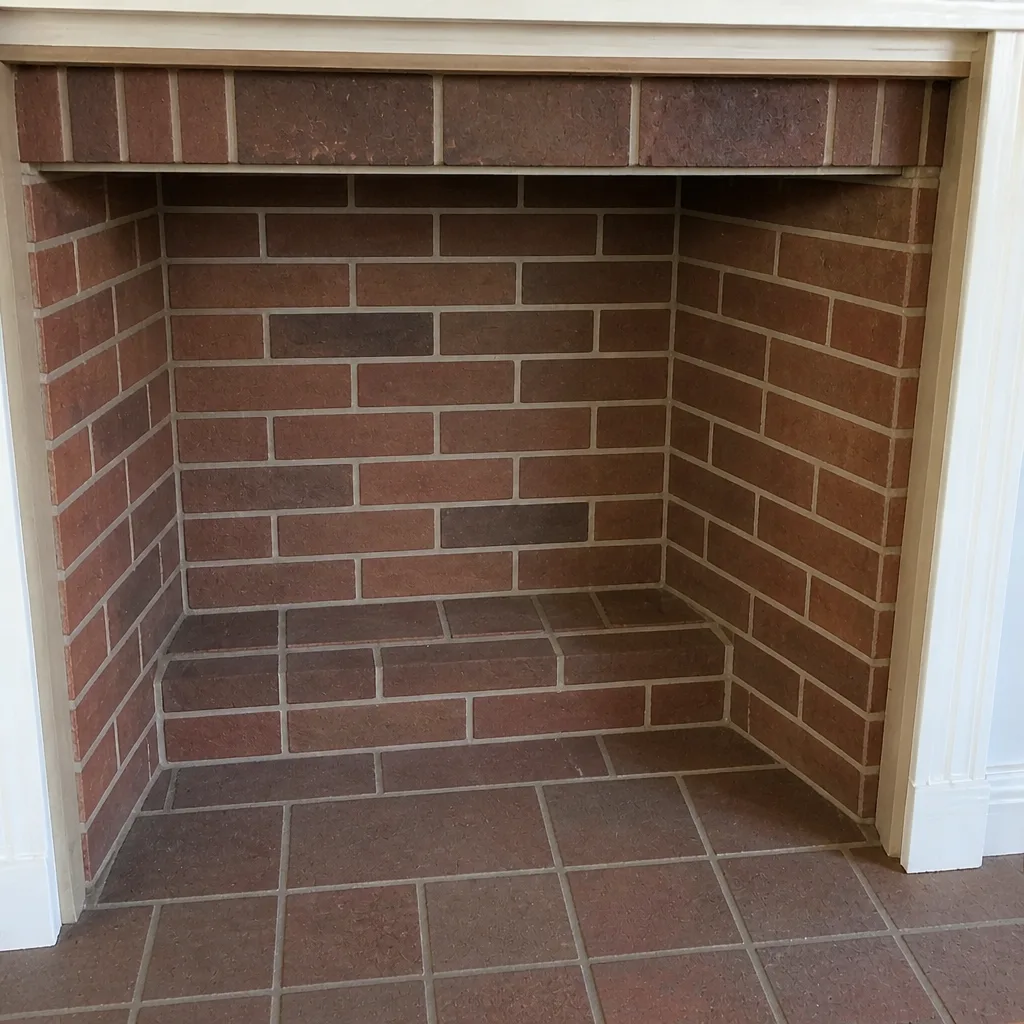 After
When to Call a Professional
Call a chimney specialist when any of these apply:
- You’ve run the crack-a-window test and the smoke still reverses.
- You’ve found debris in the firebox after a fire.
- The chimney is making a new metallic clicking or rattle.
- You smell soot in the house with no fire lit.
- You hear a rumbling roar or see smoke escaping through the chimney breast.
- You haven’t had a sweep in over a year and you burn regularly.
- The fire suddenly stopped drawing after you added windows, weatherstripping or insulation.
Chimney Sweep South Ozone Park offers free estimates in South Ozone Park – call (877) 492-4232.
A camera inspection and photo report is included in the diagnosis, so the recommendation comes with evidence you can see for yourself. If the work can safely wait, we’ll tell you that too, and note what to watch for so it doesn’t become urgent. Full-service scope means the chimney cap & crown that stops the water and the chimney sweep that clears the creosote are both on the same visit – no subcontracting, no separate invoice.
Frequently Asked Questions
Intermittent smoke is almost always a pressure problem, not a cleanliness problem. The easiest way to confirm this is to run a fire on a cold day, then a fire on a mild day and compare – if it only smokes on certain days, wind or temperature inversion is the driver. The crack-a-window test will confirm it in under two minutes. A draft booster at the cap solves most of these cases. Call (877) 492-4232 to book an inspection – estimates are free.
No. A roaring, rumbling chimney fire is obvious, but a slow one – burning quietly up in the flue where you can’t easily see it – can go unnoticed until an inspection finds the damage. Signs to watch for are a persistent crackling or popping, discolouration on the chimney cap or the top of the flue, and pieces of creosote dropping into the firebox. If you suspect one has happened, book a Level 2 inspection before relighting. Call (877) 492-4232 – the estimate is free.
If you’ve had a fire in the fireplace since your last sweep and you burn regularly, it needs an annual sweep as a baseline. Beyond the calendar, the signs to watch for are a sooty smell in the room when the fire isn’t lit, a fire that’s harder to light than it used to be, and visible creosote build-up inside the firebox or at the top of the chimney. If you see any of those, book a sweep. Call (877) 492-4232 for an estimate.
Draft boosters are usually installed by a technician at the chimney cap because the wiring and mounting need to handle weather and be sized to the flue. Doing it yourself isn’t a good idea – the cap is a sealed component and getting it wrong can let water back in. The crack-a-window diagnosis is the part you can do yourself; the booster itself is a technician’s job. Call (877) 492-4232 to book and get an exact quote.
A sweep is a cleaning – brushing the flue, smoke chamber and firebox to clear creosote and debris. An inspection is a diagnostic – going through the same areas visually or with a camera to check the structural condition. They’re often done in one visit, but they answer different questions. A Level 2 inspection with a camera is the one that tells you whether a hairline crack is stage-one and resurfaceable or wider. Call (877) 492-4232 to book both on one visit.
Yes, and it’s one of the components we install most often. A purpose-built cap from a chimney-industry line – Famco or Gelco, for example – keeps rain, birds and squirrels out of the flue and stops downdrafts from entering the top of the chimney. Without one, a flue becomes a home for nesting birds and a channel for rain, and both cause the crack damage that later requires resurfacing or relining. Call (877) 492-4232 to book a cap and crown check – estimates are free.
The Bottom Line
Chimney troubleshooting in South Ozone Park starts with understanding that most problems aren’t dirt – they’re pressure. A tight, modern, weatherstripped house in a row of attached houses starves the fireplace of combustion air, so a chimney that looks clean backdrafts. Learn the two-minute crack-a-window test, distinguish a gradual creosote blockage from a sudden masonry spall, and listen for the click of a cracked tile against the rattle of a loose damper. From there, the decision tree decides what’s DIY (draft booster, damper adjustment, cap check), what needs a Level 2 inspection (camera run of the flue, suspected crack, debris in firebox), and what warrants shutdown (roaring chimney fire, smoke through the chimney breast, CO alarm). Book the sweep and the inspection on the same visit and you’ll get both a clean flue and the information you need before agreeing to any repair.
Call (877) 492-4232 for a free estimate. We answer 24/7. Fast dispatch from 7am to 7pm, Sunday through Friday. Our technicians have up to 8 years of experience.
Written by the team at Chimney Sweep South Ozone Park.