
Last updated November 25, 2026
 Sweep & inspection
 Caps & crowns
 Flue relining
 Masonry repair
 Gas fireplace service
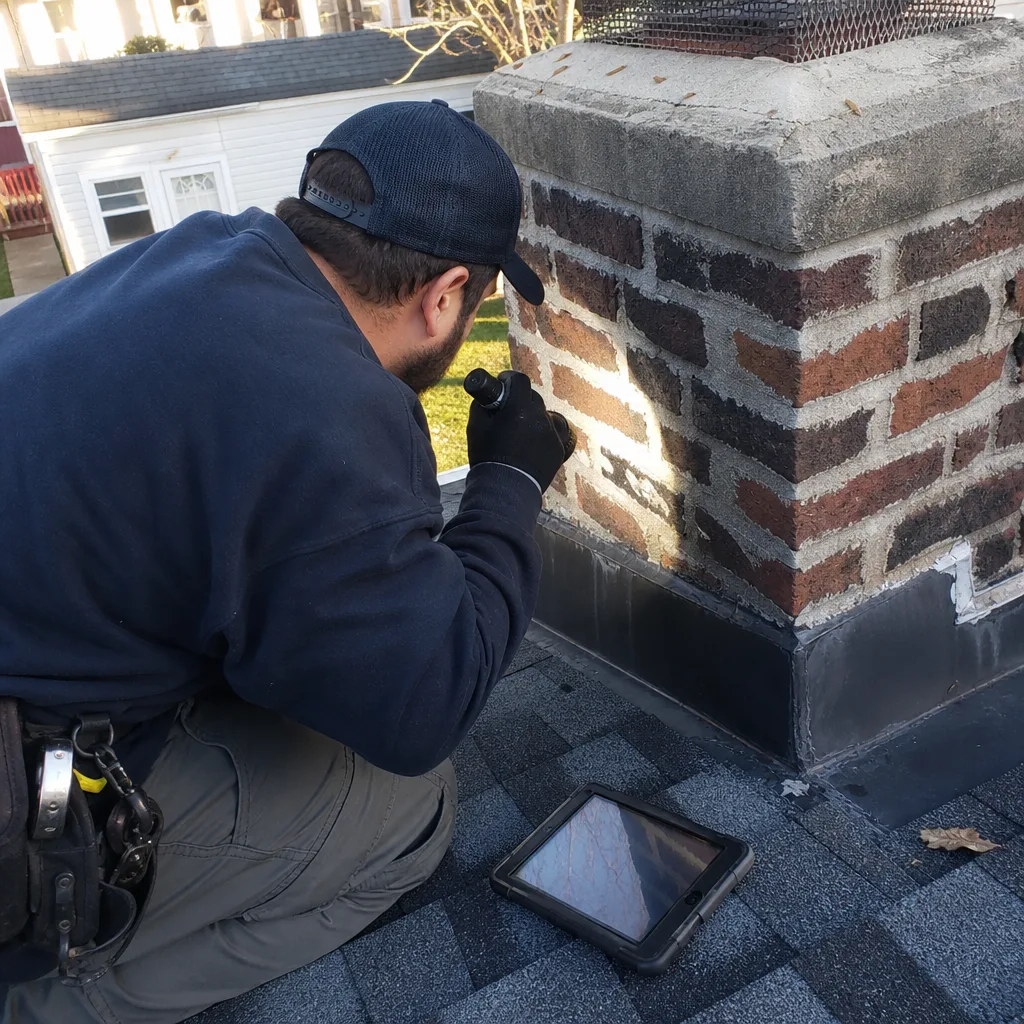
Level 1 sweep and inspection to the NFPA 211 annual standard - flue, crown, cap, and flashing checked and photographed
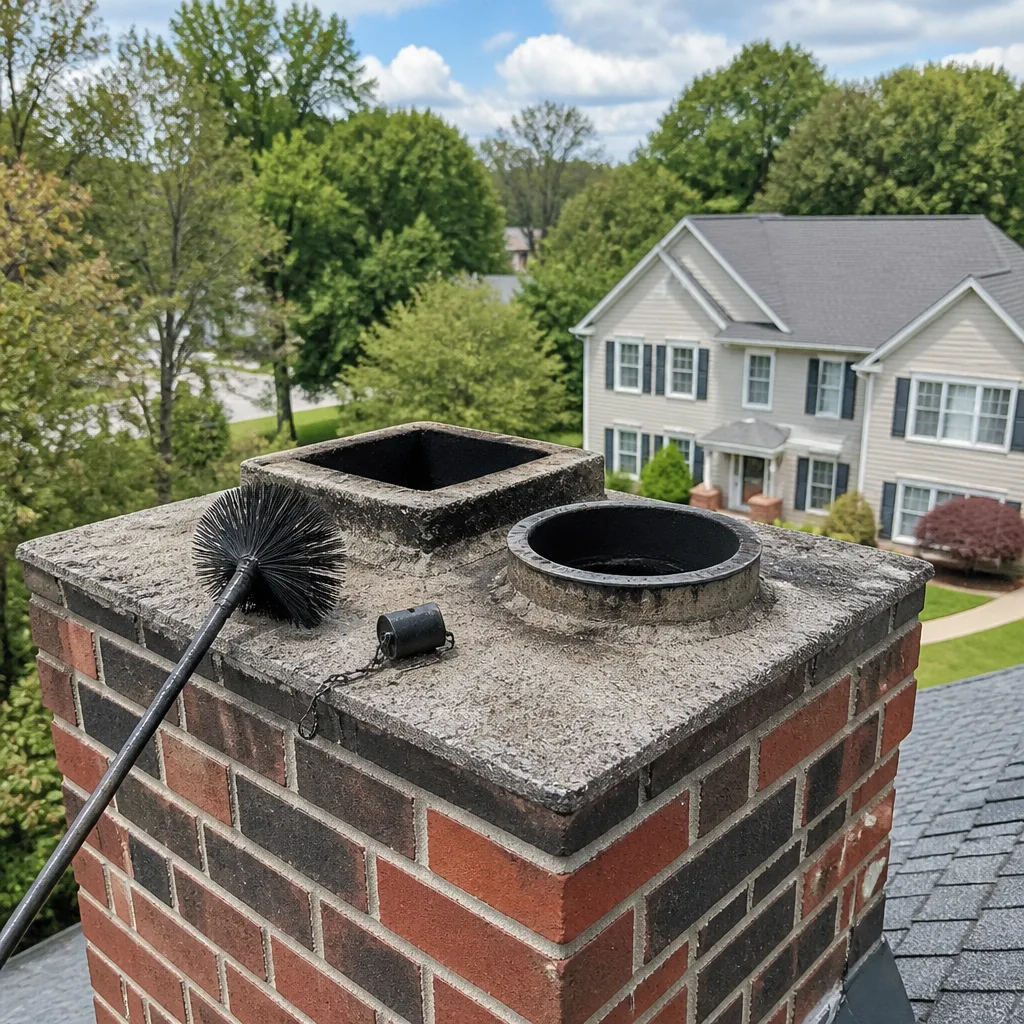
Chimney sweep logs do not sweep chimneys. They loosen some creosote - which then falls where a brush and vacuum still have to collect it.
Chimney Cleaning Emergency Preparedness Guide for South Ozone Park Homes
Most chimney advice tells you to sweep once a year and forget about it. That’s fine until the night you smell something hot and acrid and can’t tell whether it’s a little smoke rollout or a fire burning inside the flue. Here’s the counterintuitive part: the first ninety seconds of a chimney emergency matter more than anything the fire department does when they pull up, and in South Ozone Park those seconds are shaped by something most guides ignore. Half the housing stock here is attached or semi-attached, and a compromised flue wall doesn’t stop at your party wall. This guide is a reference document, not a scare piece. It walks you through what to do in a suspected chimney fire, how carbon monoxide quietly differs from smoke, what to document for an insurance claim, and why a video inspection comes before you ever relight.
Quick Answer
If you suspect a chimney fire in your South Ozone Park home, close the damper, don’t throw water on it, get everyone out, and call 911. Once the fire is out, do not relight until a trained technician has run a Level 2 video inspection of the flue. A post-fire inspection report is also the document your insurance company will ask for, so treat it as part of the emergency response, not something you get around to later.
Styles & brands we work with
- Sweep & inspection
- Caps & crowns
- Flue relining
- Masonry repair
- Gas fireplace service
Table of Contents
- What Counts as a Chimney Fire Emergency?
- Your 90-Second Protocol for a Suspected Chimney Fire
- Smoke Rollout vs. Carbon Monoxide: Two Different Emergencies
- After the Fire Truck Leaves: Why a Level 2 Video Inspection Comes First
- Attached Homes, Shared Masonry, and Notifying Your Neighbor
- What to Document for Your Insurance Claim
- Preparing Your Chimney Before Burning Season
- When to Call a Professional
What Counts as a Chimney Fire Emergency?
A chimney fire is any combustion happening inside the flue itself, usually because creosote deposits on the liner walls have ignited. The FDNY responds to chimney fires regularly across Queens, and the reason they take these calls seriously is simple: an active chimney fire burns at temperatures exceeding 2,000°F and can compromise a clay tile liner in under four minutes. That’s the whole argument for knowing the protocol before you need it. A three-minute window doesn’t leave room for searching your memory.
Not every chimney fire looks like the ones on television. Some announce themselves with a roar that sounds like a freight train. Others are quiet – a thin plume of smoke from the top of the chimney, a slight discoloration on the cap, a smell that lingers. In our experience, the quiet ones are the ones homeowners misread as “just a smoky fire” and relight the next evening.
Here’s what separates an emergency from a maintenance issue:
- Active fire signs: roaring or rumbling from the flue, a dense plume from the chimney top, glowing or discoloration at the mortar joints, flames or sparks visible at the cap. This is a 911 call.
- Smoke rollout: smoke backing into the room while a fire is burning. Sometimes this is a cold flue or a closed damper, but it can also be a blockage, a cracked liner, or early fire activity. Stop burning and get it inspected.
- Carbon monoxide alarm: treat as its own emergency. See the next section.
- Post-fire smell: a pungent, tar-like smell days after a fire you thought went out. This usually means a slow-burning creosote fire worked through your liner, and the liner needs eyes on it.
For the routine side of chimney care, the kind that prevents emergencies before they start, start with a scheduled Chimney Sweep South Ozone Park and build the rest of your preparedness around it.
Your 90-Second Protocol for a Suspected Chimney Fire
If you believe there’s a fire inside the flue, the sequence below protects people first, then the structure. Work through it in order and don’t skip steps because the fire seems small.
- Close the damper. This starves the fire of the air supply from the room and slows its growth. In attached housing especially, the difference between a contained fire and a spread fire is often an open fuel source.
- Do not add water. Throwing water into a hot firebox or flue can crack a clay tile liner outright, and in the worst case it can send a burst of steam and debris back into the room. A liner that survives a chimney fire can be resurfaced. A liner that’s been thermal-shocked usually can’t.
- Get everyone out of the house. All occupants, including pets. Close doors behind you as you leave to slow any spread.
- Call 911 from outside. Give the address, tell them you believe there’s a chimney fire, and mention if your home is attached to a neighbor. That last detail changes how the responding units approach the scene.
- Do not open windows to clear smoke. This is the step most people get wrong. Opening a window sounds like it should help, but it feeds oxygen to a fire that’s already starving, and it can raise the flue temperature rather than lower it. Let the smoke clear through the chimney, not through your living room.
- Stay out until the fire department clears the scene. Even after the visible fire is out, the flue can hold enough heat to reignite. Nobody goes back in for a photo or a coat.
We’ve seen the aftermath of chimney fires across South Ozone Park, and the pattern that holds up is consistent: homes where the protocol was followed end up with a liner that can be repaired or resurfaced. Homes where the fire was “watched” for twenty minutes usually end up with a full reline. Ninety seconds of clear thinking buys you thousands of dollars of salvaged structure.
Smoke Rollout vs. Carbon Monoxide: Two Different Emergencies
Smoke rollout is visible and immediate. You see it, you smell it, and you know something is wrong within seconds. Carbon monoxide is the opposite – it’s colorless and odorless, and the only thing that announces it is how you feel. That’s why the response protocol is different, and why treating one like the other can cost you time you don’t have.
How to tell them apart
- Smoke rollout: visible smoke entering the room, immediate strong smell, often happens at fire start or when the flue is cold. No alarms may go off. The fix is usually a warm flue, an open damper, or a cleared blockage.
- Carbon monoxide accumulation: no visible smoke, no obvious smell. Symptoms include headache, dizziness, nausea, disorientation, and a feeling of “coming down with something” that clears when you leave the house. A CO alarm, if you have one, is the only reliable early signal.
What to do for each
For smoke rollout, stop using the fireplace and get a chimney inspection before you burn again. For a CO alarm or suspected CO symptoms, get everyone outside into fresh air and call 911, then call your gas utility’s emergency line. Do not re-enter to open windows or investigate. The response to CO is immediate evacuation, not troubleshooting.
What makes CO a chimney concern specifically is that the fireplace and the furnace often share the same flue route, and a blocked or damaged liner can push CO back into the living space instead of up and out. In attached South Ozone Park homes, that pressure can also push into a neighboring unit through shared chase walls. A Level 2 inspection and a proper chimney repair when the liner is compromised is the only reliable way to close that gap.
One thing to check right now: do you have a working CO alarm on every level of your home, ideally outside sleeping areas? If not, that’s a two-minute trip to the hardware store and the single highest-value preparedness step in this entire guide.
After the Fire Truck Leaves: Why a Level 2 Video Inspection Comes First
Here’s the part that determines whether your chimney is salvageable, and it happens after the trucks leave. No chimney that has experienced any fire event gets relit until a technician has run a Level 2 video inspection of the flue. This isn’t a suggestion. It’s the difference between knowing what you’re dealing with and assuming you’re fine.
A Level 2 video inspection uses a camera system – like the SkiCam or an equivalent industry-standard scope – fed down the flue to look at every inch of the liner, the smoke chamber, and the visible flue joints. A visual check from the firebox opening and a flashlight at the cap is not the same thing. Most of the damage from a chimney fire hides above the smoke chamber and behind bends the eye can’t see.
What the inspection looks like
- Exterior check: the cap, crown, mortar joints, and masonry for visible fire damage or spalling.
- Video scope of the flue: full-length inspection of the liner interior for cracked tiles, gaps at the joints, and heat damage.
- Smoke chamber and damper: checks for warping, separation, or creosote that survived the fire.
- Written report with photos: the deliverable that goes to your insurance company. If your technician doesn’t hand you one, ask for it.
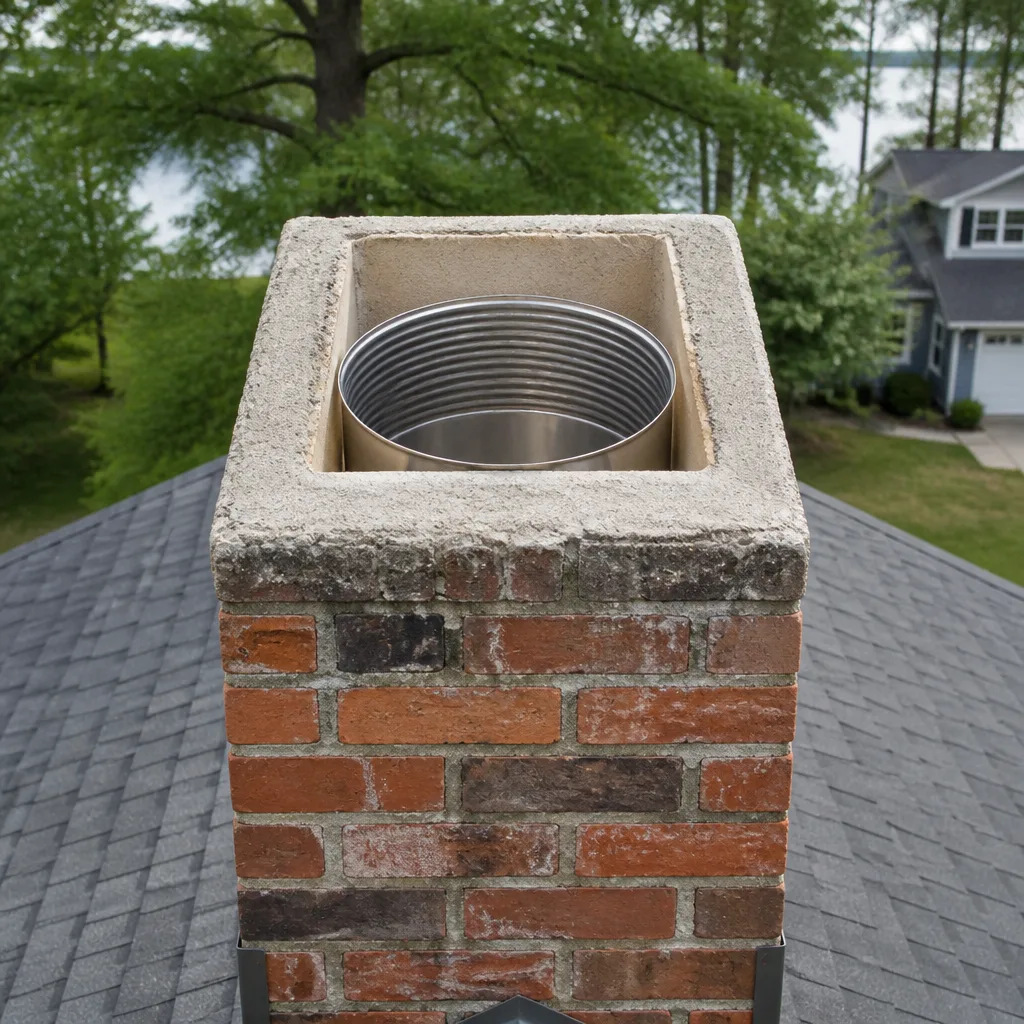
If the inspection turns up a gap or a hairline crack, that doesn’t automatically mean a full tear-out. HeatShield ceramic resurfacing is an EPA-recognized liner repair method that fills and resurfaces the voids in an existing flue. When the structural liner is sound enough to resurface, it’s often the difference between a repair and a full reline. When it isn’t, a DuraFlex flexible liner system is a UL-listed, code-compliant alternative that installs without demolishing the surrounding chimney structure – faster, less invasive, and often less expensive. The point is that the recommendation is driven by what the camera actually shows, not by a sales script.
Attached Homes, Shared Masonry, and Notifying Your Neighbor
If your South Ozone Park home shares a wall or a chimney chase with a neighboring unit, a chimney fire is not a single-household event. Heat travels through masonry faster than most people expect, and shared chimney structures can carry that heat into the neighbor’s attic or up through a party wall. Knowing what to do about it is part of being prepared, not a reason to panic.
How to notify a neighbor during or after a chimney fire
- During the emergency: tell the 911 dispatcher that your home is attached. The responding units can then check the adjacent property and make a determination about whether they need to enter.
- Once you’re safely outside: ring the neighbor’s bell and tell them plainly what’s happening. “There’s a fire in my chimney and we’re attached – please get everyone out until the fire department clears it.” That’s the whole message. Don’t discuss cause, don’t speculate about damage, don’t reassure them.
- After the fire department leaves: share the incident number and offer to coordinate inspections. If the fire department flagged damage on the shared structure, both households need to know.
What the liability questions usually look like
We’re chimney specialists, not attorneys, so this is observation rather than advice: shared-wall damage after a chimney fire almost always becomes a question about who pays. Homeowner’s policies, co-op or condo bylaws, and the actual fire department report all come into it. The two things that make any of those conversations easier are (1) the FDNY incident report and (2) a written inspection report from a technician describing what the shared structure looks like now. If both units get inspected and both reports are on file, the conversation shifts from “who’s responsible” to “what does the repair cost.” That’s a much shorter conversation.
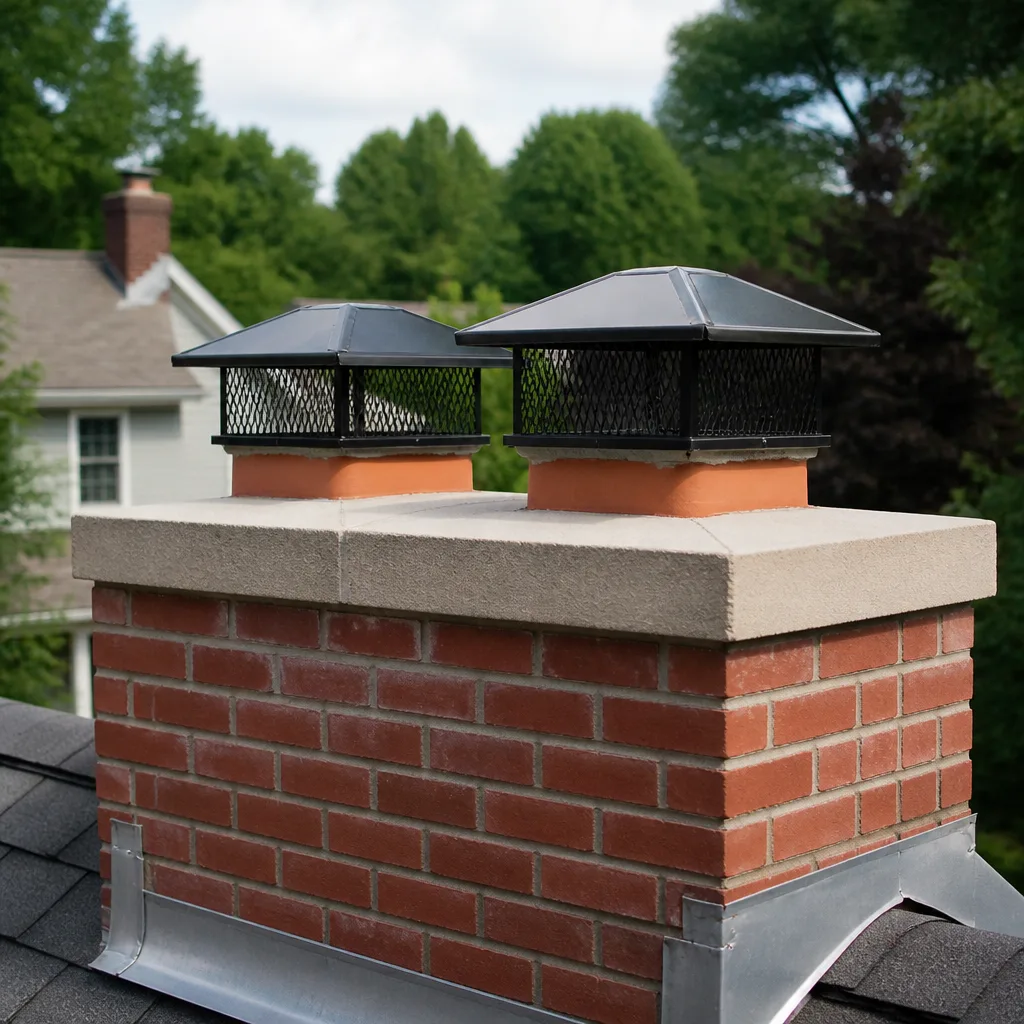
If your shared structure needs component work, the chimney cap & crown gets checked as part of the inspection, because combined cap and crown damage is one of the top ways water and debris get into a shared chase and create problems nobody can trace six months later.
What to Document for Your Insurance Claim
Whether or not you plan to file a claim, document the post-fire condition of your chimney within the first 48 hours. Timing matters because adjusters want contemporaneous evidence, and because a slow drip of water from fire-damaged masonry can create damage that looks unrelated a few weeks later.
The documentation checklist
- Photos of the chimney, inside and out. Cap, crown, exterior masonry, firebox, damper, and any visible discoloration from the interior.
- Photos of any interior smoke damage. Ceilings, walls, and anything else affected. Wide shots first, close-ups second.
- FDNY incident report number. Ask the responding unit for this on the scene, or note the date and approximate time so you can request the record.
- Written inspection report from a technician. This should describe the condition of the flue, the smoke chamber, the cap and crown, and any recommended repairs with photos attached.
- Any receipts or estimates. Sweep, inspection, and repair invoices all become part of the claim file.
Why the written inspection report is non-negotiable
Insurance adjusters are not chimney technicians. They read reports and compare them to the policy language. A verbal “your chimney looks damaged” from a sweep doesn’t tell them what’s damaged, how badly, or what it takes to fix it. A written report from a CSIA-credentialed technician does. That’s the document that turns “we think there’s damage” into “here is the scope of the damage and the cost to repair it.” If your technician doesn’t produce one automatically, request it in writing.
For the non-emergency side of things, routine chimney sweep appointments come with a photo record too. That paper trail is often the reason a homeowner can show insurers that the chimney was maintained in good faith.
Preparing Your Chimney Before Burning Season
Emergency preparedness is mostly about the 51 weeks when nothing is burning. The chimney fire you don’t have is the one you prevented, and the cheapest protection available is a proper sweep and inspection done before the first fire of the year.
Creosote is the fuel. It accumulates every burn and it comes in three forms: a light soot that brushes off, a flaky crust that brushes off with a bit more effort, and a glazed, tar-like layer that requires actual mechanical work to remove. That third form is what ignites at the temperatures we’re talking about. A yearly sweep keeps the third form from ever taking hold.
Pre-season checklist
- Schedule a sweep before the first burn. Not after the first smoke rollout – before the season starts.
- Get a Level 1 or Level 2 inspection depending on history. Level 1 if the chimney has been maintained and not recently through an event. Level 2 if anything has changed – new appliance, new home, or any prior fire event.
- Test CO alarms. Every level, every sleeping area. Replace batteries if it’s been more than a year.
- Check the cap and crown. A missing or damaged cap lets water, animals, and debris into the flue, all of which contribute to blockages and accelerated deterioration. Purpose-built components from a chimney-specific maker like Gelco or Famco are the right choice here – hardware-store substitutes that weren’t engineered for chimney applications tend to fail within a season or two.
- Burn seasoned wood. Wet wood produces more creosote than dry, and the difference in cost is a few dollars per bundle compared to a liner repair.
- Never burn trash, Christmas trees, or cardboard. High-temp flare-ups from paper products are a leading cause of chimney fires that could have been avoided.
If your cap or crown has seen better days, take care of it before the season, not during. That’s a spring or early-fall repair, and putting it off until you smell smoke is the wrong order of operations.
Common Mistakes to Avoid
- Opening a window to “clear the smoke.” This feeds oxygen to the fire and raises the flue temperature instead of lowering it. Close the damper, get out, call 911.
- Relighting after a suspected chimney fire without a video inspection. The firebox can look normal while the liner above it is cracked. Only a camera sees the difference.
- Assuming CO and smoke rollout need the same response. Smoke is visible and immediate; CO is not. If a CO alarm sounds, evacuate and call 911 – do not open windows or investigate.
- Skipping the FDNY incident report number. Homeowners in attached South Ozone Park homes have walked away from claims because they couldn’t prove a fire event happened. Get the number, write it down.
- Letting a neighbor find out secondhand. In attached housing, ring the bell during the emergency. Shared masonry is a real risk and surprise notifications make the liability conversation much harder later.
- Trusting a sweep without a written inspection report. A chimney sweep is the cleaning. The written report is what protects you when something goes wrong.
- Reaching for a hardware-store cap to save a few dollars. Chimney caps and crowns are engineered around specific flue dimensions and heat loads. A generic substitute is often the start of the next problem.
See the difference
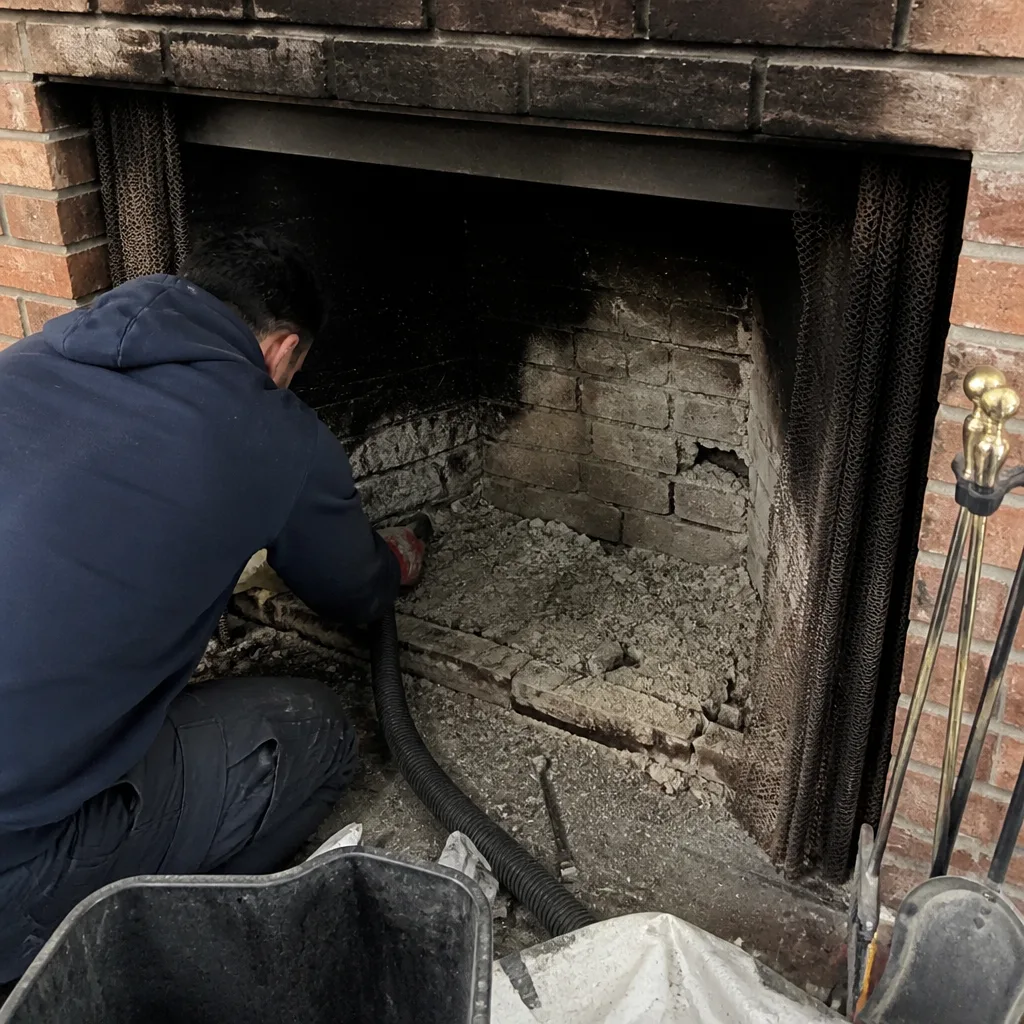 Before
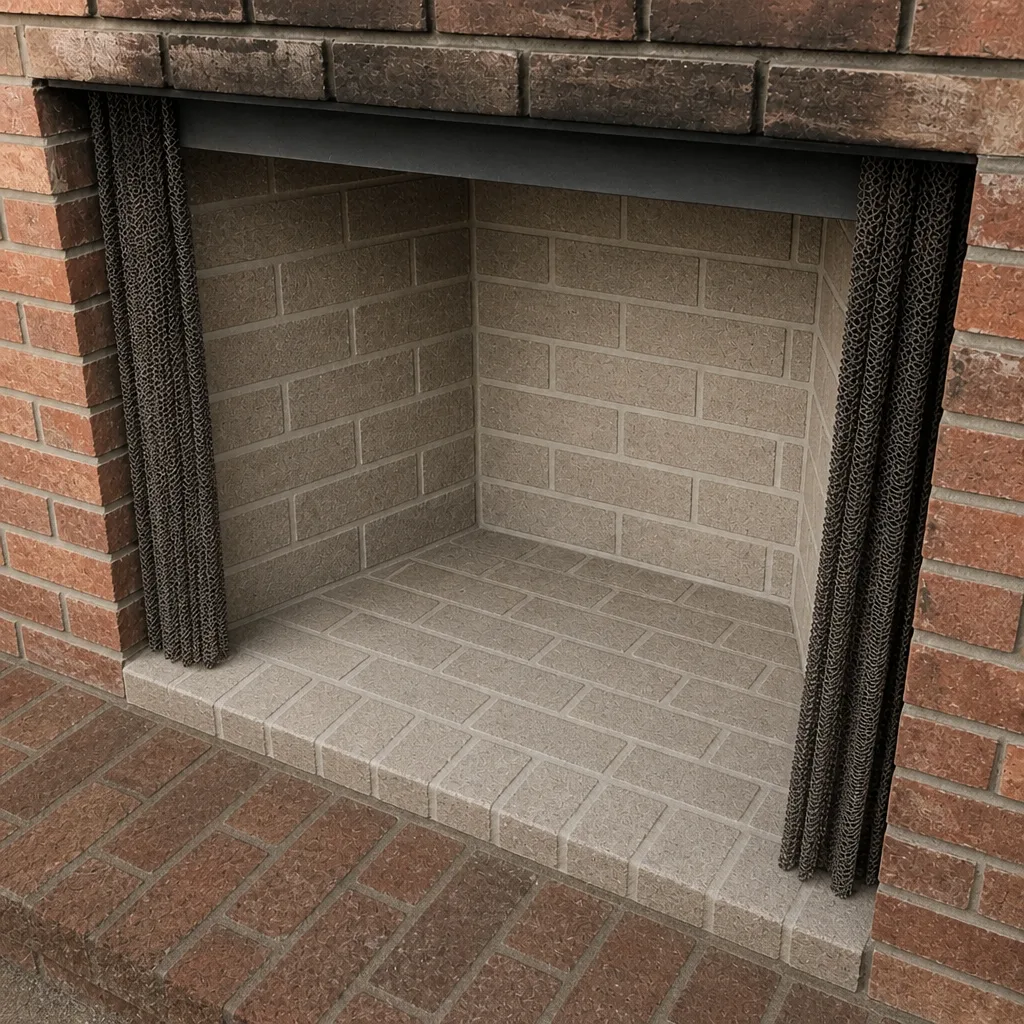 After
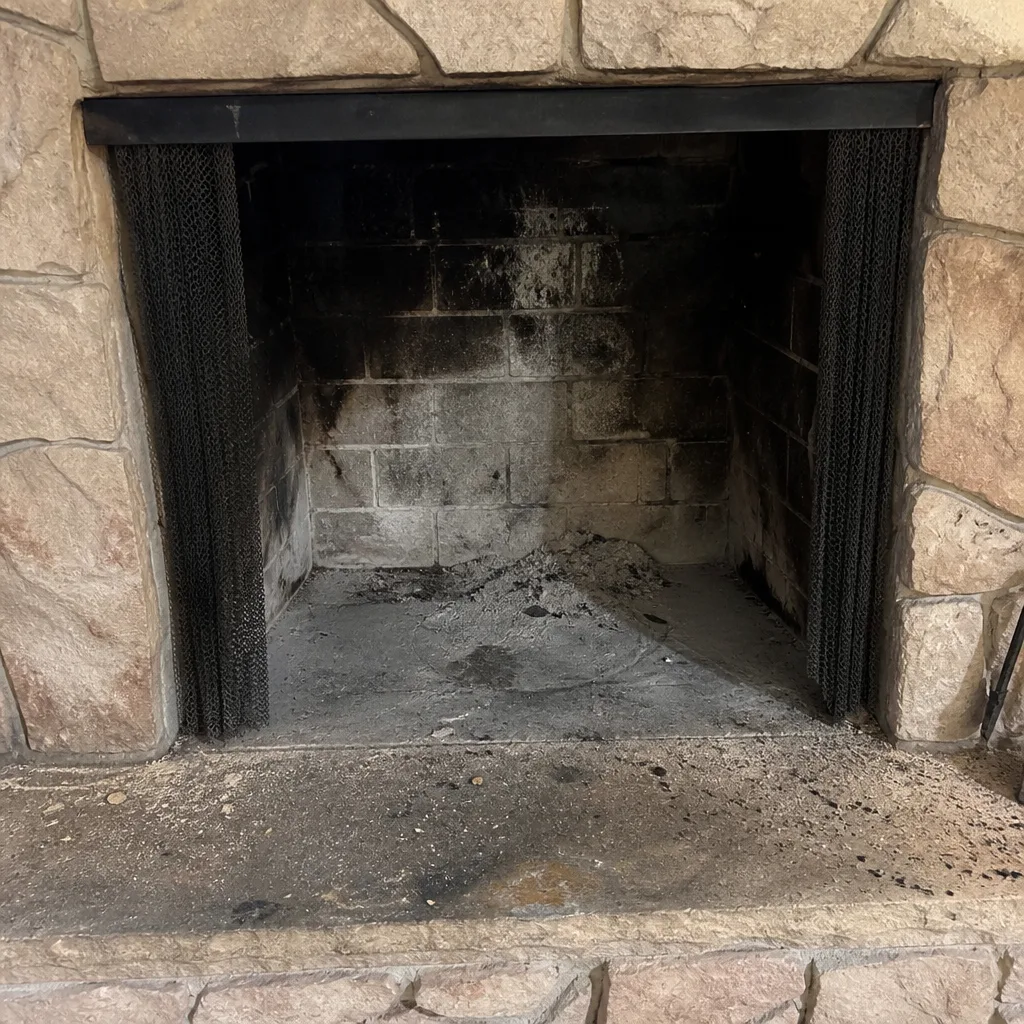 Before
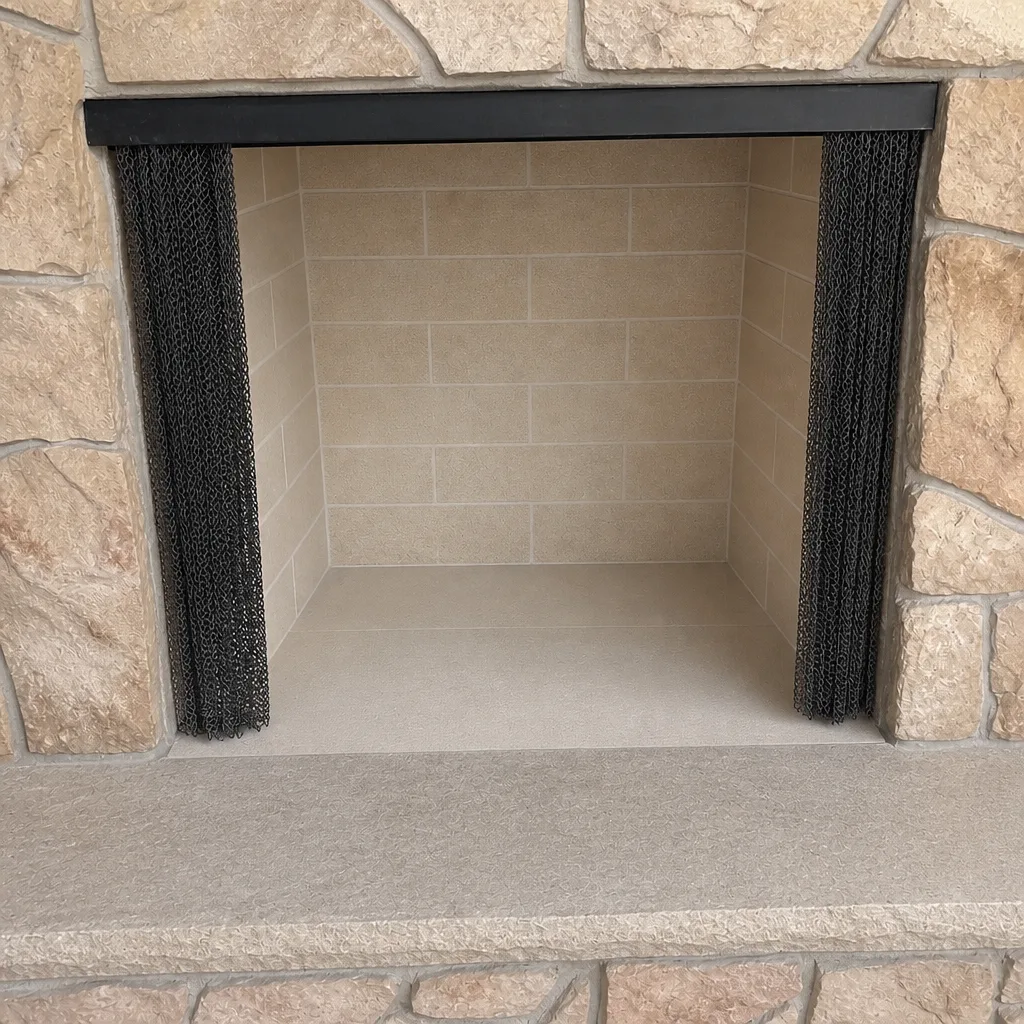 After
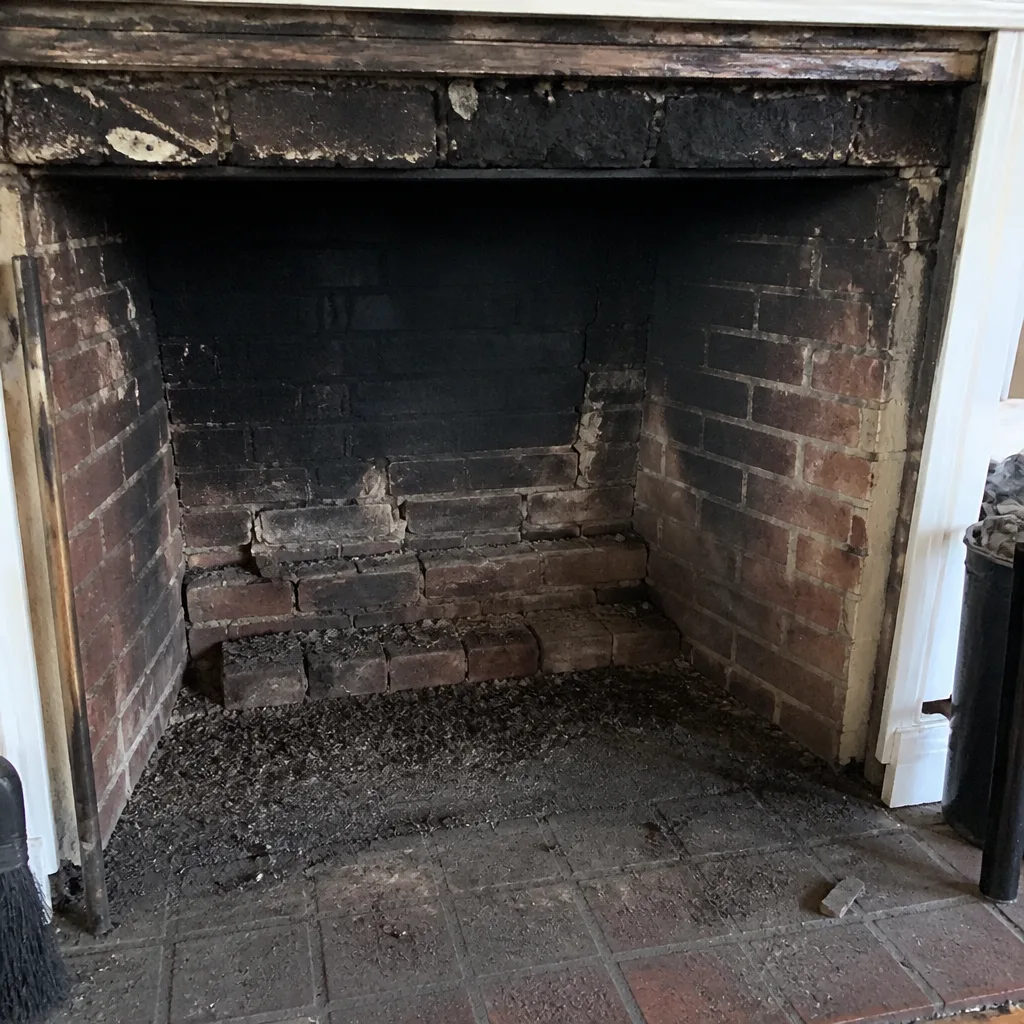 Before
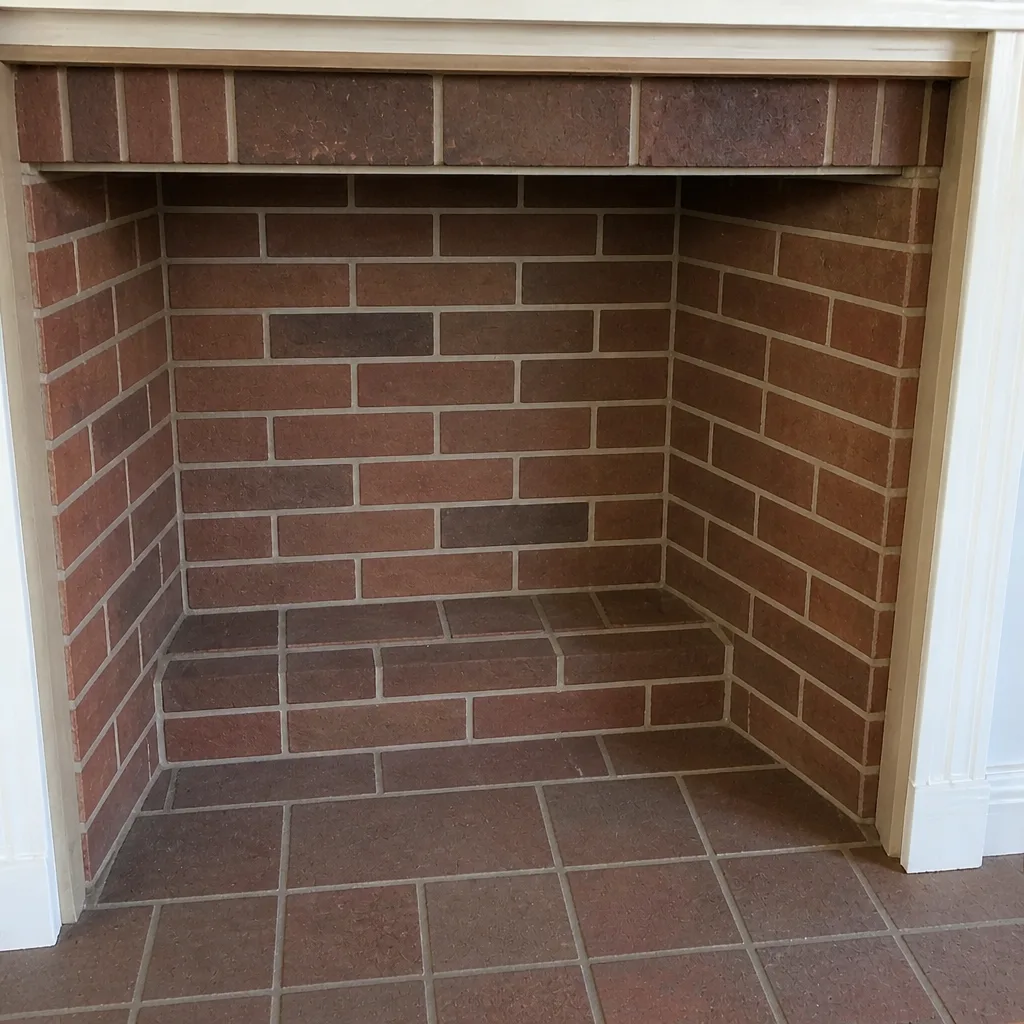 After
When to Call a Professional
Call a chimney specialist if you have any of the following: a suspected chimney fire, a CO alarm event, visible smoke rollout that recurs, a strong tar-like smell after burning, visible cracking or spalling on the exterior masonry, or a chimney that’s never been inspected in the home you own. In South Ozone Park, attached and semi-attached homes warrant an inspection any time a neighboring unit has had a fire event, because shared masonry doesn’t always show damage on your side first. Chimney Sweep South Ozone Park offers free estimates in South Ozone Park. Call (877) 492-4232. We answer 24/7. Fast dispatch from 7am to 7pm, Sunday through Friday. Every job starts with an inspection so the recommendation comes from what the camera shows, not from a script.
Frequently Asked Questions
Close the damper, don’t add water, get everyone out of the house, and call 911 from outside. Tell the dispatcher your home is attached if it is, so responding units can check the adjacent property. Do not open windows to clear smoke, and do not re-enter until the fire department clears the scene.
No. A chimney fire can crack the liner above the smoke chamber while leaving the firebox looking completely normal. You need a Level 2 video inspection of the full flue before relighting. Anything short of that is guesswork, and the cost of guessing wrong is a full reline or worse.
Smoke rollout is visible and immediate – you see and smell it. Carbon monoxide is colorless and odorless, and the signals are physical: headache, dizziness, nausea, disorientation. For smoke, stop burning and get inspected. For CO, evacuate, call 911, and call your gas utility’s emergency line. The response protocols are not interchangeable.
Yes, during the emergency if you can do it safely. Shared masonry and shared chase walls can carry fire and heat into an adjacent unit, and if the fire department flags damage on the shared structure, both households need to know. After the fire, share the FDNY incident number and coordinate inspections. It makes any insurance or liability conversation much simpler.
Photos of the chimney inside and out, photos of any interior smoke damage, the FDNY incident report number, and a written inspection report from a CSIA-credentialed technician with photos of the flue. The written report is the document adjusters actually need. A verbal description of damage doesn’t turn into a claim payout.
Once a year for a chimney in regular use, and again after any fire event, any change to the appliance, or any new-to-you home. Homes that burn frequently through the winter may need a sweep mid-season in addition to the pre-season inspection. Call (877) 492-4232 for an exact quote – estimates are free.
The Bottom Line
Chimney emergency preparedness in South Ozone Park comes down to four things: knowing the 90-second protocol for a suspected fire, distinguishing smoke from carbon monoxide, getting a Level 2 video inspection before you relight, and documenting the event for insurance. The structural reality of attached and semi-attached homes means these steps protect more than your own household – they protect the one on the other side of the wall. Prevention is the cheapest part of the whole equation: a sweep and inspection before burning season, a working CO alarm on every level, and a cap and crown that aren’t held together with hope. Everything else is response, and response is best when you’ve already done the planning.
Call (877) 492-4232 for a free estimate. We answer 24/7. Fast dispatch from 7am to 7pm, Sunday through Friday. Our technicians have up to 8 years of experience, and every job starts with an inspection so the recommendation is diagnosis-driven.
Written by the team at Chimney Sweep South Ozone Park.