
Last updated November 25, 2026
 Sweep & inspection
 Caps & crowns
 Flue relining
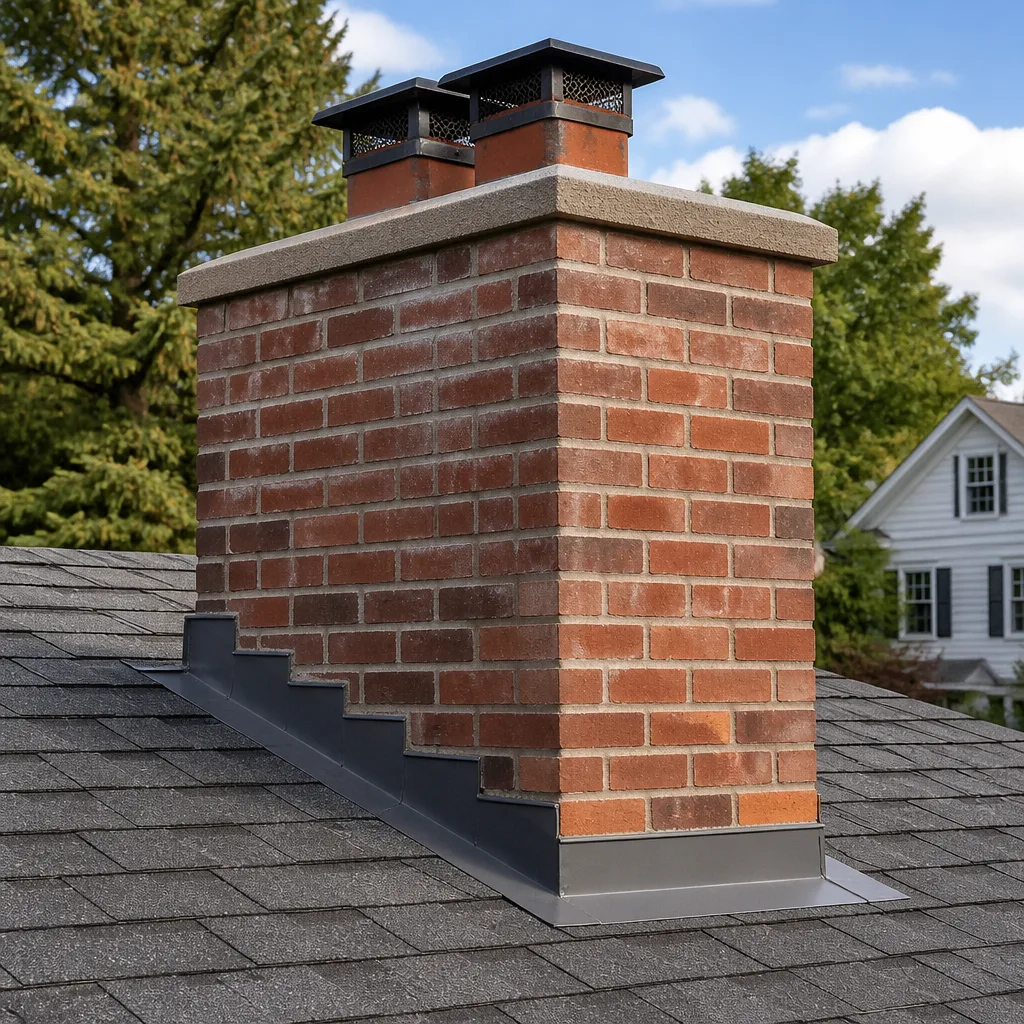 Masonry repair
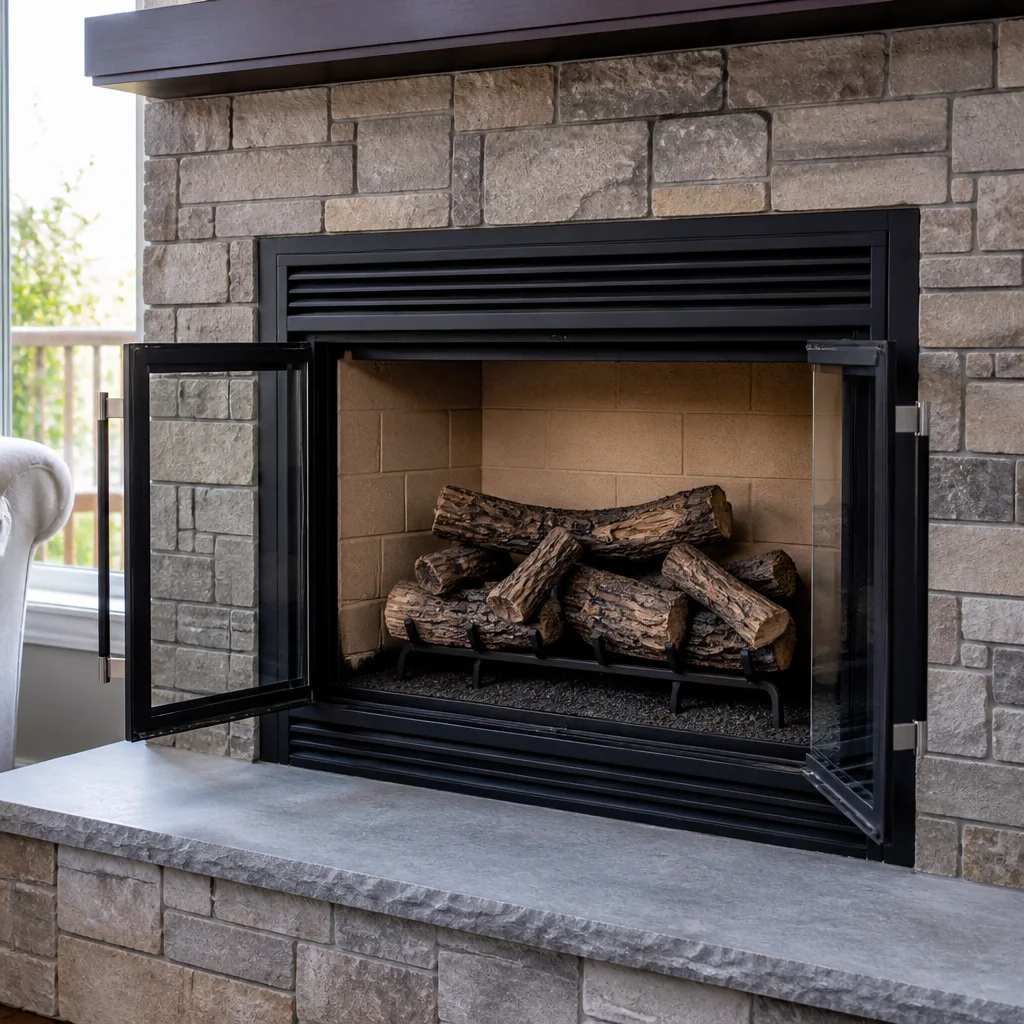 Gas fireplace service
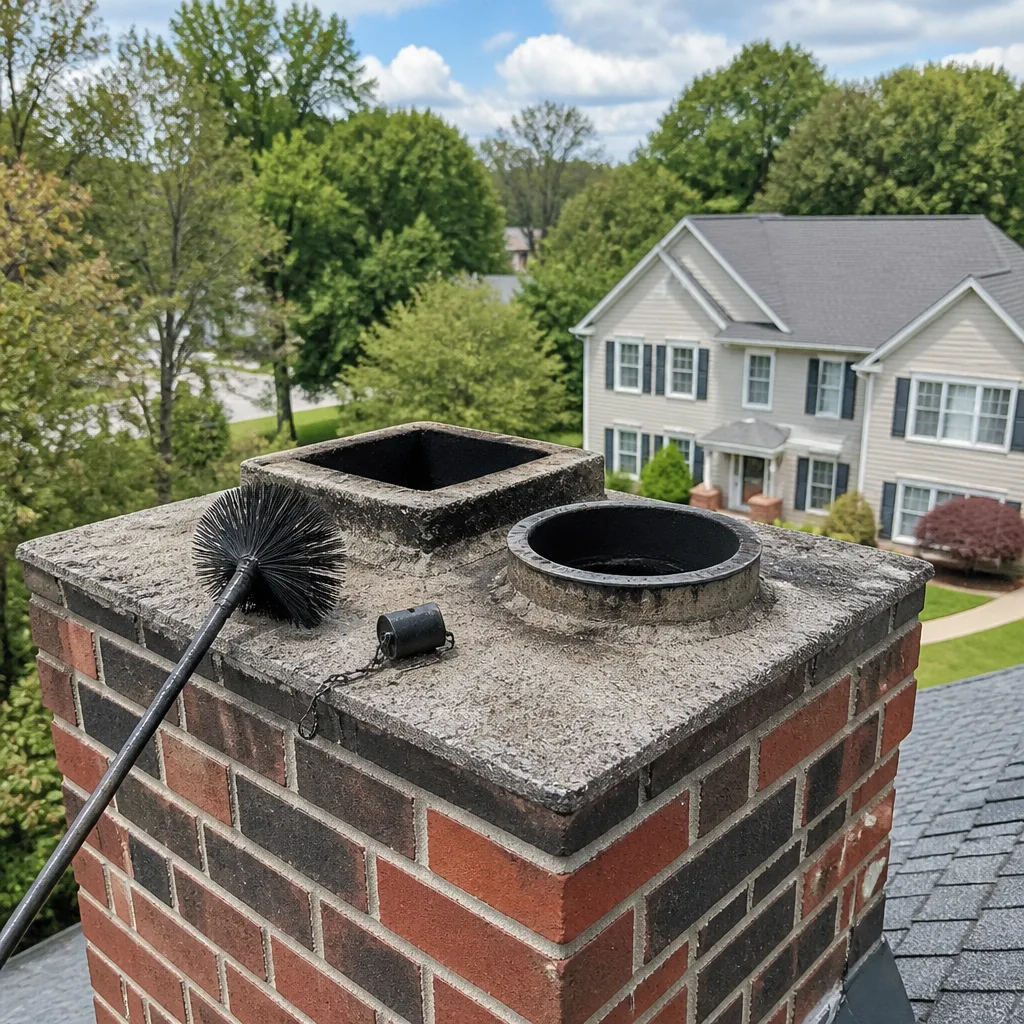
Level 1 sweep and inspection to the NFPA 211 annual standard - flue, crown, cap, and flashing checked and photographed
Chimney sweep logs do not sweep chimneys. They loosen some creosote - which then falls where a brush and vacuum still have to collect it.
How to Hire a Chimney Cleaning Contractor in South Ozone Park: A Step-by-Step Guide
New York doesn’t license chimney sweeps. That surprises most homeowners, and it should, because it means the person who shows up at your door with a brush and a shop vac has no legal obligation to prove a single thing about how they were trained. The certification patch on a jacket is the only independent evidence of competence in this trade, and it’s easy to copy onto a business card without ever earning it. What follows is the verification process we’d want a neighbor to run before letting anyone near their flue in South Ozone Park: what to check, where to check it, and which questions expose a contractor who’s skipping the parts of the job you can’t see.
Quick Answer
To hire a chimney cleaning contractor in South Ozone Park, verify CSIA or NFI certification directly on the certifying body’s website, confirm liability insurance in writing, and demand a written scope of work that includes camera documentation of the flue before any repair is quoted. A legitimate sweep will welcome all three. A contractor who deflects any of them is telling you something.
Styles & brands we work with
- Sweep & inspection
- Caps & crowns
- Flue relining
- Masonry repair
- Gas fireplace service
Table of Contents
- Why Credentials Matter More Than Price in South Ozone Park
- How to Verify CSIA and NFI Certification Yourself
- What a Written Scope of Work Should Include
- Why Camera Inspection Is the Line Between Cleaning and Diagnosis
- Red Flags Specific to South Ozone Park
- Insurance, Damage, and Who Pays
- Questions to Ask Before You Book
- Why Branded Materials Signal a Real Specialist
Why Credentials Matter More Than Price in South Ozone Park
The cheapest bid in this market is usually the bid from someone who doesn’t own a camera. That’s the uncomfortable math of chimney work. A sweep with a brush, a ladder and a drop cloth can perform something that looks like a cleaning in under an hour and never once look up the flue to see what’s actually happening inside it. You pay for an hour of labor and get no information about the condition of your liner, your smoke chamber or your crown.
South Ozone Park’s housing stock makes that gap more consequential than it would be in a newer suburb. A large share of the homes here were built in the decades when masonry chimneys were standard, and many have been through one or more heating conversions since. An oil flue that was later connected to a gas appliance, a fireplace that hasn’t been swept since the previous owner lived there, a clay tile liner that has spalled quietly for years: none of these announce themselves. They show up on camera, or they show up as a chimney fire.
Certification is the closest thing this trade has to a floor. The Chimney Safety Institute of America (CSIA) certifies sweeps after an exam covering codes, venting and inspection standards, and requires continuing education to keep the credential. The National Fireplace Institute (NFI) certifies on the appliance side, which matters when the question shifts from cleaning to how your fireplace or insert actually vents. Neither is a state license. Both are verifiable, which is the point.
We come at this from the specialist side. Our work is chimney and fireplace systems only, not HVAC, not roofing, not general masonry. Our technicians have up to 8 years of experience, and every job we take starts with an inspection rather than a sales pitch, because a recommendation without a diagnosis behind it isn’t worth the paper it’s printed on.
What the two certifications actually cover
- CSIA: sweeping, inspection, venting theory, code familiarity, and the standard three-level inspection framework (Level 1, 2 and 3). This is the credential to look for on a sweep.
- NFI: appliance installation and venting for gas, wood and pellet systems. Useful when your question is about a fireplace insert, a stove, or a gas appliance connection.
- Both: not a guarantee of quality on any individual job, but a verified baseline that an unlicensed handyman cannot fake once you check the database.
If you want the full picture of what a routine visit involves before you start comparing contractors, our chimney sweep page walks through the process step by step.
How to Verify CSIA and NFI Certification Yourself
Never take a certification claim at face value, including on a van, a website or a business card. Both the CSIA and NFI maintain searchable directories of certified professionals, and checking takes about two minutes. If a company claims certification and the name doesn’t appear, that’s your answer.
- Get the full name of the certified technician, not just the company name. CSIA certifies individuals, not businesses, so “we’re CSIA certified” is only meaningful if a specific person holds the credential.
- Search the CSIA certified professional directory on the CSIA website for that name. Confirm the certification is current, not expired.
- If the work involves a fireplace insert, stove or gas appliance, search the NFI certified professional directory separately. CSIA and NFI are different credentials with different scopes.
- Ask whether the person who will actually be in your chimney is the certified one. A company can employ one certified technician and send an uncertified helper. Ask directly.
- Confirm insurance in writing before the visit, ideally a certificate of insurance sent to you in advance rather than a verbal assurance at the door.
That last step matters more than most homeowners realize. If a technician drops a brush head down a flue and cracks a tile, or knocks a cap loose and dents the flashing on the way down, the question of who pays becomes a liability question. A contractor without liability coverage leaves you holding the repair bill. Ask what their coverage is, and ask for documentation.
For a broader comparison of how certified and uncertified companies differ in practice across the neighborhood, our guide to a Chimney Sweep South Ozone Park covers the local angles.
What a Written Scope of Work Should Include
A written scope of work is the document that separates a professional visit from a van showing up and improvising. Ask for it before the appointment, and read it. It should state exactly how the chimney will be accessed, what will be inspected, how findings will be documented, and how debris will be contained inside your home. If a contractor can’t produce one, they’re working without a plan.
The four items a real scope of work names
- Access method. Roof access, ground-level access, or access through the firebox. Each has different implications for safety and for what the technician can actually see.
- Liner inspection protocol. Whether the flue will be examined with a camera, at what level of inspection (Level 1, 2 or 3), and whether photos or video will be provided to you.
- Camera documentation. Before-and-after images, delivered to you. This is the single most important line item on the page.
- Debris containment. Drop cloths, a sealed firebox opening, a HEPA vacuum. Creosote dust and soot in a living room is a cleanup problem you shouldn’t inherit.
We work with a curated roster of recognized chimney-industry brands: HeatShield, Gelco, Olympia Chimney, Famco and Copperfield. That matters at the scope stage because when a scope of work names the materials a repair will use, you can look them up. “We’ll reline it” is not a scope. “We’ll install a DuraFlex flexible liner sized to your flue, with the appliance connection specified” is.
If your chimney needs more than a cleaning, our chimney repair page lays out what structural work typically involves and when it can safely wait.
Why Camera Inspection Is the Line Between Cleaning and Diagnosis
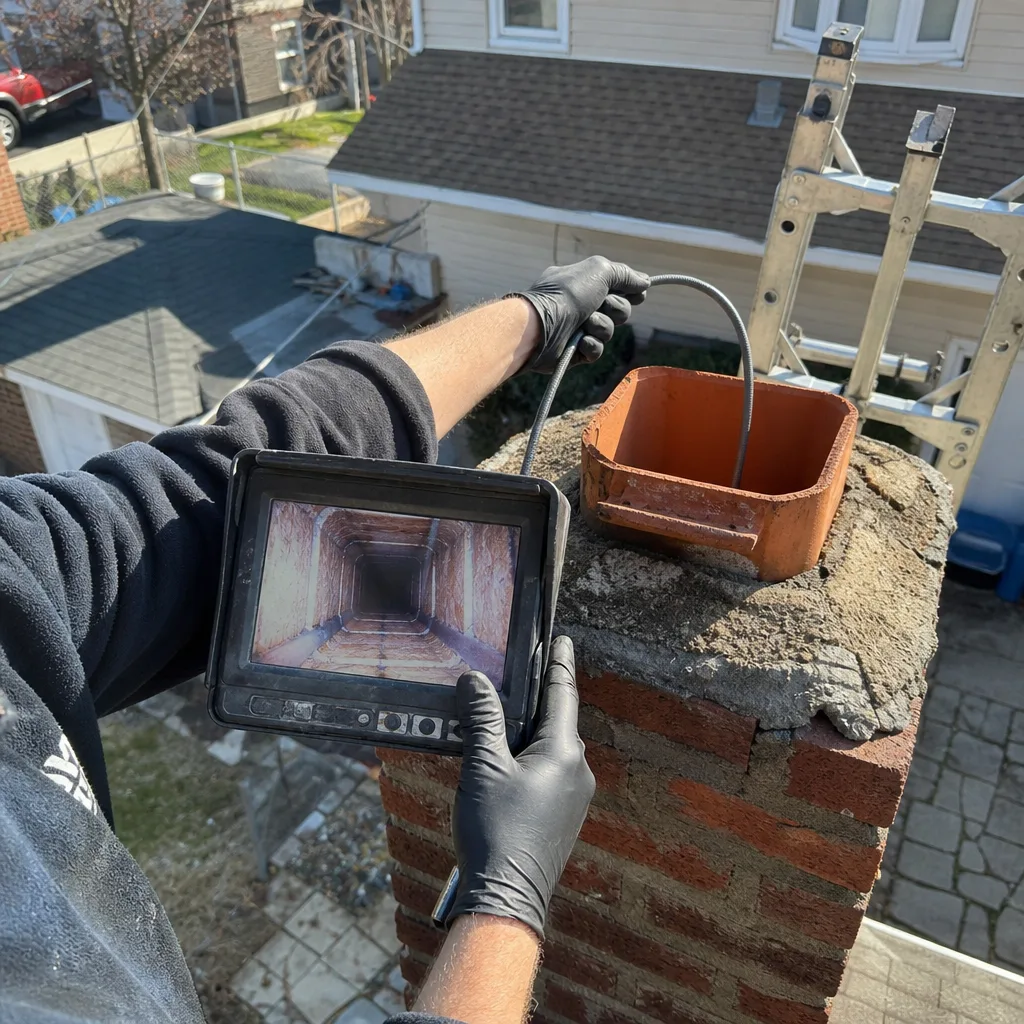
A cleaning removes creosote. An inspection tells you what condition the chimney is in. They are not the same service, and a contractor who conflates them is charging you for one and skipping the other. The camera is where that difference becomes visible, literally.
Inside a South Ozone Park chimney, a camera can reveal:
- Liner cracks and gaps between clay tiles, which let heat and gases reach framing or masonry that isn’t rated for it.
- Spalling, where tile faces flake and break down, creating edges that catch creosote and restrict draft.
- Animal intrusions, including nests, which obstruct the flue and are common in chimneys with damaged or missing caps.
- Creosote glazing at the top of the flue, the hard, shiny, third-degree build-up that a brush alone won’t remove.
- Improper connections where an appliance flue meets the chimney, a frequent issue in homes that have changed heating fuel.
In our experience, the moment a homeowner sees the inside of their own flue on a screen, the conversation changes. Recommendations stop sounding like an upsell and start sounding like evidence. That’s why camera inspection and a photo report are included in our work rather than offered as an add-on. Nothing gets recommended that you can’t see for yourself, and we say plainly when a repair can safely wait until next season.
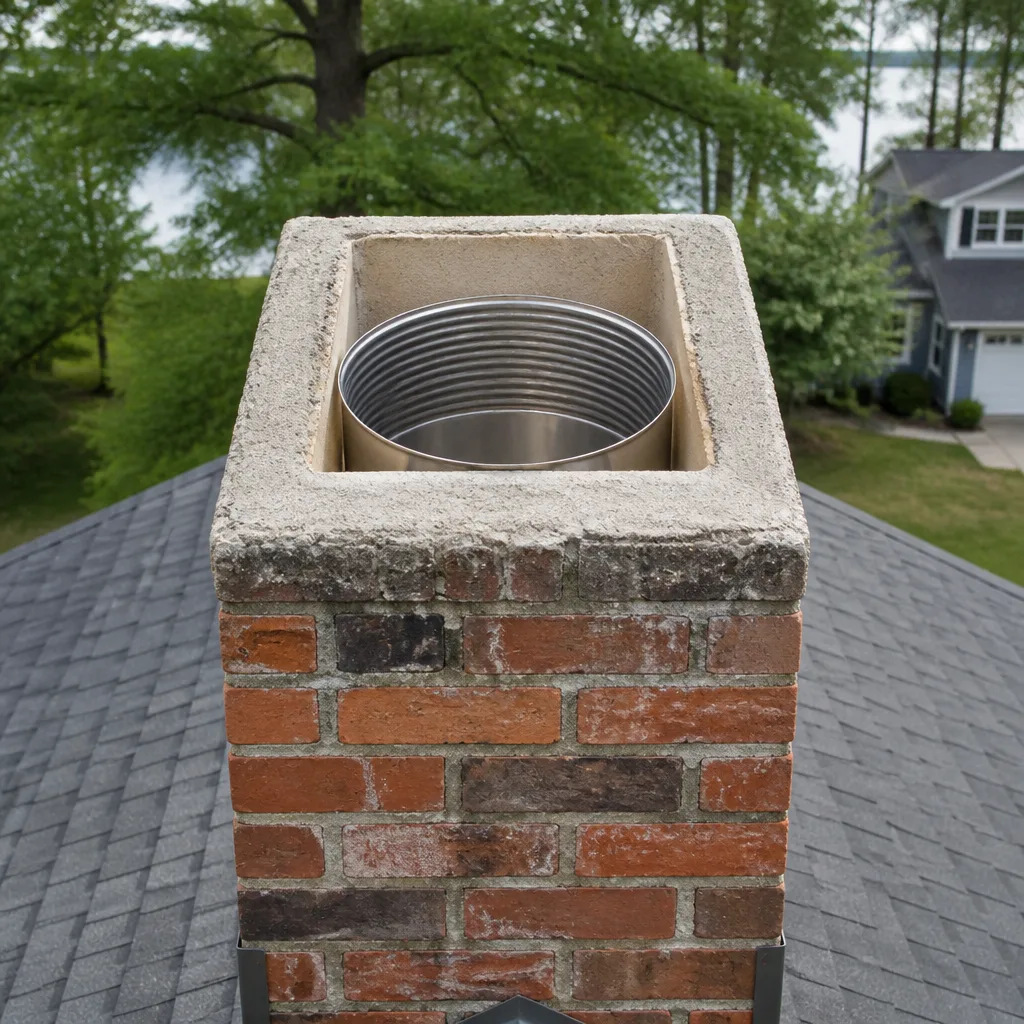
When a liner problem turns up, the repair is not always a replacement. HeatShield ceramic resurfacing is an EPA-recognized process that can restore a deteriorated liner from the inside, and it’s a service not every chimney company offers. When a full reline is the right call, DuraFlex flexible liner systems allow it without demolishing the surrounding chimney structure, which is faster and less invasive than rebuilding.
Red Flags Specific to South Ozone Park
The warning signs you should watch for in this neighborhood are less about rudeness at the door and more about what a contractor doesn’t ask. A specialist asks questions because the answers change the job. A generalist quotes a flat price because the price is the same regardless of what’s in the flue.
A contractor who quotes without asking these three things is guessing
- Fuel type. Wood, gas, oil and pellet each produce different deposits and require different sweeping methods. A quote without a fuel question is a quote for nothing in particular.
- Flue height and configuration. A one-story ranch and a two-story colonial with an offset flue are different jobs. If nobody measures, nobody knows.
- When the chimney was last swept. Two years of build-up and twelve years of build-up are different problems. A contractor who doesn’t ask is a contractor who doesn’t plan.
Other signs, all common enough in South Ozone Park to name outright:
- A quote given over the phone before any inspection. It’s fine to give a ballpark range, but a firm number without looking is a guess dressed up as a price.
- Pressure to sign on the spot, especially when a “free inspection” suddenly produces thousands of dollars of recommended liner work with no photos.
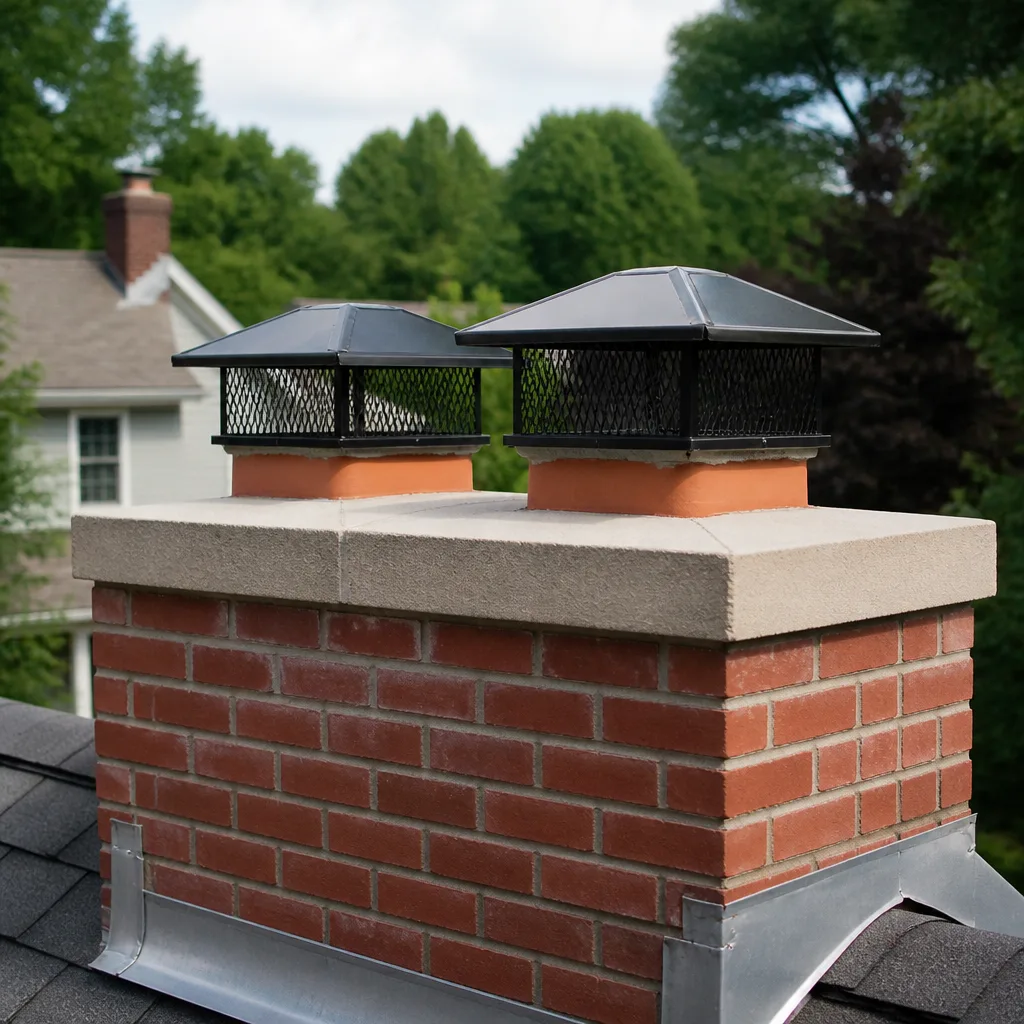
- No mention of a cap. A missing or damaged cap is the single most common entry point for water and animals, and it’s the cheapest thing to fix.
- Cash-only payment with no written estimate or invoice. The price should be set per job by a written estimate, and the paperwork should be there before the work starts.
Our chimney cap & crown page covers the Gelco and Famco components we use for that work, which are engineered specifically for chimney applications rather than adapted from hardware-store stock.
Insurance, Damage, and Who Pays
Ask about liability insurance before the appointment, not after something breaks. Any contractor working on a roof or inside a flue carries some risk of damage, and the difference between a professional and an amateur is who absorbs that risk when it happens. A legitimate contractor carries liability coverage and can produce a certificate of insurance on request. If you hear “we’re fully covered” with nothing to back it up, keep looking.
The specific damage scenarios worth asking about:
- Liner damage during sweeping. A stiff brush on a deteriorated clay liner can crack tiles. Ask who pays for the repair if that happens, and get the answer in writing.
- Flashing damage from roof access. Flashing is the metal seal around the chimney where it meets the roof. A technician stepping on it can break the seal and create a leak. Ask how they access the roof and how they protect the flashing.
- Interior damage from debris. Soot on furniture, creosote stains on a hearth, a broken damper. Ask about containment and cleanup responsibility.
One more thing worth asking: what happens if a technician finds a problem mid-job that wasn’t in the original scope. A professional stops, shows you the camera evidence, and gets your approval before continuing. A contractor who proceeds without checking is spending your money without your consent.
Questions to Ask Before You Book
Here’s the list we’d want a neighbor to run through. Write the answers down. A contractor’s willingness to answer these clearly is itself a signal.
- “Who is CSIA certified, and can I verify the name?” Get the actual name, check the directory.
- “Will you camera-inspect the flue, and do I get the photos?” Yes and yes, or you’re getting a cleaning without a diagnosis.
- “What’s your liability coverage, and can you send a certificate?” Before the appointment.
- “What’s the written scope, and what access method will you use?” Roof, ground or firebox access, stated in advance.
- “How do you contain debris inside the house?” Drop cloths, sealed opening, HEPA vacuum.
- “What happens if the liner turns out to be damaged?” Diagnosis first, options second, approval before any work.
- “Do you do the cap and crown work yourself, or subcontract it?” One specialist handling the full system avoids finger-pointing later.
- “Can you tell me when a repair can wait?” A specialist will say so. A salesperson won’t.
If a contractor answers every one of these without flinching, you’ve found someone worth hiring. If they answer two and brush off the rest, you haven’t.
Why Branded Materials Signal a Real Specialist
When a repair is recommended, ask what materials will go into your chimney. The answer separates a specialist from a generalist quickly. Generic flue liners and unbranded caps exist, and they’re cheaper for a reason: nobody can trace where they came from or what standard they were made to. Branded materials are verifiable by you and, importantly, by a home inspector or a future buyer.
We name the materials we use because you should know what’s going into your chimney. DuraFlex flexible liner systems are UL-listed and code-compliant. Gelco and Famco components are purpose-built for chimney cap and crown work, not retrofitted hardware-store substitutes. HeatShield ceramic resurfacing lets us repair and resurface a damaged liner in many cases rather than replace it, which is often the difference between a resurfacing job and a full reline. Olympia Chimney and Copperfield materials round out the roster for other parts of the system.
This is also why our diagnostics are diagnosis-driven. The repair recommended depends on what the camera shows, and the material chosen depends on the repair. From the firebox to the cap, one specialist handles the diagnosis, the material selection and the installation, which means no subcontractor loophole when something needs to be made right.
Common Mistakes to Avoid
- Hiring on price alone. The lowest bid in South Ozone Park is often the bid that skips the camera, and you won’t know what was missed until the next inspection. Pay for the diagnosis, not just the brush.
- Accepting a phone quote as final. A price before an inspection is a guess. A written estimate after a camera inspection is the number that actually governs the job.
- Skipping the certification check. A CSIA or NFI logo on a website means nothing until you’ve searched the directory for the technician’s name. Two minutes now saves a much longer problem later.
- Not asking for insurance documentation. If a technician damages a liner or flashing, the certificate of insurance you didn’t request becomes the repair bill you didn’t plan for.
- Assuming a cleaning includes an inspection. They’re separate services. Confirm that a camera inspection with photo documentation is part of the visit, in writing.
- Ignoring the cap and crown. A missing or cracked cap is the most common cause of water intrusion and animal nesting in South Ozone Park chimneys. It’s cheap to fix and expensive to ignore.
- Letting a contractor start without a written scope. Access, inspection protocol, camera documentation and debris containment should all be on paper before anyone steps on the roof.
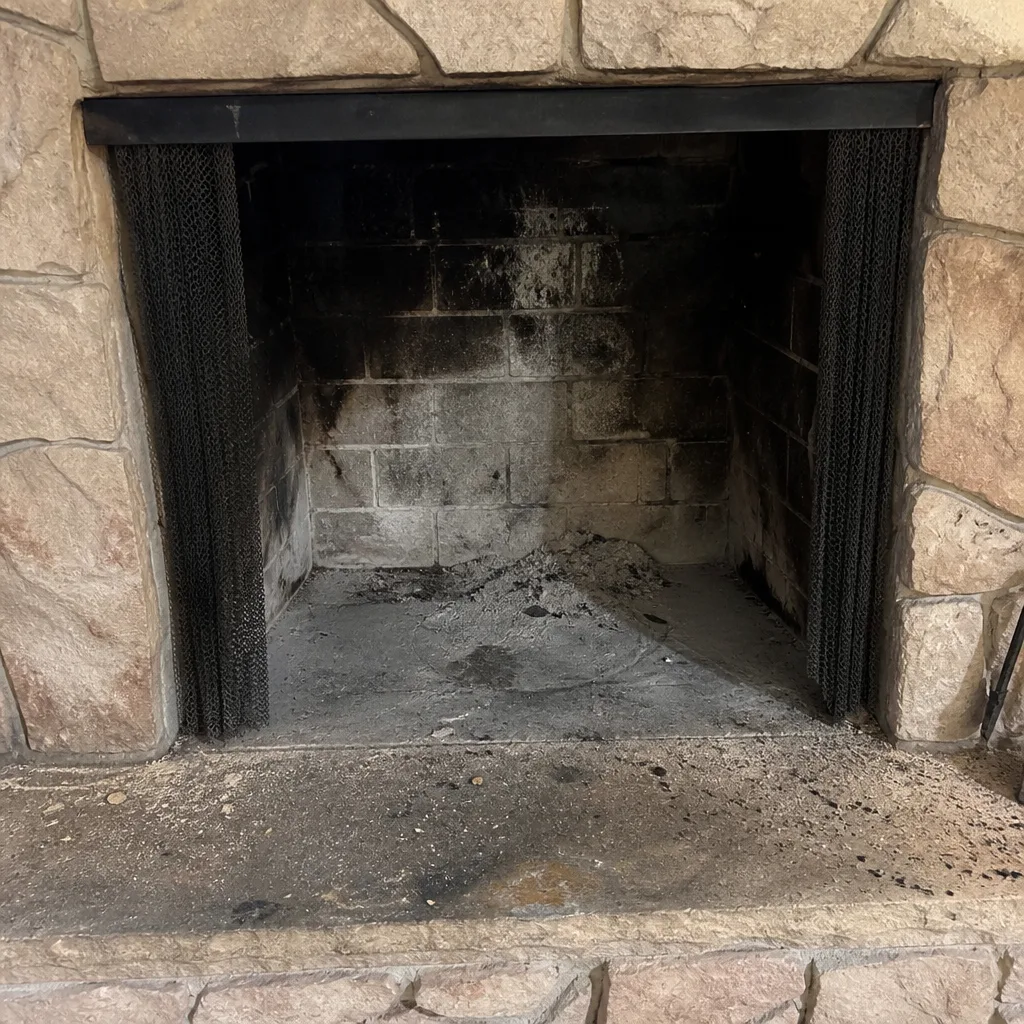
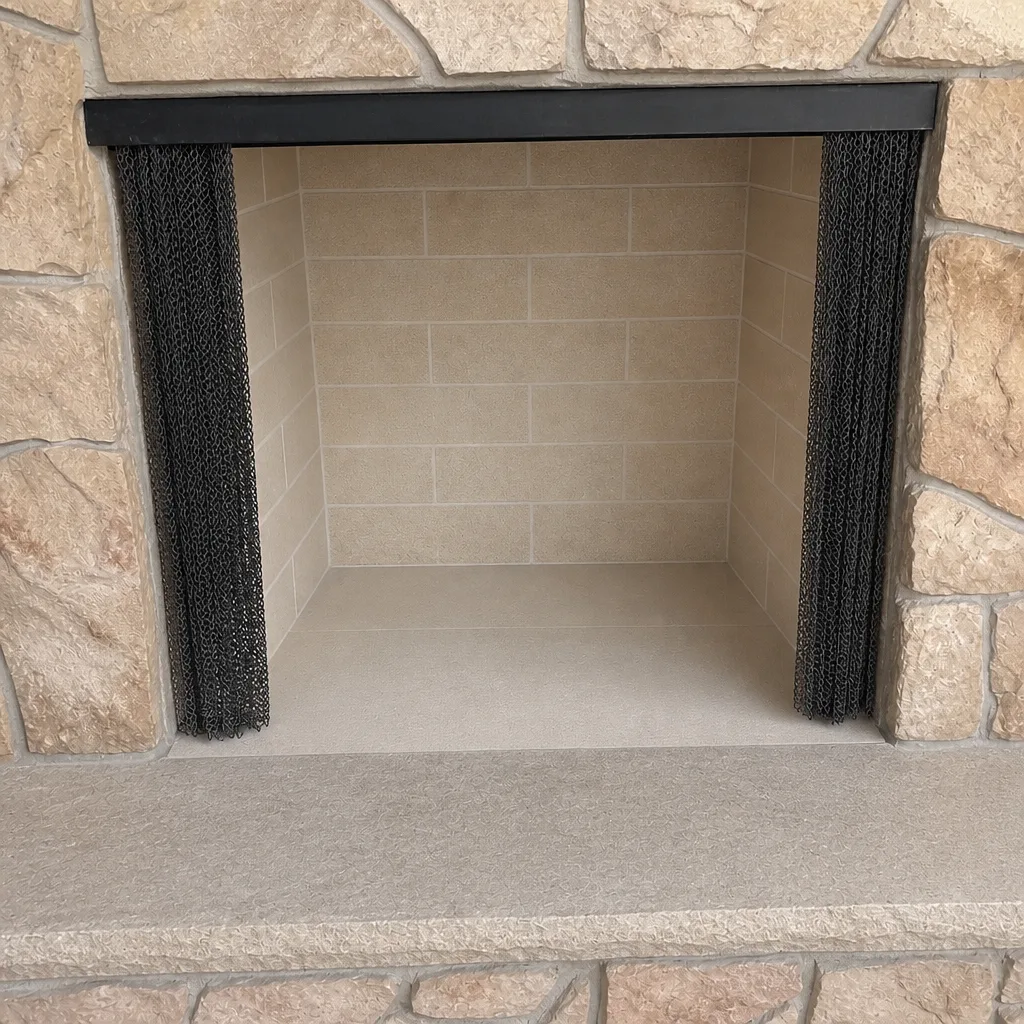
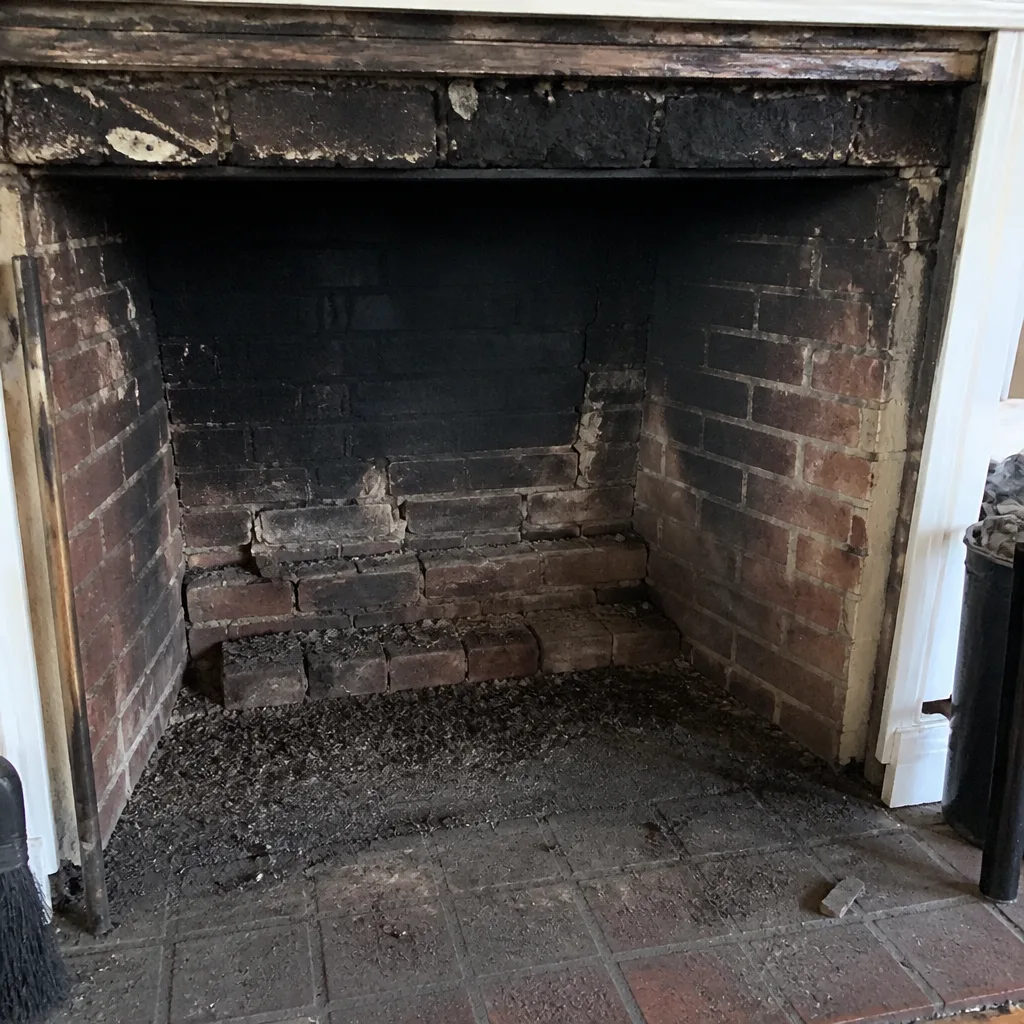
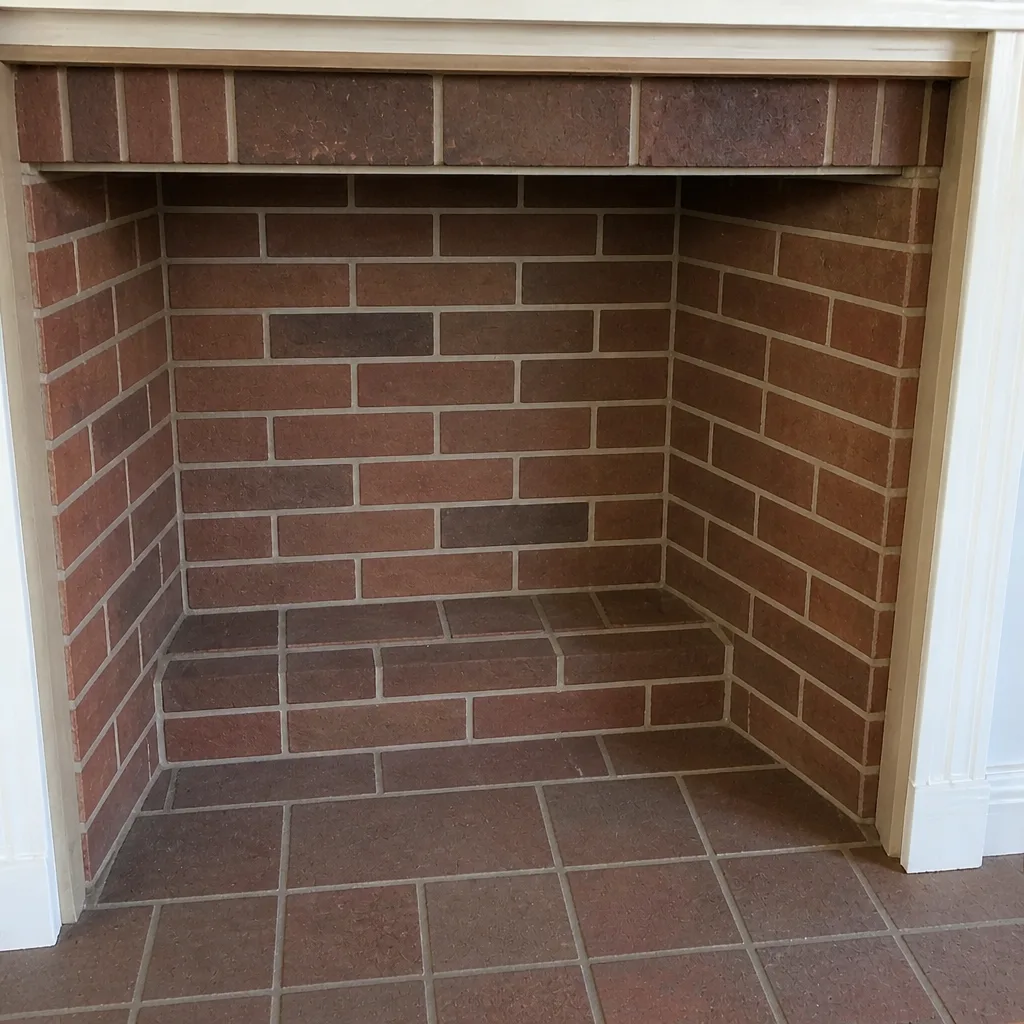
See the difference
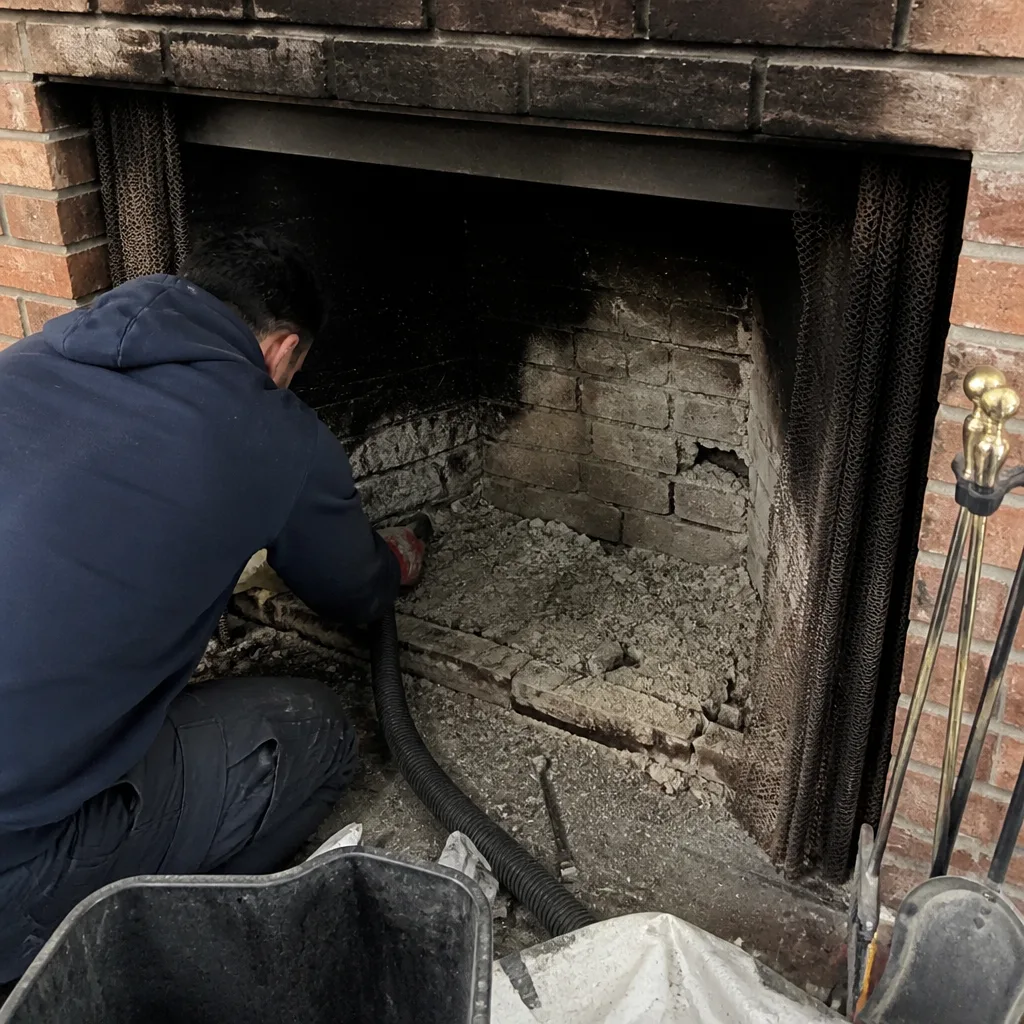 Before
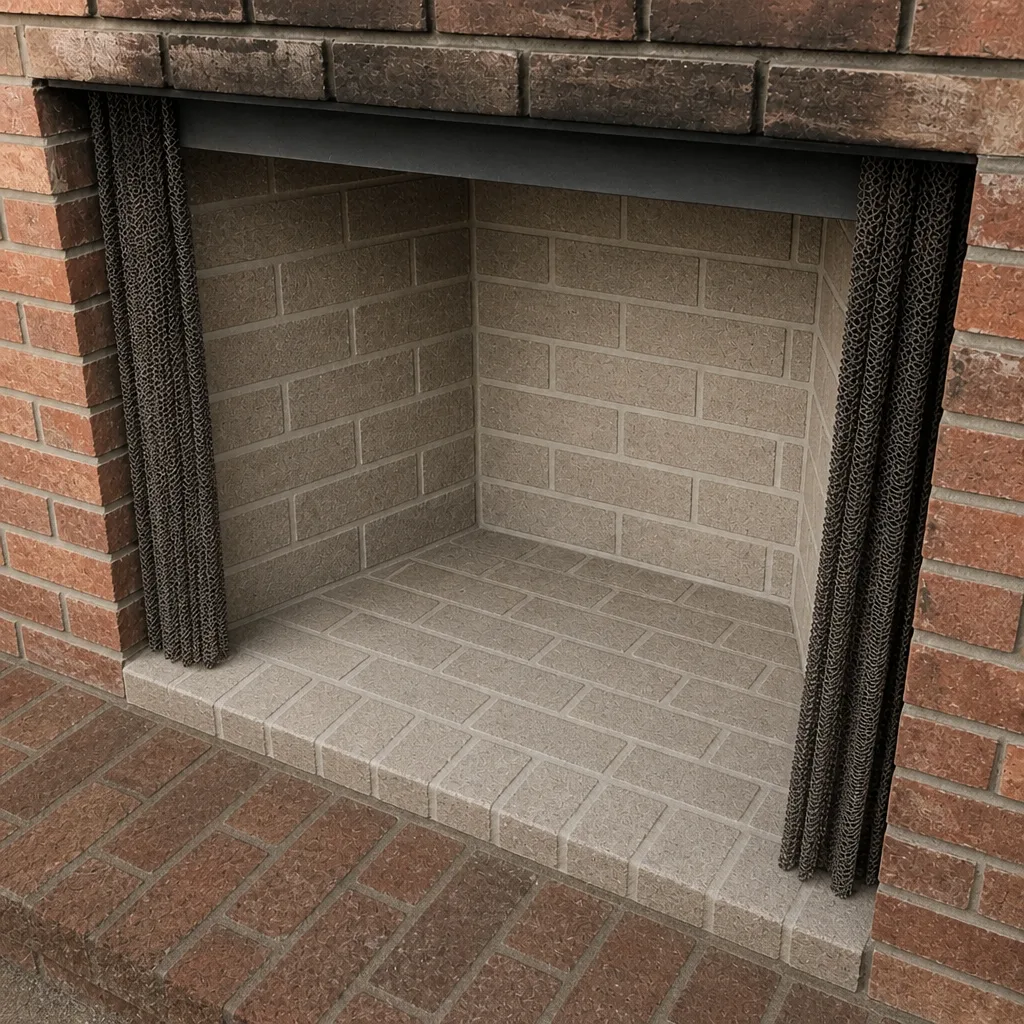 After
 Before
 After
 Before
 After
When to Call a Professional
Some problems need a specialist now, and some can wait for a scheduled visit. Call promptly if you smell a strong creosote odor or detect a draft coming back down the flue, if you’ve had a chimney fire (even a small one you put out yourself), if you see cracked or missing mortar in the crown or cap, or if you notice animals or nesting material around the top of the chimney. Call before your first fire of the season if the chimney hasn’t been swept in a year or more. Carbon monoxide is the quiet risk here, and a blocked or compromised flue is exactly the condition that produces it. Chimney Sweep South Ozone Park offers free estimates in South Ozone Park – call (877) 492-4232. Our technicians have up to 8 years of experience, and the estimate is set per job by a written scope, not a phone guess.
Frequently Asked Questions
A standard sweep in South Ozone Park is typically priced per job by a written estimate after an inspection, because the cost depends on fuel type, flue condition and how much build-up is present. We don’t quote a firm number before looking, and the estimate is free. Call (877) 492-4232 for an exact quote – estimates are free.
No. New York does not license chimney sweeps, which is why certification from the CSIA or NFI is the only independent proof of competence in this trade. Verify the technician’s name in the certifying body’s directory rather than accepting a logo at face value. Call (877) 492-4232 for an exact quote – estimates are free.
You need a new liner only when the camera shows cracks, gaps, spalling or an unlined flue, and a legitimate contractor will show you that evidence before recommending anything. HeatShield ceramic resurfacing can repair some damaged liners without a full replacement, and we say plainly when a repair can wait. Call (877) 492-4232 for an exact quote – estimates are free.
Once a year for most wood-burning fireplaces, and more often if you burn frequently or notice heavy creosote at the top of the flue. Gas and oil appliance flues should be inspected annually even when they don’t need a full sweep. Call (877) 492-4232 for an exact quote – estimates are free.
Creosote accumulates and can ignite inside the flue, and a cracked or blocked liner lets carbon monoxide and heat reach parts of the house that aren’t rated for it. Both risks build quietly and reveal themselves only on camera or in a fire. Call (877) 492-4232 for an exact quote – estimates are free.
Yes. Camera documentation and a photo report are included in the work, not offered as an add-on, because nothing gets recommended that you can’t see for yourself. That’s how a diagnosis stays honest. Call (877) 492-4232 for an exact quote – estimates are free.
The Bottom Line
Hiring a chimney contractor in South Ozone Park is a verification exercise, not a shopping comparison. Confirm the certification by name in the CSIA or NFI directory. Get insurance documentation in writing. Demand a written scope that names the access method, the inspection protocol, the camera documentation and the debris containment. Expect a camera inspection before any repair is quoted, and expect to see the photos yourself. A contractor who welcomes all of that is the one worth hiring. A contractor who deflects any of it is showing you exactly what the work would look like. Call (877) 492-4232 for a free estimate – we answer 24/7, with fast dispatch from 7am to 7pm, Sunday through Friday.
Written by the team at Chimney Sweep South Ozone Park.